

By Nelson Ayivor
Ghanaian President, John Dramani Mahama has issued a strong appeal for an immediate cessation of hostilities in the Middle East, warning that the escalating conflict among the United States, Israel, and Iran poses serious economic risks for African nations.
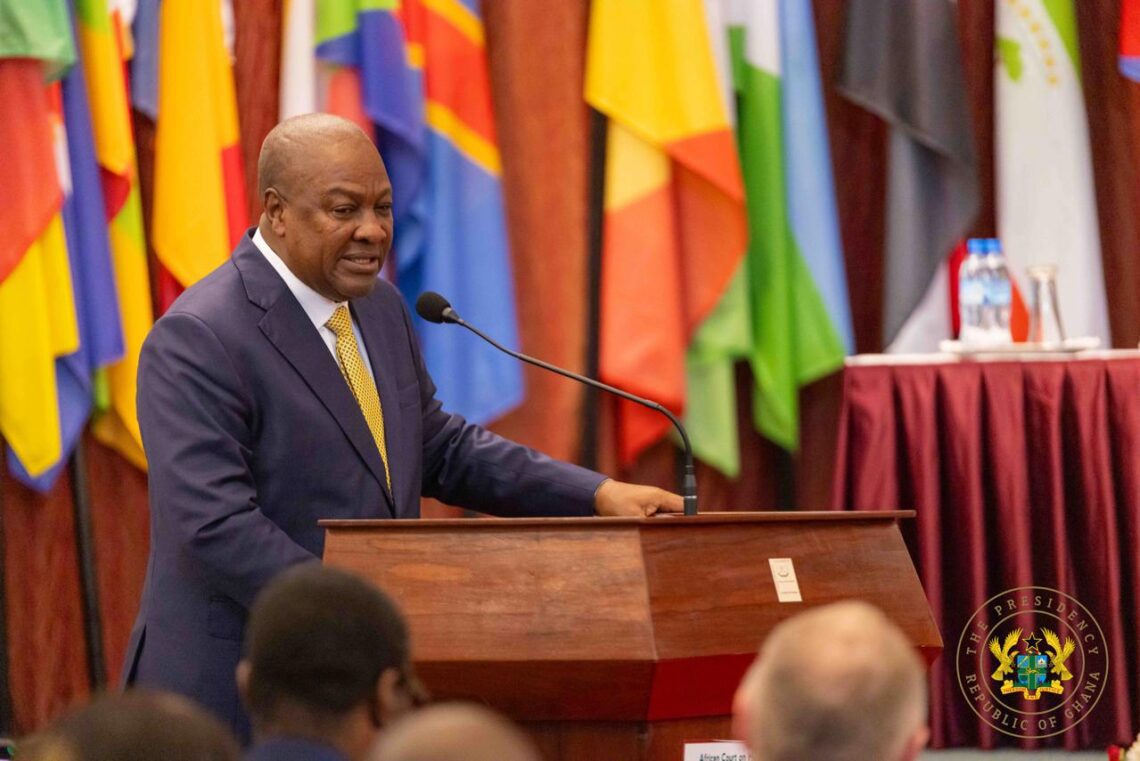
Speaking during a bilateral engagement with Samia Suluhu Hassan at the State House in Arusha, President Mahama stressed that Africa cannot afford prolonged instability in a region central to global energy supply.
The Ghanaian leader expressed deep concern over intensifying military exchanges and retaliatory attacks that continue to unsettle the Gulf region, describing the situation as troubling not only for global security but also for economies across Africa that rely heavily on Middle Eastern crude oil to power industries, transport systems, and households.
President Mahama characterised the Middle East as the epicentre of global oil supply, noting that any disruption there inevitably sends shockwaves across energy importing regions such as Africa.
He cautioned that the current trajectory of the conflict was already translating into higher crude prices, with global benchmarks climbing beyond ninety-one dollars per barrel.
Such price movements, he explained, place immediate pressure on African economies like Ghana that depend on imported petroleum products. Rising crude prices increase the cost of fuel, electricity generation, and transportation, which in turn raises the prices of food and basic goods.
These pressures ultimately erode household incomes and deepen the cost-of-living burden on ordinary citizens. “We call for the cessation of the conflict and the return to dialogue so that we can see peace come back to that region,” President Mahama said, underscoring the urgency of diplomatic engagement over military confrontation.
President Mahama warned that when crude prices cross certain thresholds, raise fares, manufacturers face higher production costs, and traders pass these increases on to consumers. For many African households already grappling with inflationary pressures, such external shocks can be devastating,
noting that Africa’s vulnerability lies not in decisions taken on the continent, but in global conflicts beyond its control. Yet the consequences are felt sharply at home.
According to President Mahama, this reality makes peace in the Middle East not just a regional or global concern, but a direct African economic priority.
“And we know when the prices of crude go above a certain amount, it has a negative effect on our country,” he added, reinforcing the link between distant geopolitical tensions and local economic hardship.
While calling for peace, President Mahama acknowledged that Africa must also strengthen its resilience against external shocks. He said governments must plan ahead to cushion their populations from sudden price surges driven by global crises.
This includes prudent fiscal management, diversification of energy sources, and targeted social interventions to protect the most vulnerable.
“We know that these shocks will come, but when they come, we must prepare ourselves to make sure that our people are protected,” he said, signalling the need for proactive policy responses rather than reactive measures.
The Ghanaian leader’s remarks reflect a broader concern among African leaders who increasingly find their economic fortunes tied to geopolitical developments far beyond their borders.
As energy prices rise, countries face difficult trade offs between maintaining fiscal discipline and providing relief to citizens affected by higher living costs.
Beyond the economic implications, President Mahama appealed to the international community to prioritise diplomacy and peaceful resolution. He warned that prolonged hostilities risk reversing hard-won economic gains across Africa and could push millions more into poverty.
The call for dialogue, he said, must be embraced by all parties involved in the conflict, as well as by global powers with influence over the situation. Sustainable peace, in his view, is the only path that prevents further destabilisation of energy markets and protects vulnerable economies from cascading shocks.
His appeal comes at a time when global attention remains firmly fixed on the Middle East, with tensions showing little sign of easing. As military actions continue and uncertainty clouds oil markets, African governments are watching developments closely, aware that each escalation carries tangible economic consequences at home.
President Mahama’s intervention highlights Africa’s often overlooked stake in global peace and security. Though not a direct participant in the conflict, the continent bears significant economic fallout from disruptions in oil supply and price volatility.
By urging restraint and renewed dialogue, the Ghanaian President positioned Africa as a voice of reason calling for stability in an interconnected world. His message underscored a simple but powerful reality: peace in one region safeguards livelihoods far beyond its borders, while conflict imposes costs on nations least able to absorb them.
As the Middle East crisis unfolds, African leaders like President Mahama continue to press for diplomacy, hoping that calm will return before rising energy prices inflict deeper economic pain across the continent.