

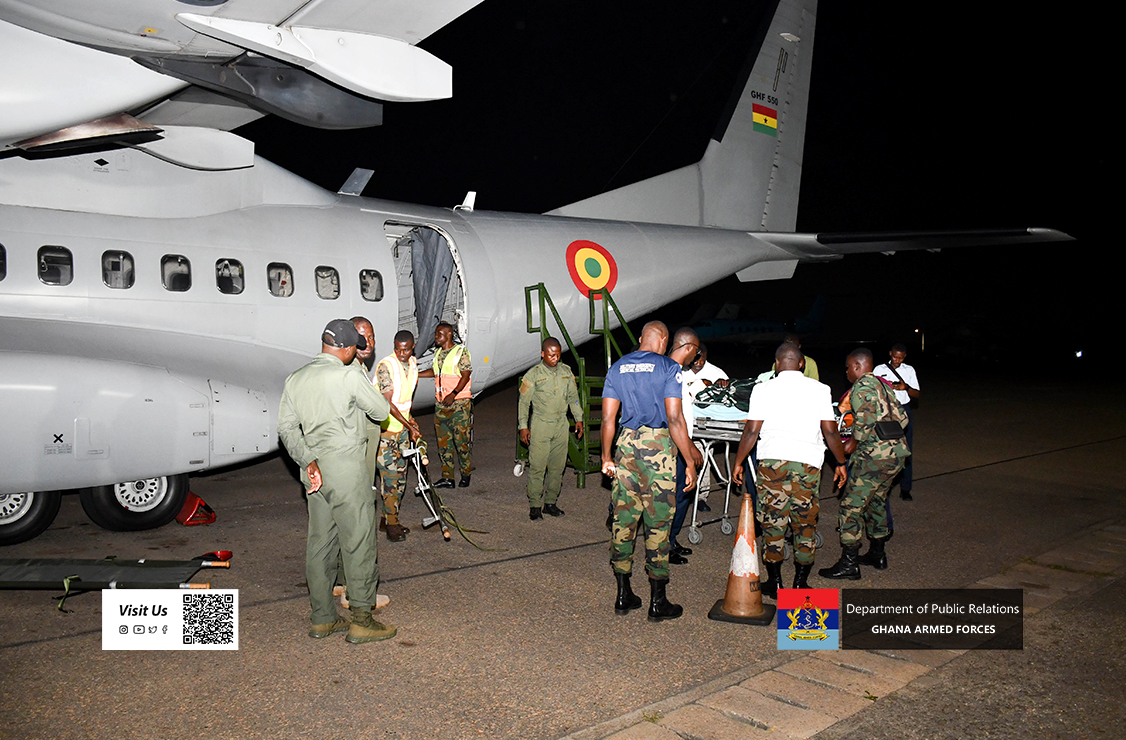
The Ghana Armed Forces has successfully evacuated three Ghanaian traders who survived a deadly terrorist attack in northern Burkina Faso, marking a critical step in the government’s humanitarian and security response to an incident that claimed eight Ghanaian lives.
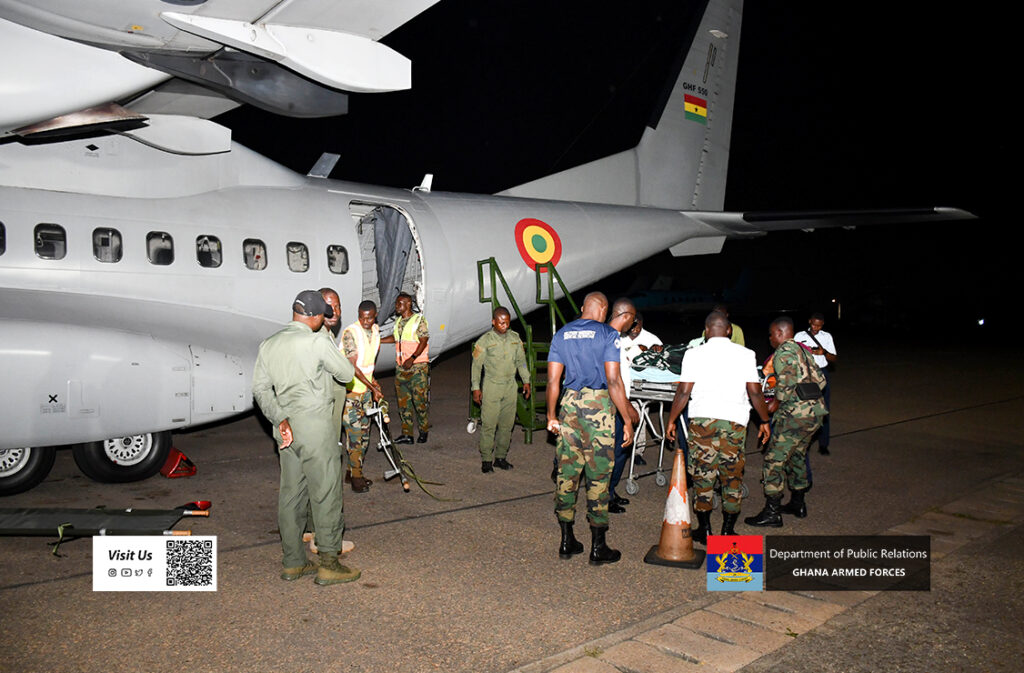
The evacuation, carried out by the Ghana Air Force on Tuesday, February 17, 2026, followed a directive from President John Dramani Mahama and reflects heightened efforts to protect Ghanaian citizens affected by rising insecurity in the sub region.
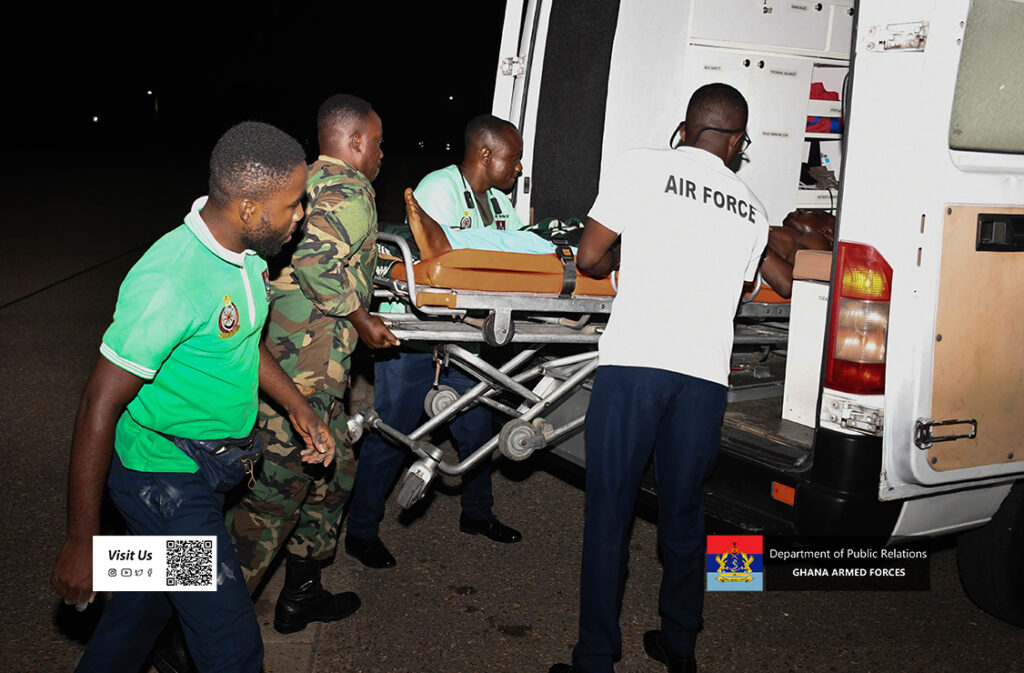
Per a release issued by the Department of Pulic Relations at GAF General Headquarters, Burma Camp, the injured traders were airlifted from Burkina Faso and transported to Accra for further medical care.
Upon arrival, they were conveyed to the 37 Military Hospital, where they are undergoing medical assessment and treatment. Military authorities described the operation as part of a coordinated national response involving security agencies, diplomatic channels, and health professionals.
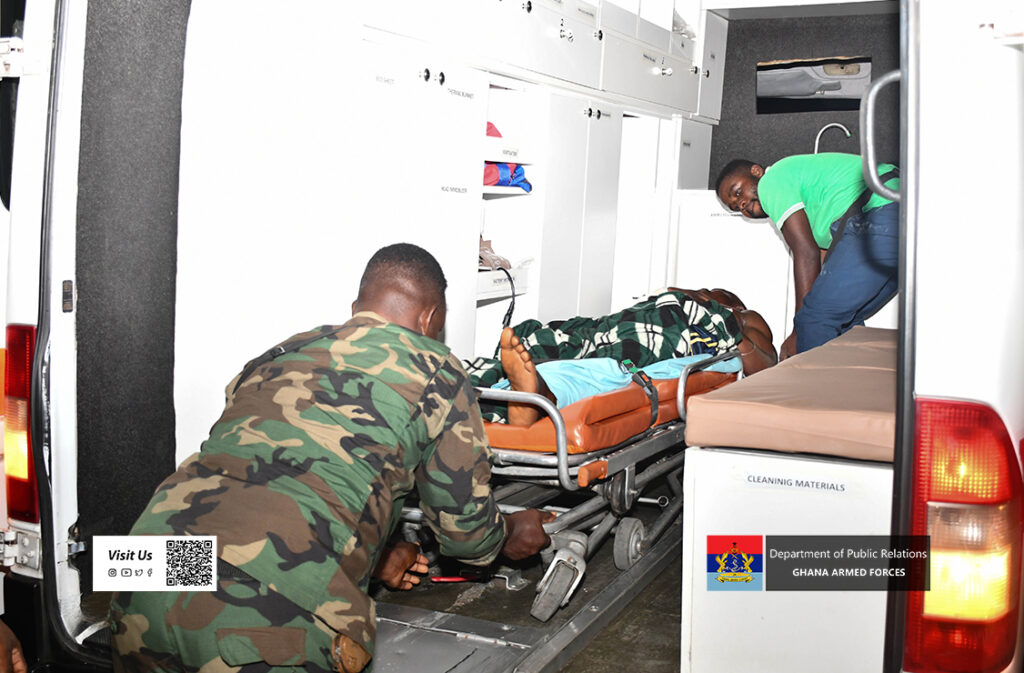
The evacuation was undertaken by the Ghana Armed Forces, with the air mission executed by the Ghana Air Force. The military said the operation was conducted efficiently and safely, ensuring that the injured received urgent medical attention after days of treatment in Burkina Faso.
In expressing sympathy, the Armed Forces conveyed their deepest condolences to the families of those who lost their lives in the attack and wished the injured a speedy recovery.
The release noted that the loss of Ghanaian lives in the incident was deeply painful and underscored the growing threat posed by violent extremism within parts of the West African sub region.
The evacuation follows confirmation by government authorities that a jihadist attack occurred on February 14, 2026, in Titao, located in the northern province of Burkina Faso. The attack targeted traders who had travelled to the area to conduct lawful business activities.
Initial reports indicated that seven Ghanaian traders were killed during the ambush by armed terrorist groups. A subsequent update from the government confirmed that an eighth victim, who had sustained serious injuries, later died while receiving medical treatment.
The victims were members of the Ghana National Tomatoes Traders and Transporters Association, a group whose members regularly travel across borders within the sub region to trade in agricultural produce.
The association has long played a vital role in cross border food supply chains, particularly in the trade of tomatoes between Ghana and its northern neighbours.
President John Dramani Mahama has described the incident as tragic and unacceptable, reaffirming his government’s commitment to safeguarding Ghanaian lives at home and abroad.
Following the attack, he directed security agencies to work closely with diplomatic missions to ensure that injured citizens received immediate care and that the remains of the deceased were handled with dignity.
The successful evacuation highlights the importance of rapid response mechanisms in times of crisis. It also underscores the operational readiness of the Ghana Armed Forces to undertake cross-border humanitarian missions when the safety of citizens is at stake.
Such evacuations require extensive coordination with host nations, airspace authorities, and medical teams. Beyond the immediate humanitarian response, the incident has renewed concerns about the spread of violent extremism in parts of the Sahel and its implications for regional trade and security.
Northern Burkina Faso has in recent years experienced increasing attacks by armed groups, disrupting livelihoods and threatening the safety of civilians, including foreign traders.
Ghanaian authorities have reiterated calls for stronger regional cooperation to address the root causes of insecurity and to protect economic activities that sustain communities across borders.
Officials argue that attacks on traders not only result in loss of life but also undermine regional integration and food security. The government has since issued new travel advisories urging Ghanaians to exercise caution when travelling to high-risk areas within the sub-region.
Citizens engaged in essential travel are advised to contact the Ministry of Foreign Affairs or Ghana’s diplomatic missions for guidance, while those already resident in volatile areas are encouraged to limit movement and maintain regular contact with embassies.
Meanwhile, diplomatic engagements with Burkina Faso continue, with Ghana acknowledging the cooperation of Burkinabe authorities in facilitating the evacuation and providing initial medical support to the injured.
Ghana’s embassy in Burkina Faso has remained actively engaged, maintaining contact with affected citizens and coordinating assistance. At the 37 Military Hospital, medical officials say the evacuated traders are receiving comprehensive care, including trauma assessment and follow-up treatment.
The Ghana Armed Forces has assured the public that it remains ready to support government efforts to safeguard citizens and contribute to regional peace and stability. While the wounds from the Burkina Faso attack are still fresh, the successful evacuation of the survivors stands as a measure of relief amid profound national grief.