

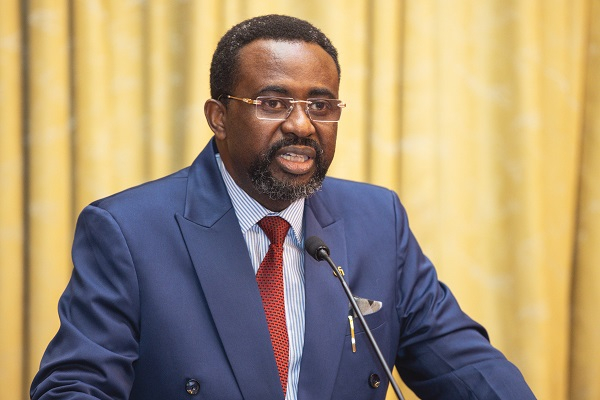
The Bank of Ghana (BoG) governor, Dr Johnson Asiama, has announced a number of sweeping initiatives aimed at enhancing collaboration between the media and the institution, reaffirming commitment to deepen partnership.
In a speech read on his during the opening of a two-day workshop for members of the Private Newspapers and Online Publishers Association of Ghana (PRINPAG), on Saturday January 24, at Ada, advisor to the governor, Dr Francis Yao Kumah, announced the institutionalization of an award, aimed at encouraging media practitioners, especially those from print and digital platforms, to accurately and creatively report on the economy.
The “Economic and Financial Story of the Year’’ award, is intended to award one journalist annually.
The initiative, will see the central bank handsomely awarding the eventual journalist being sponsored to the International Monetary Fund (IMF) and World Bank meetings— a unique opportunity to gain global perspective and deepen professional networks.
The person, will be chosen based on accuracy, depth of analysis, originality, public impact and clarity of explanation stories he or she writes.
“To encourage accuracy, insight, and creativity in economic reporting across print and digital platforms, we are launching an annual award. The prize will see the winning journalist sponsored to attend the IMF/World Bank Meetings—a unique opportunity to gain global perspective and deepen professional networks. The criteria will be accuracy, depth of analysis, originality, public impact and clarity of explanation”, he said.
Speaking under the theme “Resetting the Economy: The Role of Journalists, News Publishers, and Media Owners”, Dr Asiama disclosed other initiatives one being training programmes for the media, to improve specialized training for practitioners on monetary policy.

Additionally, he announced the formation of what he calls “dedicated forum for editors, producers and presenters and newsroom leaders” where regularly, the Bank will hold forum to discuss impending data releases, policy cycles, and emerging risks, to ensure that practitioners have the context needed to guide their work.
The Communications department of the BoG, he assured will maintain relationship with the media by supporting and updating the newsroom with timely clarifications, background briefings and access to authoritative data and subject-matter experts.
These interventions he believed will ensure that stories emanating from the Bank are well-sourced and unambiguous.
“These initiatives reflect a simple conviction: when the media succeeds, the public understands and when the public understands, the economy functions better”.

Viewing the work of the media as an integral part of the reset agenda by the government, the governor stressed four key areas attention will be shifted to listing them as economic literacy and public understanding, integrity of the information ecosystem, constructive accountability and championing rules and responsible innovation, to achieve their vision.
He also shed light on some strategic choices they are planning to implement this year, pointing out that their main agenda is to consolidate the gains made so far and as well as being disciplined, to continue to put the economy on it right footing.
For a central bank that has achieved impressive outcomes from its reforms in 2026, he promised to deepen them to support orderly price discovery, discipline market conduct, and improved confidence, ensuring that oversight, reporting mechanisms, and enforcement will remain firm to curb market abuse and support transparent pricing.
They will also be looking at the payments and digital finance to ensure that it expands stressing that, “we will keep our focus on resilience and safeguards, consumer protection, sound governance, and system reliability. Innovation must proceed within clear regulatory boundaries, ensuring trust in the ecosystem”.

In the area of supervision and market conduct, the governor assured that their posture will rather be to prevent “with greater emphasis on governance quality, capital and liquidity planning, and early risk identification. This is how we protect stability before vulnerabilities escalate”.
On policy communication he opined they “Will continue to provide clear signalling, consistent liquidity management and evidence-based communication. Predictability and credibility — not surprises —will anchor our approach”.

By Gifty Boateng