


Ghana’s Finance Minister, Dr. Cassiel Ato Forson has moved to shut down a suspected transit diversion racket after customs officers intercepted 18 articulated trucks hauling cooking oil and other goods declared for landlocked Niger, but travelling without the mandatory customs escorts that Ghana’s transit regulations require, exposing the state to a revenue loss the minister has placed at over GH¢85 million.
Dr. Forson disclosed the operation in a Facebook post on Friday, February 20, 2026, describing it as evidence of both systemic control failures and deliberate human complicity within the customs system.
Subsequently, he directed the Ghana Revenue Authority (GRA) to begin comprehensive investigations immediately.
The trucks were part of a consignment electronically gated out of the customs system as transit goods from Akanu, declared for Niger through Kulungugu, but were intercepted moving along the Dawhenya-Tema road without mandatory customs human escorts, a serious breach of established transit procedures.
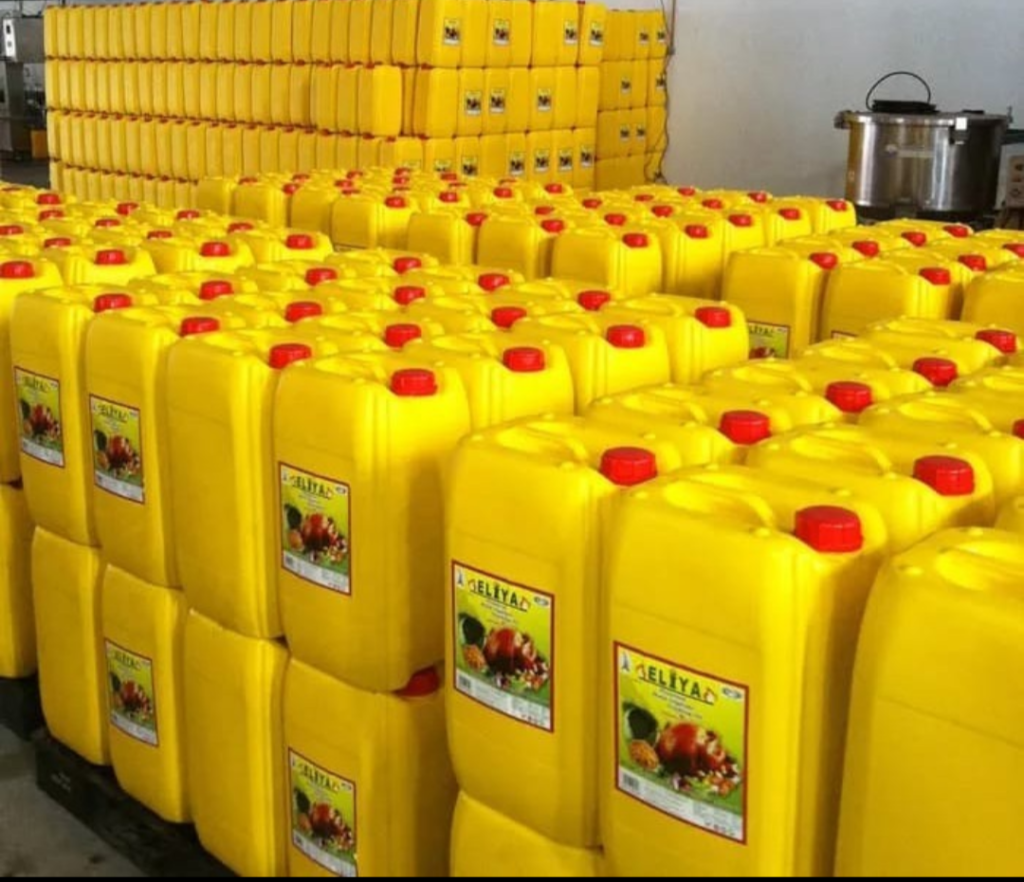
The trucks were loaded with 44,055 packages of edible cooking oil, tomato paste, and spaghetti. Eleven of the intercepted trucks have been secured at the Ghana Ports and Harbours Authority (GPHA) Transit Terminal under strict customs supervision. One vehicle overturned while attempting to evade interception, spilling its cargo, while six others remain at large and are still being tracked.
Initial suspended duties and taxes were assessed at approximately GH¢2.6 million. Post-interception inspections, however, uncovered material discrepancies in declared unit values, tariff classifications, and cargo weights, revising the revenue exposure sharply upward to GH¢85.3 million.
The crackdown follows concerns raised by the Food and Beverages Association of Ghana (FABAG) during a meeting with the Finance Minister, in which the association called for tighter border security to curb smuggling that was undermining local producers.
Under the new directive, cooking oil consigned for onward transit to landlocked countries will no longer be permitted to move through land border collection points. All shipments must instead pass through Ghana’s seaports, where stricter valuation systems, electronic tracking, scanning infrastructure, and layered customs controls are operational.
Dr. Forson warned that any customs officer found culpable would face prompt disciplinary action, and that criminal investigations would extend to importers and clearing agents where evidence supported prosecution. Impounded goods will be auctioned in accordance with the law.
“We will not allow Ghana’s customs regime to be exploited to undermine domestic revenue mobilisation and national development. Every cedi matters,” he stated.
Ghana Revenue Authority (GRA) Commissioner-General Anthony Kwasi Sarpong described the overnight operation as a decisive blow against economic sabotage, stressing that the intelligence-led raid represented a new standard of enforcement against revenue leakage at the country’s borders.