

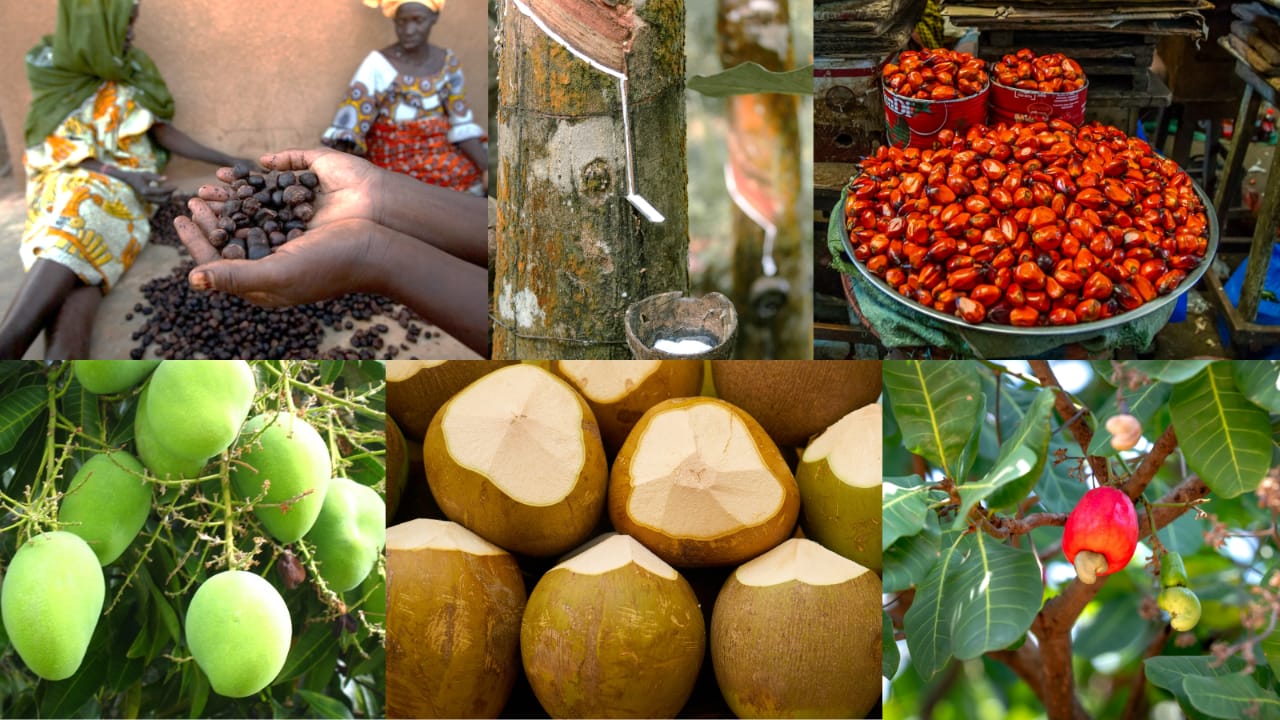
President John Dramani Mahama says Ghana will invest $500 million to develop 100,000 hectares of oil palm and create 250,000 direct jobs, as his administration moves to position tree crops as a central pillar of the country’s “reset” agenda and broader green economy strategy.
Speaking at the inaugural Ghana Tree Crops Investment Summit in Accra, Mahama also announced the relaunch and acceleration of the $200 million World Bank-supported Ghana Tree Crop Diversification Project, which will distribute millions of seedlings to farmers and provide matching grants to small and medium-sized enterprises.
The summit is being held under the theme: “Sustainable Growth Through Tree Crop Investments: Resetting and Building Ghana’s Green Economy.”
“We will no longer export raw cashew, raw shea or unprocessed rubber while importing the same finished products at higher prices,” Mahama said, adding that the government’s target is “50 to 60 % local processing annually,” supported by agro-industrial parks, incentives for private processors and stronger oversight through the Tree Crops Development Authority.
Mahama framed the initiative as both an economic and security imperative, warning that instability in the Sahel is disrupting regional trade routes that Ghana depends on for agricultural commerce. He cited the recent ambush of Ghanaian traders in Burkina Faso who had travelled to buy tomatoes, saying some were killed and others injured. He said he has directed the Tree Crops Development Authority and Cocobod to expedite implementation. “Our farmers not paperwork,” he said
The tree crops will also be integrated into the government’s proposed 24-hour economy, with production, processing, logistics and exports operating continuously to boost productivity and job creation.
He said Ghana’s export ambition remains $12 billion annually by 2035, translating to $2 billion per crop across the key tree-crop value chains. “It’s very ambitious, I agree,” he said. “And yet it’s achievable.”
Mahama called on investors, development partners and traditional leaders to back the strategy, arguing that access to land remains one of the biggest constraints to scaling tree crops. He urged public officials and other leaders to invest directly in farming, saying government must lead by example.
“We can’t just always talk and say people should go back to the land when you yourself are not going back to the land,” he said.