


By Nelson Ayivor
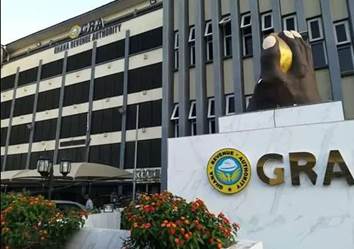
The Ghana Revenue Authority (GRA) has announced the successful interception of numerous consignments of uncustomed and misclassified goods at Aflao and the Tema Port.
Through enhanced intelligence, robust inter-agency collaboration, and cutting-edge technological surveillance, the GRA has effectively prevented a potential revenue loss estimated at GH¢3.6 million.
Anthony Kwasi Sarpong, the Acting Commissioner-General of the GRA, revealed shocking details of the operation, which uncovered a burgeoning scheme where importers misdeclare goods as transit cargo destined for Burkina Faso, only to clandestinely divert them to local warehouses to evade customs duties.
“Declared as transit goods headed for Burkina Faso, these items were instead diverted into a warehouse in Tama End Cliff. Such goods should not attract duties, indicating that they were falsely classified.
Furthermore, devices installed on these trucks to monitor their movements were tampered with,” Sarpong stated. He added that these operations alone had an estimated duty loss amounting to approximately GH¢1.7 million.
The remarks came in the wake of a coordinated operation involving Customs, National Security, and the Military, which intercepted multiple trucks believed to be carrying undeclared or undervalued goods.
The confiscated items ranged from large quantities of rice, sugar, and tomato paste to textiles and clothing, most of which were either misclassified or undervalued to minimize duty payments.
Sources involved in the operation pointed out that advanced electronic tracking devices play a crucial role in revealing unusual routing and tampering incidents.
Recently, the GRA upgraded these tracking systems, enhancing GPS precision and enabling real-time monitoring, which allows officials to quickly detect deviations and act before contraband enters the local market.
Sarpong emphasized that the integration of surveillance technology with physical enforcement is a “turning point” in combating transit fraud, under-declaration, and smuggling an essential strategy for Ghana, where import duties significantly contribute to national revenue.
Economists argue that tackling leakages at Ghana’s borders is vital for shoring up the cedi, improving government liquidity, and restoring public confidence in the effectiveness of tax administration.
The GRA remains committed to the consistent deployment of sophisticated monitoring tools, aiming not only to close revenue gaps but also to dismantle the long-standing perception that loopholes exist within the port system for manipulation and collusion.