

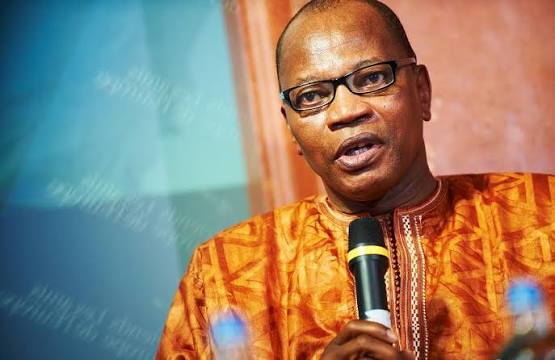
Dr. Ibn Chambas has highlighted the need for Ghana’s educational system to reflect the changing needs and diversity in the global market rather than solely focusing on the theoretical aspect.
He made this call as he delivered a challenging yet impactful speech at the University of Education, Winneba, as the keynote speaker for the lecture series, dubbed “Empowering Minds-Rethinking Education for Sustainable Development.”
As the African Union’s high representative for the strategy of “silencing the guns” by 2063, he emphasized the need to educate children, noting that education is a long-term tool to “silencing the guns.”
Education, he opined, is a foundation to achieve this objective by directly addressing the cause of conflicts across the continent.
He stated that this will ultimately sustain peace and help to build a prosperous Africa. As it will further prevent the recruitment of young people into armed groups. He asserted that education “counters ethnic divisions through inclusive curriculum and promotes dialogue over violence.” Education, he explained, can go a long way to help curb the social vices and ensure a peaceful coexistence between people.
He therefore advocated for the need for STEM education to be merged with the media and arts, which is known as STEAM. He stated that STEM alone cannot be the sole developmental tool without combining it with knowledge in the arts and media. The country will be able to provide more skillful and industry-equipped young people to enhance innovation and development.
He also applauded the initiative of the government to make STEM education tuition-free for people, ensuring that the area of arts and culture, when combined with STEM, is beneficial.
He again shed light on the need to be each other’s keeper and not to engage in activities that ultimately endanger others. He went on to add his voice to the ongoing debate surrounding Galamsay and called for a halt in the activity. He also spoke on the indiscriminate cutting of trees, condemning the act. He asserted that integrity must be taught as a practice, not a religious fundamental only. Citizens were urged to be diligent in their dealings with others.
Also, Dr. Ibn Chambas expressed excitement about the growth achieved in Ghana’s educational sector over the years, noting an increase in the enrollment of children across all levels of education. This, he believes, is a significant step towards reshaping the minds of people to ensure development and empowering them for sustainable development.
Even though there has been an increase in enrollment, education in Ghana is not tailored to suit the job market, as there is a gap in skill training. TVET, according to hm must be strengthened to train people to enhance development. Project- based learning should focus on community service, not getting rich.
Dr. Ibn Chambas used the opportunity to praise teachers and charged them to deliver not just for the sake of education, but to ensure that the education is centered on transforming minds.
He stated that teachers are true “agents of change” and no reform will be made without the teacher. He believes it is not what inspires, but rather the teacher who does. To achieve empowered minds, we must have well empowered and compensated teachers, which will also impact their ability to deliver. He asserts that the most prestigious career is one that contributes to society.
Government and policymakers must come together to achieve the vision of reshaping the educational reforms to meet the developmental agenda of the country. Private sector players must collaborate with schools to ensure that students get the requisite skills for the job market.
He finally charged parents to invest in the education of their wards and not leave it entirely in the hands of the government. Children, on the other hand, must also be diligent and disciplined towards their education.