

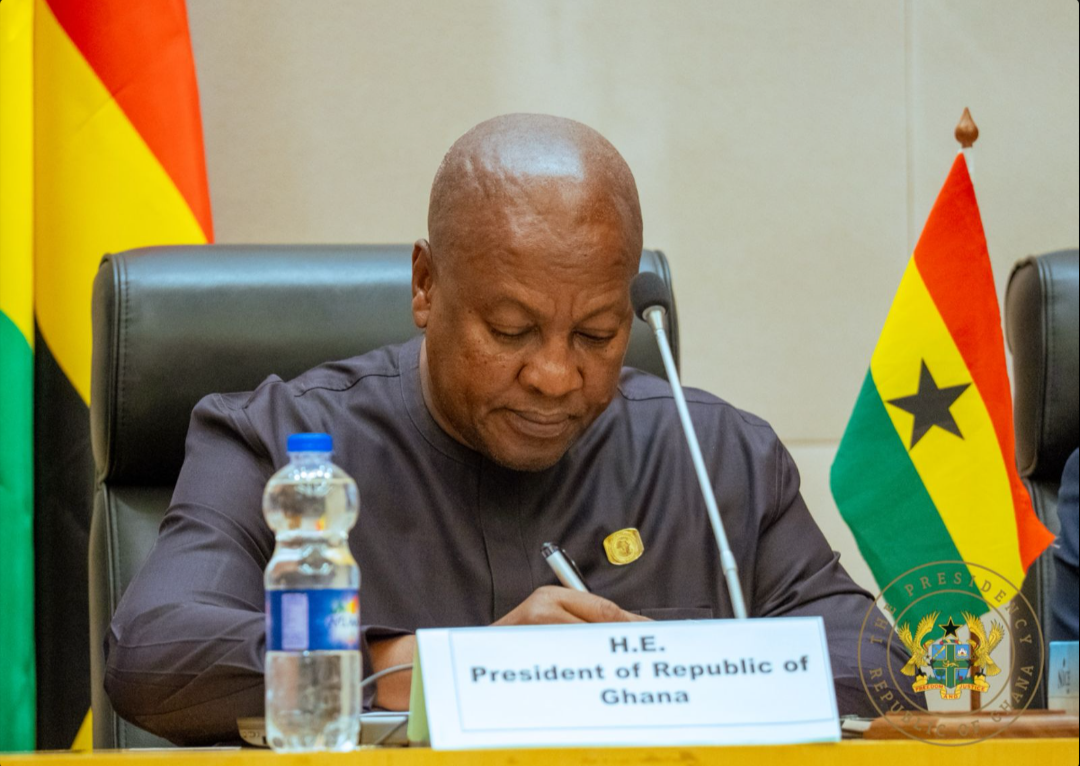
The African Union has endorsed a Ghana led resolution seeking international recognition of the transatlantic slave trade and racialised chattel enslavement of Africans as the gravest crime against humanity, strengthening Africa’s collective push for reparatory justice.
The endorsement was confirmed at a press conference held during the 39th Ordinary Session of the Assembly of Heads of State and Government of the African Union, where President John Dramani Mahama detailed the diplomatic and legal pathway toward adoption at the United Nations.
“At the recent African Union Summit, the Executive Council recommended the endorsement of this resolution. I am pleased to inform you that the Assembly of Heads of State and Government adopted that decision by consensus at this 39th Ordinary Session.”
This endorsement signals strong political backing from African leaders and reinforces the legitimacy of Ghana’s role as the lead sponsor of the resolution at the United Nations.
The initiative is rooted in Decision 884 adopted by the African Union in February 2024, which declared 2025 the Year of Justice for Africans and People of African Descent through Reparations. Under that decision, reparations linked to the transatlantic slave trade, colonialism, and apartheid were elevated to flagship priority status.
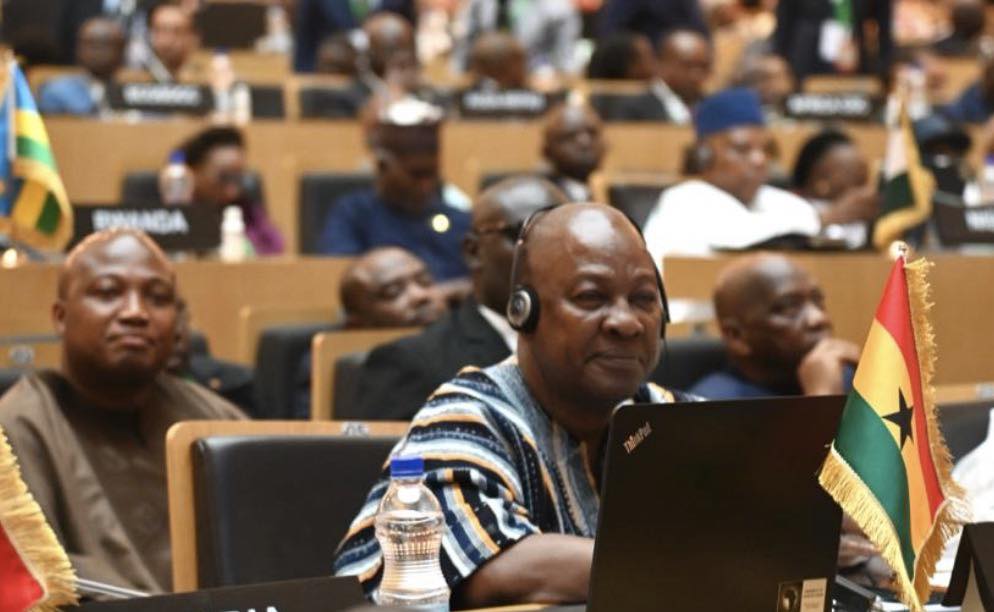
President Mahama was subsequently appointed African Union Champion for Reparations, a mandate he described as a solemn responsibility to pursue truth, recognition, and justice for both past and future generations.
“At the 80th session of the United Nations General Assembly in September 2025, I announced that Ghana would lead the effort to table a resolution declaring slavery and the transatlantic slave trade as the gravest crime against humanity. That commitment marked the beginning of a structured diplomatic and legal process.”
To advance the initiative, the Ministry of Foreign Affairs was directed to establish a high level committee tasked with coordinating consultations, refining the legal framework, and preparing a draft text aligned with international law and diplomatic practice.
According to the President, the process has been guided by the need for credibility, inclusiveness, and legal soundness to ensure that the resolution can command broad international support.
Legal grounding and core principles
The proposed resolution is anchored in established principles of international law, particularly the prohibition of slavery as a peremptory norm from which no derogation is permitted. President Mahama explained that this legal status provides a firm foundation for the resolution, reinforcing its legitimacy within the international system.
He noted that the text rests on three core pillars. The first is historical accuracy, ensuring that the scale, structure, and intent of the transatlantic slave trade are properly documented.
The second is legal defensibility, designed to withstand scrutiny within international legal forums. The third is alignment between Africa and its diaspora, recognising that the legacy of enslavement extends beyond the continent and continues to shape global inequalities.
“Following expert consultations, the title has been refined to read, Declaration of the Trafficking in Enslaved Africans and Racialised Chattel Enslavement of Africans as the Gravest Crime Against Humanity.”
President Mahama emphasised that this wording is intentional and precise, capturing the systematic trafficking of millions of Africans and the racialised, institutional nature of chattel enslavement.
He stressed that precision in language is essential for precision in justice, as it acknowledges not only the historical events themselves but also their enduring social, economic, and political consequences across generations.
Inclusive consultations and expert engagement
Ghana’s leadership of the initiative, according to President Mahama, has been marked by broad consultations involving continental and international stakeholders.
Engagements have included UNESCO, the Global Group of Experts on Reparations, the Pan African Lawyers Union, academic institutions, the African Union Committee of Experts on Reparations, and the African Union Legal Experts Reference Group.
Earlier this month, Ghana hosted the inaugural joint meeting of the African Union Committee of Experts on Reparations and the African Union Legal Experts Reference Group in Accra.
The meeting focused on refining the draft resolution and ensuring consistency with international legal standards. Consultations with the African diaspora have also been integral, beginning with discussions at the Ghana Diaspora Summit held in December last year.
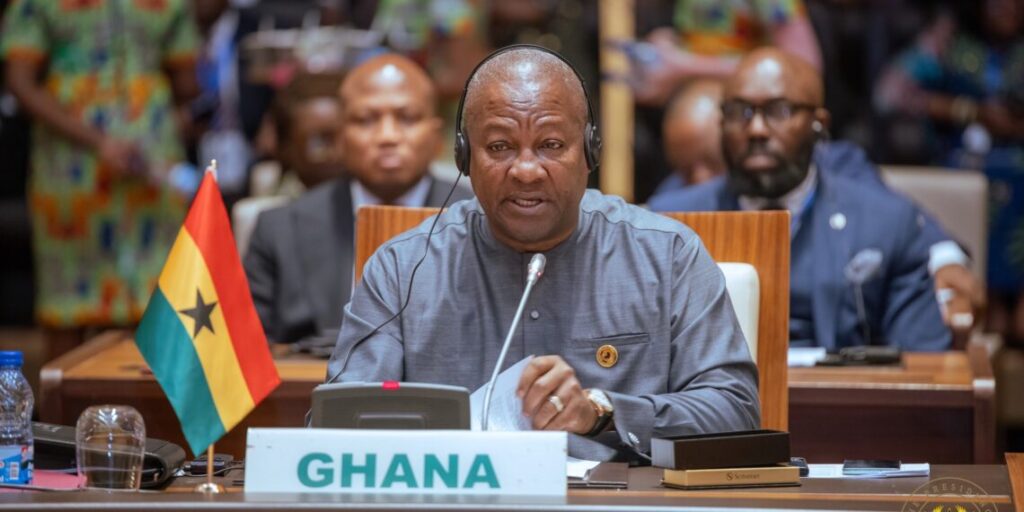
President Mahama described the process as inclusive and deliberate, aimed at building shared ownership of the initiative rather than advancing a unilateral national agenda.
With continental approval secured, Ghana is now focusing on expanding support beyond Africa. President Mahama announced that the next major engagement will be at the 50th regular meeting of CARICOM, reflecting the shared historical experience between Africa and the Caribbean shaped by slavery and colonial exploitation.
Support from Caribbean states is expected to play a critical role in mobilising broader international backing, particularly within multilateral groupings at the United Nations.
Beginning on 20 February 2026, Ghana will undertake intensive diplomatic engagements in New York with CARICOM, the Non Aligned Movement, the Group of 77 and China, the European Union, and other regional blocs.
Informal consultations on the draft text are scheduled between 23 February and 12 March 2026, with the objective of building consensus ahead of formal tabling. President Mahama emphasised that the initiative is not directed at any specific country. Instead, it is framed as a collective effort toward truth, recognition, and reconciliation.
Symbolism at the United Nations
On 24 March 2026, Ghana will host a high-level side event at the United Nations, followed by a wreath-laying ceremony at the African Burial Ground National Museum in New York.
The following day, 25 March, which marks the International Day of Remembrance of the Victims of Slavery and the Transatlantic Slave Trade, Ghana and its co-sponsors will formally table the resolution before the General Assembly with the endorsement of the African Union.
President Mahama noted that the timing is deliberate, linking remembrance with concrete action and reinforcing the moral weight of the initiative. Addressing the broader significance of the resolution, President Mahama said recognition of the transatlantic slave trade as a crime against humanity is not about division or retribution.
He argued that these acts were foundational crimes that shaped the modern world and whose consequences remain visible in structural inequality, racial discrimination, and economic disparity.
Adoption of the resolution, he said, would represent a critical step toward acknowledgement and healing. While it will not erase history, it will affirm historical truth and create space for sustained dialogue on reparatory justice.
Following adoption, Ghana plans to continue engagement with the United Nations Secretary General, the African Union Commission, relevant UN bodies, and interested member states.
President Mahama described the initiative as a historic opportunity to affirm the truth of Africa’s past and lay a stronger foundation for reconciliation and equality in the global order.