

By Leo Nelson||TNR Business
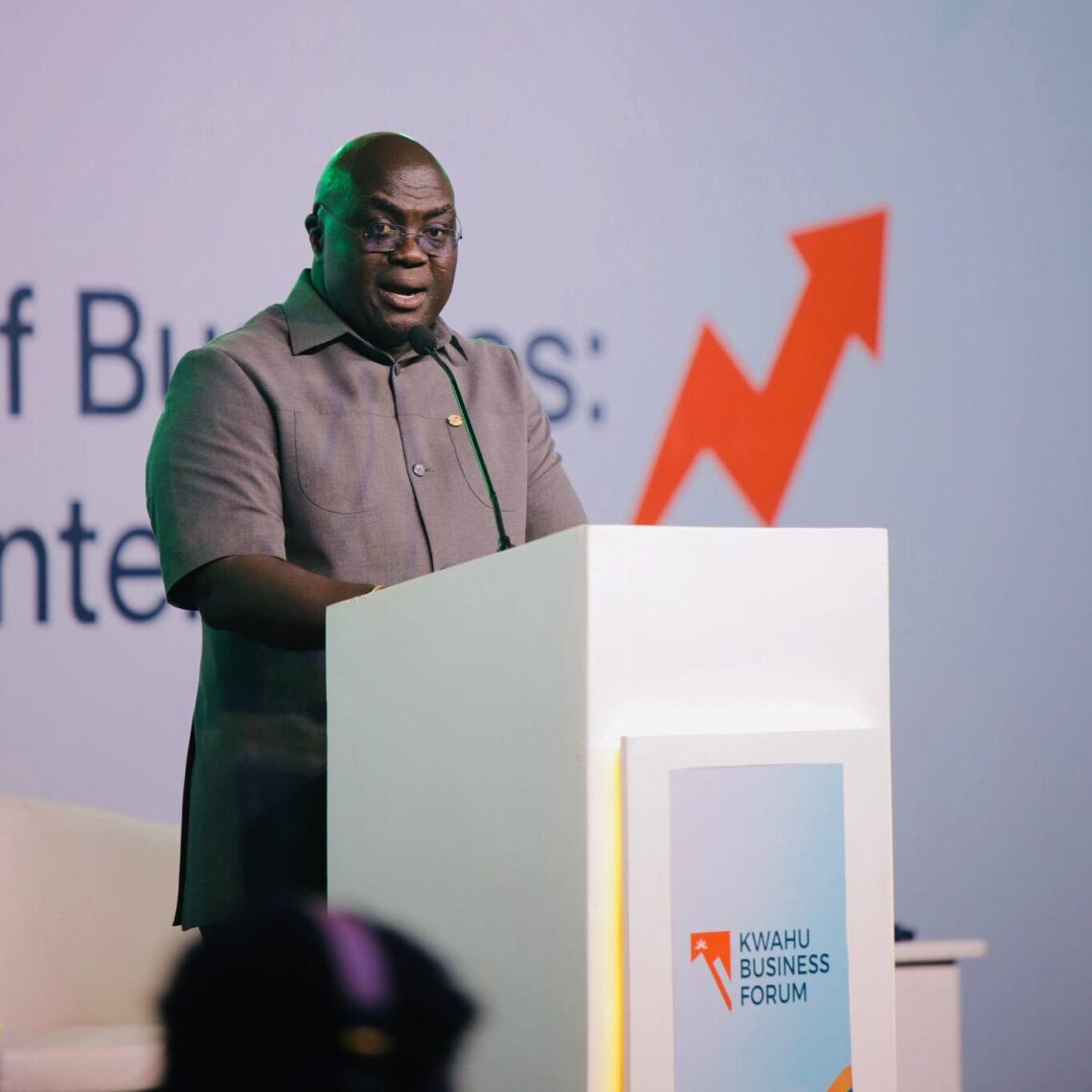
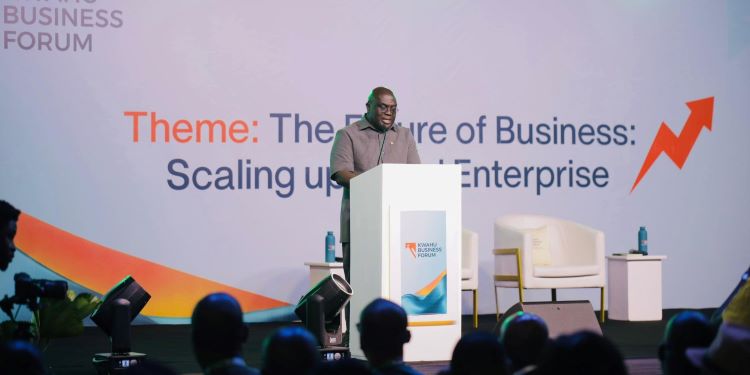
Ghana’s Chief of Staff, Julius Debrah has delivered a strategic roadmap for Ghana’s economic realignment at the opening of the Kwahu Easter Forum 2026.
Speaking under the theme “The Future of Business: The Role of the Financial Sector,” Debrah positioned the forum as a functional instrument for policy execution rather than a seasonal ceremony.
The Chief of Staff’s address centered on a singular directive, that Ghana must transition from a commerce-heavy economy to a manufacturing powerhouse to achieve structural transformation and long-term resilience. He argued that exporting raw materials while importing finished goods at a premium is a barrier to prosperity.
“Ghana must move beyond commerce and become a manufacturing hub. No nation becomes truly prosperous by exporting raw materials alone. We cannot continue to produce cocoa and import chocolate, grow food and import too much of what we could process locally, or ship out raw opportunity while buying back finished products at a premium,” he stated.
To correct this and ensure that Ghana produces more of what it consumes and processes more of what it grows, Debrah expanded on how the Mahama administration is prioritizing value addition as the primary engine for GDP expansion and foreign exchange stability.
He noted that a central pillar of this strategy is the recognition that manufacturing acts as a massive economic multiplier.
Unlike simple trade, industrial growth triggers a demand for a vast array of secondary services, and when a production line is established, it necessitates a robust ecosystem involving logistics, packaging, engineering, maintenance, technology, and warehousing.
This multi-sectoral expansion is also the administration’s answer to the urgent demand for meaningful jobs among Ghana’s youth, as providing “pathways to productivity and ownership,” with regards to manufacturing, creates sustainable livelihoods across the entire value chain.
According to the Chief of Staff, this industrialization is also expected to deepen local supply chains, making the economy more inclusive and less dependent on raw outputs.
“From agriculture, logistics, packaging, engineering, maintenance, marketing, technology, warehousing, finance, and distribution – industrial growth multiplies opportunity far beyond a single production line.”
For this industrial vision to materialize, Hon. Debrah called for a “new compact,” between the government and the private sector, where the state’s responsibility is defined by the provision of policy clarity, macroeconomic discipline, reliable power, and efficient regulation.
In return, the private sector is expected to move “beyond comfort,” to invest boldly, innovate consistently, and formalize operations.
In a global environment characterized by supply chain disruptions and geopolitical shocks, the Chief of Staff introduced resiliency as a core requirement for modern Ghanaian firms, noting that the goal is to build institutions that can adapt to external pressures through better planning and deeper local integration.
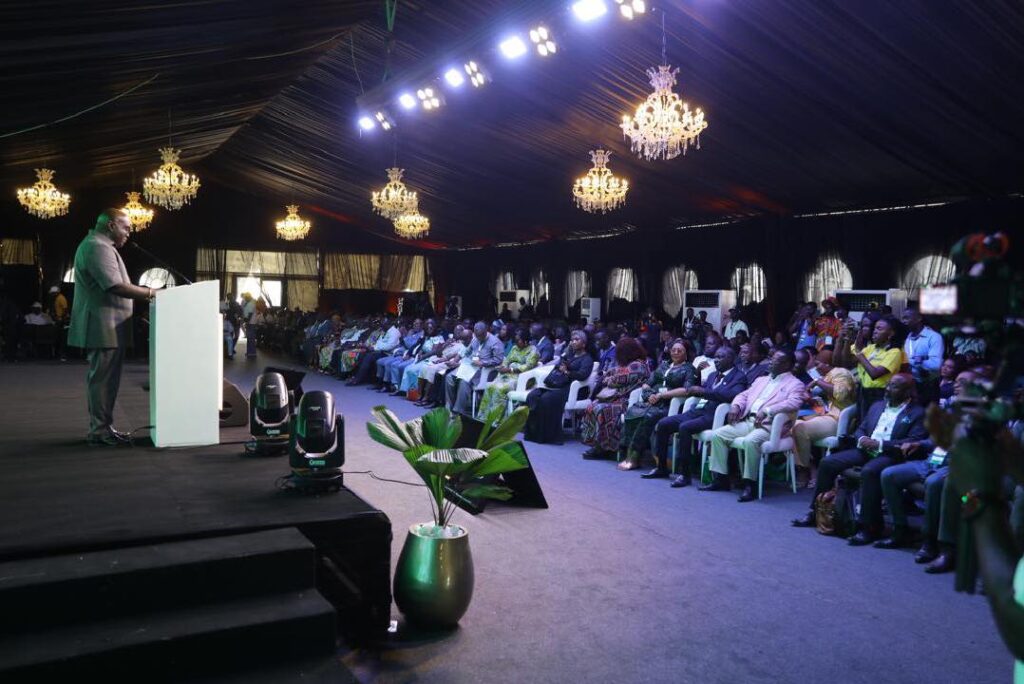
This partnership, he emphasized, requires government and enterprise to move past an adversarial relationship and work as “unified partners in a common mission to build a self-confident economy.”
Debrah noted that a distinctive element of the Kwahu Business Forum 2026 agenda is the formalization of mentorship, arguing that for the private sector to remain sustainable, business leaders must deliberately invest in the next generation, not as a social favor, but as a calculated economic strategy to reproduce excellence.
“Mentorship is how a country reproduces excellence, strengthening institutions, widening opportunities, and building a sustainable economy of shared prosperity.
Established business leaders must mentor young and upcoming business leaders– transferring not only capital, but wisdom, judgment, and discipline.”
By opening doors and sharing hard-earned lessons, seasoned entrepreneurs can help younger founders avoid preventable mistakes, thereby securing the future of the private sector. Conversely, younger leaders are expected to remain teachable and value the benefit of experience to build businesses that endure.
The Chief of Staff concluded with a call to action, urging the conversion of “conversations into collaborations and collaborations into outcomes.”

The Kwahu hills, traditionally a site of holiday festivities, are now the designated launchpad for an industrial renaissance, with the message from the 2026 forum being that the time has come to convert national potential into factories, exports, and tangible hope.
“Let this forum send a message to every corner of Ghana that we are ready to build, ready to produce, ready to lead, and ready to lift others as we rise. This is our time– to move from an economy known mainly for commerce into one respected for production, transformation, and competitive strength.”
Julius Debrah’s keynote marked a definitive turn toward linking manufacturing to job creation and mentorship to institutional strength for the 2026 fiscal year and beyond. He reiterated that the Kwahu compact must serve as a blueprint for a self-sustaining Ghana, where business leads with courage and government supports with clarity.
However, the success of this vision will be measured not by the dialogue in the hills, but by the industries established and the jobs created in the months to follow.