

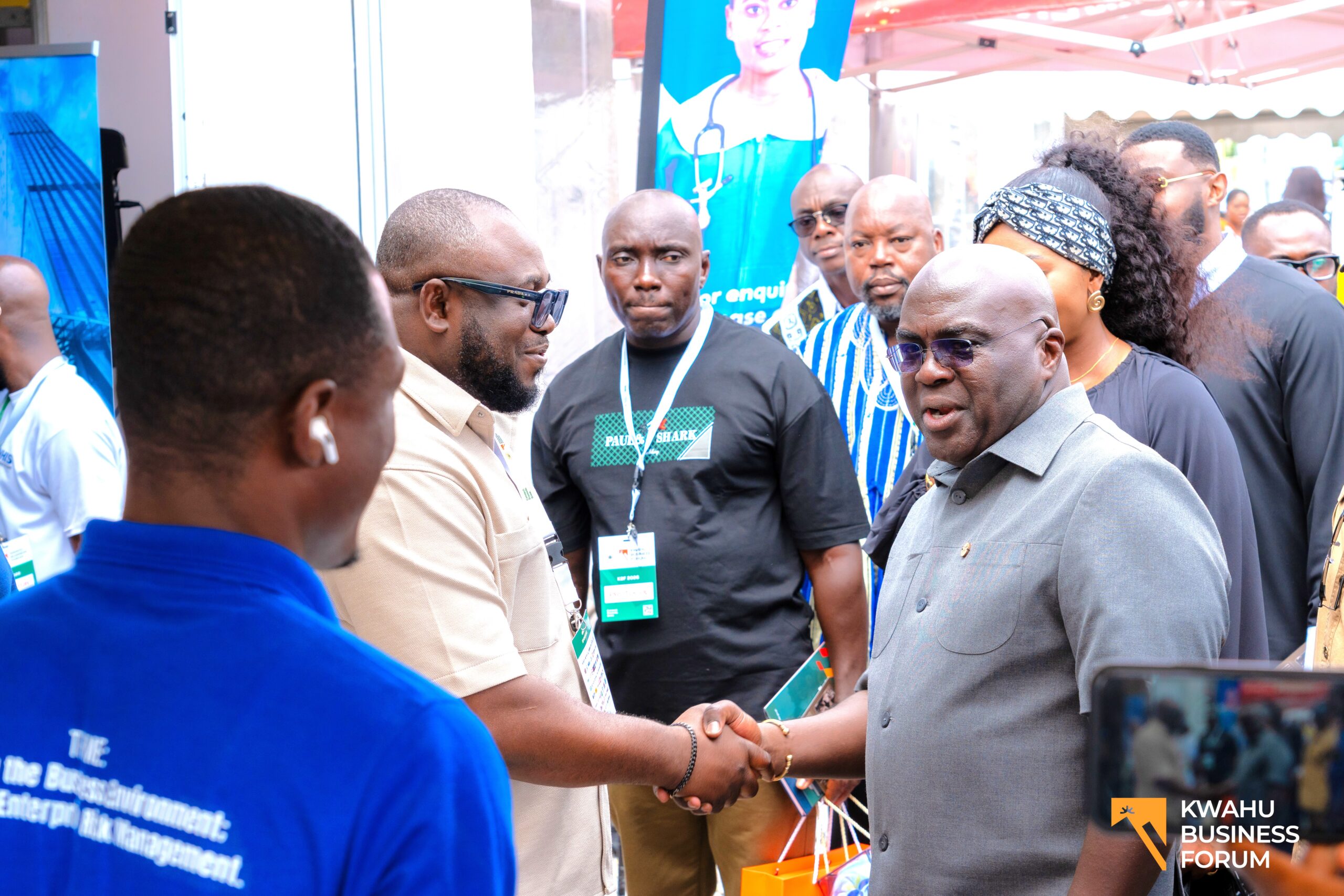
Business Captains Descend, Answers stay up the Hills
By Prince Ahenkorah
The annual Easter homecoming in Kwahu has become a stage for grand economic visions.
This year, the Ghana Export-Import Bank (GEXIM) announced it has approved funding for three local enterprises Perfect End Logistics, Nobi Farms, and Rockmar Pharmaceutical.
President John Dramani Mahama outlined a three-pivot strategy to transform Ghana’s economy. And the Chief of Staff, Julius Debrah, issued a blunt demand: young people need jobs, not motivational speeches.
But beneath the polished statements and applause lines, the same structural fractures that have long hobbled Ghana’s industrial ambitions remain unhealed. The funding approvals, while welcome, are still pending disbursement.
The strategy, while coherent, faces familiar obstacles: limited access to finance, weak linkages between producers and processors, and a staggering $1 billion annual bill for imported rice and poultry products Ghana could grow itself.
On paper, GEXIM delivered on pledges made at the 2025 forum. Three businesses successfully navigated the bank’s credit processes and secured both management and board approval.
That is not nothing. But “disbursement pending” is a phrase that haunts Ghanaian enterprise. Without follow-through, the announcement risks becoming another entry in the long ledger of unmet promises.
The bank’s 2025–2030 strategy, presented as a “blueprint for national transformation,” prioritises rice, poultry, garments, and apparel.
The targets are bold: over 100,000 direct jobs by 2030, significant gains in poultry self-sufficiency, and a sharp rise in non-traditional exports like shea, cashew, and mango.
Yet the strategy’s success hinges on solving the very fragmentation it identifies weak coordination between farmers, processors, and export markets. That is not a banking problem alone. It is a governance problem.
President Mahama told the gathering that Ghana suffers no shortage of vision only a deficit of execution.
His three strategic shifts produce what we consume, process what we produce, export value-added goods are sound economics. But they are also familiar. Previous administrations have made similar pledges. The difference, Mahama argued, is urgency.
He pointed to declining inflation, stabilising currency conditions, and reduced government borrowing as signs of progress.
He cited tax reforms and the proposed 24-hour economy initiative as incentives for investment. He even unveiled plans for a permanent convention centre and improved roads in Kwahu tangible infrastructure promises.
Yet for every indicator of progress, there is a countervailing reality. The $1 billion annual import bill for rice and poultry alone underscores how far Ghana remains from self-sufficiency.
And while GEXIM’s strategy aims to stimulate entire value chains from milling to cold-chain logistics the bank itself acknowledges that “limited access to finance” and “inadequate scale and systems” continue to strangle local businesses.
The sharpest words came from Julius Debrah, the Chief of Staff. “Our young people need employment opportunities, not just motivational speeches,” he said.
It was a rare moment of candour on a platform often given to platitudes. Debrah called on the private sector, development partners, and financial institutions to move beyond talk and actually absorb the growing youthful workforce.
His warning is backed by grim arithmetic. Ghana’s youth unemployment rate remains stubbornly high. And while sectors like agribusiness, manufacturing, and technology hold promise, the ecosystem of support capital, mentorship, infrastructure remains patchy at best.
Debrah’s challenge to investors to back youth-led businesses is a test of whether Kwahu’s rhetoric can translate into risk-taking.
The Kwahu Business Forum has evolved from a cultural homecoming into a serious economic policy platform. That evolution is real. But so are the gaps between announcement and action.
GEXIM’s pending disbursements, Mahama’s three shifts, and Debrah’s demand for jobs all point in the same direction: Ghana knows what it needs to do. The question is whether it will finally do it.
For the young Ghanaians listening in Kwahu and across the country, the verdict will not come from speeches or strategy documents. It will come from paychecks. And on that front, the evidence so far remains inconclusive – and the $1 billion question unanswered.