

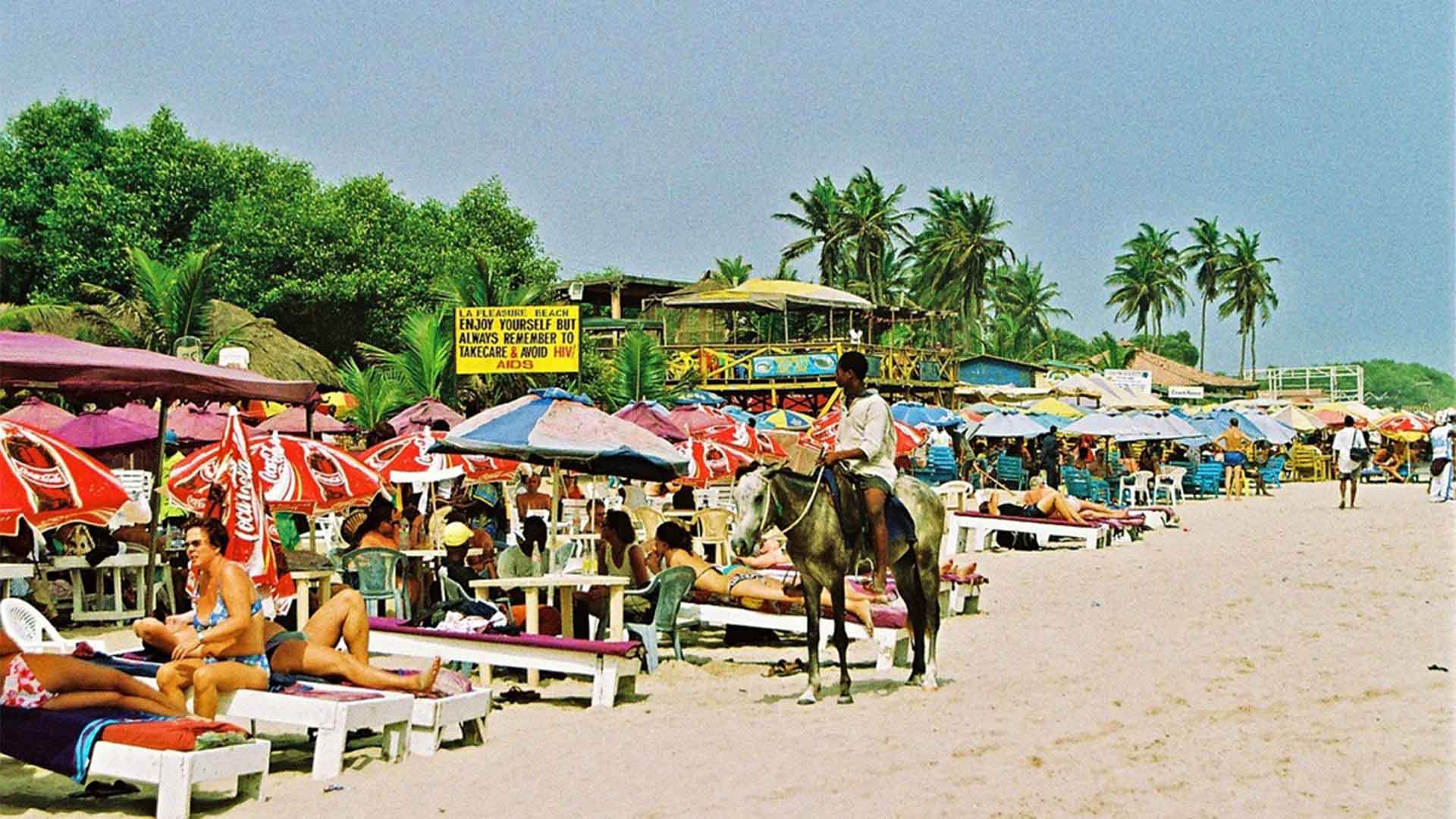
– Stanley Nunoo Accused of Hijacking Revenue Against Court Orders
A brazen, decade-long campaign of alleged forgery and institutional manipulation has allowed one man to retain exclusive control of La Pleasure Beach, sidelining its legal owners and diverting tens of millions of cedis from community development funds, an investigation by The New Republic reveals.
The case of Stanley Nunoo who transformed from a youth representative into the solitary gatekeeper of the lucrative beachfront has become a litmus test for judicial authority and police enforcement in Ghana.
Despite a landmark Court of Appeal ruling in July 2022 ordering a complete managerial overhaul, Nunoo remains in charge, using tactics that his accusers describe as a blueprint for impunity.
“We have watched millions of cedis pass through that beach whilst our development fund remains empty,” Nabi Adja Gasa, a director of the La Youth Association, told The New Republic. “Instead, we have one man treating our community’s resources as his personal property.”
The beach’s troubles are rooted in a 2002 Memorandum of Understanding between the La Traditional Council the allodial landowners and the state-owned Ghana Tourism Development Company (GTDC).
Following youth protests in 2012-13 demanding transparency, the courts established an Interim Management Committee (IMC) with one seat each for the Council, GTDC, and the youth. Revenues were to be split: 20% to the Council and 30% to a Youth Development Fund for scholarships and skills training.
This arrangement collapsed in October 2014, when Nunoo, the youth representative, assumed sole operational and financial control.
For nearly eight years, neither the traditional council nor the youth fund received a cedi, despite the beach generating substantial monthly income. During this period, 25 individuals who demanded accountability were jailed for contempt of court, a move that effectively silenced dissent.
The Court of Appeal’s ruling on 21 July 2022 was meant to be decisive. It dissolved the defunct IMC and ordered a new nine-member committee with three representatives each from the Council, the youth fund, and GTDC and an annually rotating chairmanship. Nunoo was given six months to hand over operations.
The handover never happened. Instead, a police complaint filed at Cantonments Police Station (CR/117/24) alleges that Nunoo forged the signatures of two La Youth Association directors on registration documents, fraudulently appointing himself as a director to qualify for the new committee.
The complaint notes mismatched taxpayer ID numbers and misspelt names, and has requested forensic analysis.
In an even more audacious move, Nunoo subsequently registered the beach facility as his personal property, attempting to convert a community asset held in trust into a private holding.
Between December 2023 and mid-2024, a semblance of order emerged when Abraham Lomotey, the Traditional Council’s representative, assumed the chairmanship.
Financial records from this period show a transparent system functioning as the court intended: monthly revenues for 2024 exceeded five million cedis, with clear allocations for royalty, the development fund, and operations.
This system was abruptly dismantled. Lomotey was ousted, the beach’s official mobile money number was replaced with a personal line, and control was recentralised. Recent records show that from August to November 2024, payments to the Youth Development Fund were slashed and relabelled as “paying bank loan” rather than the mandated 30%.
Under the court-ordered rotation, the GTDC should currently be chairing the committee. Multiple sources confirm that Nunoo remains in full operational control, highlighting a critical failure of enforcement.
A February 2023 High Court ruling explicitly authorised police assistance to enforce the Appeal Court’s orders, citing a “likelihood of a breach of the peace.” A March 2023 letter from the La Stool Secretary to municipal security authorities pleaded for intervention to prevent violence.
These legal instruments have gathered dust. The impasse points to a disturbing gap between judicial pronouncements and executive action on the ground. “This is a textbook case of impunity,” a governance expert said anonymously. “It demonstrates that with determined local leverage and perceived political cover, you can outlast the judiciary.”
The human cost is acute. The Youth Development Fund, meant to be a ladder for La’s next generation, is dormant. The Traditional Council’s authority and revenue stream have been systematically undermined for years.
Stakeholders are now making direct appeals to the Inspector General of Police for enforcement and to the Lands Commission to investigate the beach’s contested registration.
The battle for La Pleasure Beach is no longer a local dispute; it is a stark measure of the state’s willingness to reclaim a public asset from a defiant private grip.