

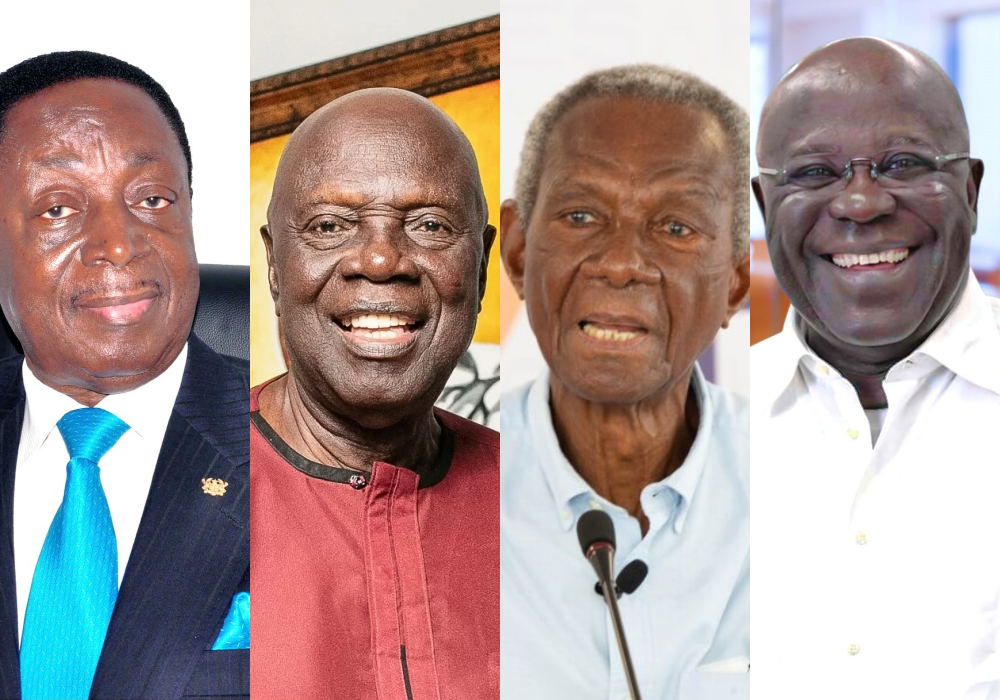
Pianim, Jonah, Dufuor, Yamson, Afede Features in Economic Rescue Squad
By Prince Ahenkorah
President John Dramani Mahama has turned to a clutch of seasoned technocrats, retired central bankers, and corporate heavyweights to navigate Ghana’s turbulent economic waters.
The 12-member Presidential Advisory Group on the Economy, unveiled on Wednesday, reads like a who’s who of the country’s finance and policy establishment. Its mandate: diagnose the structural weaknesses, prescribe remedies, and perhaps most critically lend credibility to a government searching for a coherent recovery narrative.
Vice President Prof. Jane Naana Opoku-Agyemang sits on the committee, her presence signalling that this is no ornamental talking shop.
But the real weight lies elsewhere. Kwame Pianim, the doyen of private sector advocacy and a man who has advised governments of every stripe, is in. So is Sir Samuel Esson Jonah, whose corporate tentacles stretch across continents.
Ishmael Yamson returns to an advisory role he occupied under previous administrations. Nana Oye Mansa Yeboaa brings dual finance and trade ministry experience.
Then there are the central bank veterans. Dr. Kwabena Duffuor, who has held both the Finance Ministry and Bank of Ghana governorship, is on board. So is his successor at the central bank, Dr. Henry A. Kofi Wampah. Their presence suggests monetary policy orthodoxy will have a loud voice.
Togbe Afede XIV represents both traditional authority and serious private capital. Abena Amoah brings stock exchange perspective. Prof. Priscilla Twumasi Baffour and Prof. Patience Aseweh Abor anchor the academic flank. Ato Brown, a former World Bank infrastructure specialist now in agribusiness, adds an investment lens.
Mahama’s inaugural address was carefully calibrated optimistic in vision but blunt about the grind ahead. “I do not want this committee to misunderstand my optimism… as an endorsement of an easy task,” he said. “You are qualified to know that we face a tough road ahead.”
The message was unmistakable: this is not a ribbon-cutting committee. The president wants fiscal, monetary and industrial policies yanked into alignment, and he wants the private sector to believe the alignment is real.
What remains unsaid is equally significant. The group includes no fire-breathing populists, no anti-austerity crusaders. The composition is overwhelmingly orthodox, market-friendly, institution-centric.
That may reassure investors. It may also signal that the space for radical economic experimentation under this administration is narrower than some in the NDC’s left flank would prefer.
The committee is expected to feed directly into ministries and agencies. Whether its prescriptions translate into policy or join the long queue of unapplied expert reports will determine if this is genuine economic retooling or merely stagecraft.