

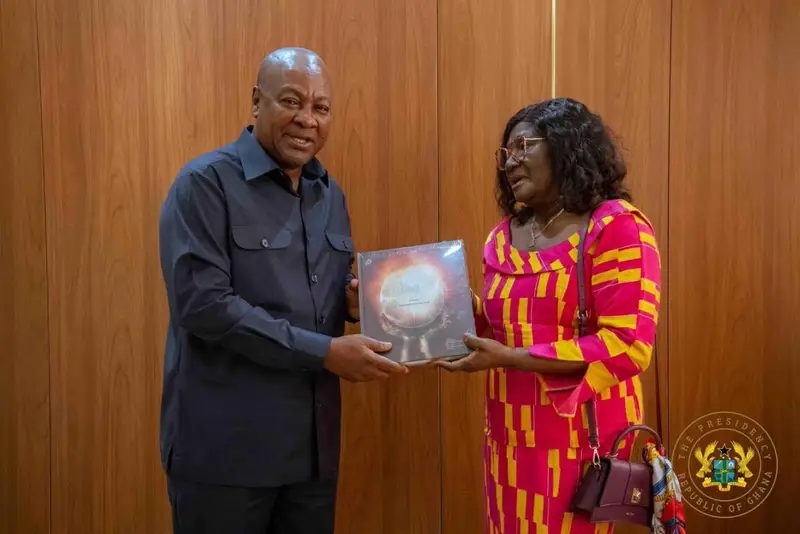
President John Dramani Mahama has reaffirmed Ghana’s commitment to transparency, accountability, and good governance, declaring the country ready to undergo a comprehensive peer review under the African Peer Review Mechanism.
He described the APRM as an essential continental framework for measuring governance performance, strengthening democratic institutions, and guiding reforms that respond to the expectations of citizens.
The President made these remarks after swearing in members of the National African Peer Review Mechanism Governing Council, a body mandated to oversee Ghana’s participation in the APRM process and coordinate engagements with continental institutions.
The ceremony marked a significant step in Ghana’s preparations for its second generation governance review, which is scheduled to take place next week on the margins of the African Union Summit in Addis Ababa, Ethiopia.
APRM as a Meaningful Instrument for National Self-Assessment
President Mahama underscored that Ghana views the APRM not as a procedural obligation but as a meaningful instrument for national self-assessment and reform.
According to him, peer review offers an opportunity for countries to take a candid look at their governance systems, identify strengths and weaknesses, and align national policies with shared African values of democracy, rule of law and inclusive development.
He stressed that Ghana is approaching the upcoming review with openness and confidence. “We are ready to participate fully and to lead this process,” the President stated, adding that Ghana’s engagement with the APRM reflects a broader national commitment to good governance and institutional accountability.
He noted that the review process provides an important platform for benchmarking progress in political governance, economic management, corporate governance and socio economic development.
President Mahama further explained that Ghana’s participation in the second generation review is especially significant at a time when citizens across the continent are demanding higher standards of leadership, transparency and public sector performance.
He said the APRM creates space for dialogue among governments, civil society and development partners, helping to ensure that governance reforms are grounded in evidence and public participation.
The President expressed confidence in the newly inaugurated Governing Council, describing its composition as a reflection of experience, integrity and independence.
He said the Council would play a central role in coordinating Ghana’s review process, ensuring credible data collection, stakeholder consultations and constructive engagement with the APRM Secretariat and peer institutions across Africa.
The APRM Governing Council is chaired by Ladyship Professor Akua Kuenyehia, a distinguished legal scholar and former international jurist. In brief remarks after her swearing in, Professor Kuenyehia expressed appreciation to the President for the confidence reposed in the Council.
She reaffirmed the council’s commitment to transparency and institutional independence and assured that the Council would discharge its mandate diligently and in line with the principles of the APRM.
Professor Kuenyehia noted that the credibility of the peer review process depends on honesty, objectivity, and respect for democratic norms. She pledged that the Council would work to uphold these values, adding that Ghana’s engagement with the APRM should strengthen public trust in governance institutions and contribute to sustainable national development.
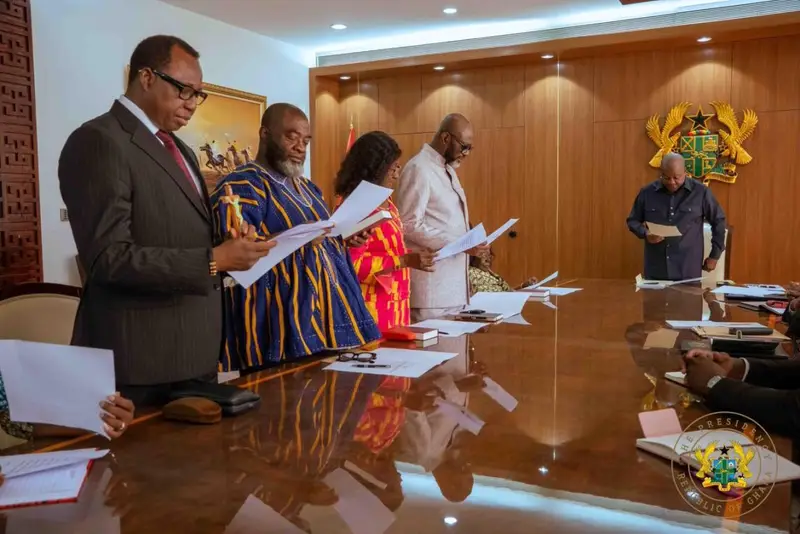
Other members of the Governing Council include Dr Joseph Whittal, Chairman of the Commission on Human Rights and Administrative Justice, Mr Joseph Obeng, Mr David Ofosu Dorte and Mrs Cornelia Amoah. Together, the Council brings together expertise in law, human rights, governance, private sector development and public administration.
Safeguarding the Independence of Governance Institutions
President Mahama highlighted the importance of safeguarding the independence of governance institutions as Ghana prepares for the review. He said bodies such as CHRAJ and other accountability institutions play a vital role in promoting ethical conduct, protecting rights and ensuring checks and balances within the democratic system.
According to him, strengthening these institutions remains central to the government’s governance agenda. The APRM is a voluntary self monitoring mechanism adopted by African Union member states to promote good governance and socio economic development.
Ghana was among the first countries to accede to the mechanism and has previously undergone a peer review. The second generation review is designed to deepen the process, incorporate emerging governance challenges and assess progress made since earlier assessments.
President Mahama indicated that Ghana intends to use the outcomes of the review to guide future policy choices and institutional reforms. He said the government is committed to translating recommendations from the peer review into practical actions that improve public service delivery, enhance accountability and foster inclusive growth.
As Ghana prepares to engage its peers at the African Union Summit, the President reiterated that transparency and openness would guide the process. He stressed that meaningful governance reform requires continuous self reflection and a willingness to learn from both successes and shortcomings.
The swearing in of the National African Peer Review Mechanism Governing Council therefore signals Ghana’s readiness to re engage the APRM process with renewed focus.
With the Council in place and preparations underway, the upcoming review is expected to provide a comprehensive assessment of Ghana’s governance landscape and contribute to shaping reforms that align with national aspirations and continental standards.