

The Ghana Centre for Democratic Development has credited President John Dramani Mahama with easing financial strain in Ghana’s health sector through the uncapping of the National Health Insurance Levy, describing the move as a critical stabilisation measure after a period of severe funding stress.
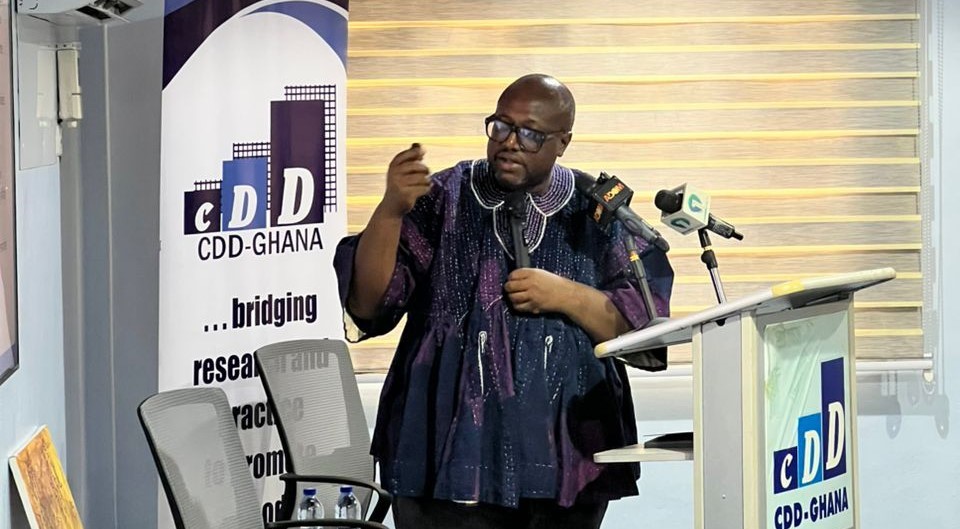
This assessment formed part of CDD-Ghana’s one-year review of the Mahama administration, presented by Dr. Kojo Pumpuni Asante, Director of Policy Engagement and Partnerships at the CDD.
According to Dr Kojo Pumpuni Asante, health sector reforms over the past year have largely focused on restoring financial stability following constraints inherited from the previous fiscal period.
He explained that the cap on the National Health Insurance Levy had significantly limited resources available to the health system, particularly at the primary care level. By removing the cap, the government has sought to expand fiscal space and ensure that essential health services are adequately financed.
Dr. Asante noted that the uncapping of the levy is especially important for primary health care delivery, arguing that primary care forms the backbone of the health system and is often the first point of contact for most citizens.
Without reliable funding, basic services such as outpatient care, preventive services, and early diagnosis become vulnerable. In his assessment, restoring predictable financing through the levy represents a foundational step toward rebuilding confidence in the health system.
A Broader Pattern of Stabilisation
The CDD-Ghana review placed the health sector reforms within a broader pattern of stabilisation across key social sectors. Dr. Asante explained that much of the government’s effort in 2025 was directed at addressing financial strain that had accumulated over time.
Rather than introducing sweeping new programmes immediately, the administration prioritised restoring flow of funds to education and health, which had experienced chronic underfunding pressures. He cautioned, however, that stabilising financing is only the first phase of reform.
With the uncapping of the levy now in place, expectations will shift toward how effectively resources are translated into expanded access and improved quality of care. In particular, Dr. Asante highlighted the importance of monitoring how free primary health care is rolled out under the new financing arrangements.
Another key issue raised during the assessment was the relationship between the National Health Insurance Scheme and emerging health financing initiatives under the Mahama administration.
Dr. Asante pointed to Mahama Care and the Ghana Medical Trust as examples of programmes whose integration with existing structures will determine their effectiveness.
According to him, the challenge is not merely mobilising funds but ensuring that different financing mechanisms complement rather than duplicate or undermine each other.
He explained that non communicable diseases represent one of the most pressing health challenges facing Ghana. Conditions such as diabetes, hypertension, cancer, and cardiovascular disease require long term and often costly treatment.
Dr. Asante stressed that if public funds are to be used to address these conditions, clarity is needed on how new initiatives will interface with the National Health Insurance Scheme in terms of eligibility, benefit packages, and reimbursement systems.
Poor Coordination Risks Missed Opportunities
In his view, poor coordination between funding mechanisms could lead to inefficiencies and missed opportunities. He warned that without deliberate integration, parallel systems may emerge that strain limited resources and create confusion for providers and patients alike.
For this reason, he argued that aligning Mahama Care and the Ghana Medical Trust with the National Health Insurance Scheme should be treated as a policy priority.
The CDD-Ghana assessment also underscored the growing financial burden posed by non communicable diseases. Dr. Asante described them as expensive to manage and increasingly prevalent, noting that they now account for a significant share of health expenditure.
Addressing this challenge, he said, requires not only adequate funding but also strategic purchasing, preventive interventions, and long term planning. While acknowledging progress, the review maintained a cautious tone.
Dr. Asante suggested that the success of health sector reforms will depend on how well financial stabilisation is followed by operational clarity. Questions remain about benefit coverage, provider payment systems, and the sustainability of funding in the face of competing fiscal demands.
The uncapping of the levy, he said, creates opportunity but does not guarantee outcomes. The presentation also highlighted the importance of transparency and accountability in managing newly available resources.
Strong Oversight Necessary for Service Delivery
With increased funding flowing into the system, CDD-Ghana stressed the need for strong oversight to ensure that funds reach frontline services and are not lost to inefficiency or mismanagement. According to Dr. Asante, public trust in health financing reforms will depend on visible improvements in service delivery.
Overall, the one-year assessment portrayed the Mahama administration’s approach to health as one of consolidation rather than rapid expansion. By prioritising the removal of financing constraints, the government has attempted to stabilise a sector that is central to social welfare and economic productivity.
CDD-Ghana framed this approach as pragmatic, given the fiscal pressures facing the state. As the administration enters its second year, the think tank indicated that attention will increasingly focus on results.
The uncapping of the National Health Insurance Levy has set the stage for reform, but expectations are now higher regarding access to care, quality of services, and protection against catastrophic health costs. For CDD-Ghana, the true test will be whether restored financing translates into tangible health gains for citizens.
The assessment concluded that Ghana’s health sector stands at an important juncture. With financial stress eased, policy coherence and effective implementation will determine whether the system can respond to emerging health challenges.
The decisions made in aligning funding mechanisms and prioritising primary care, Dr. Asante suggested, will shape health outcomes long after the immediate stabilisation phase has passed.