

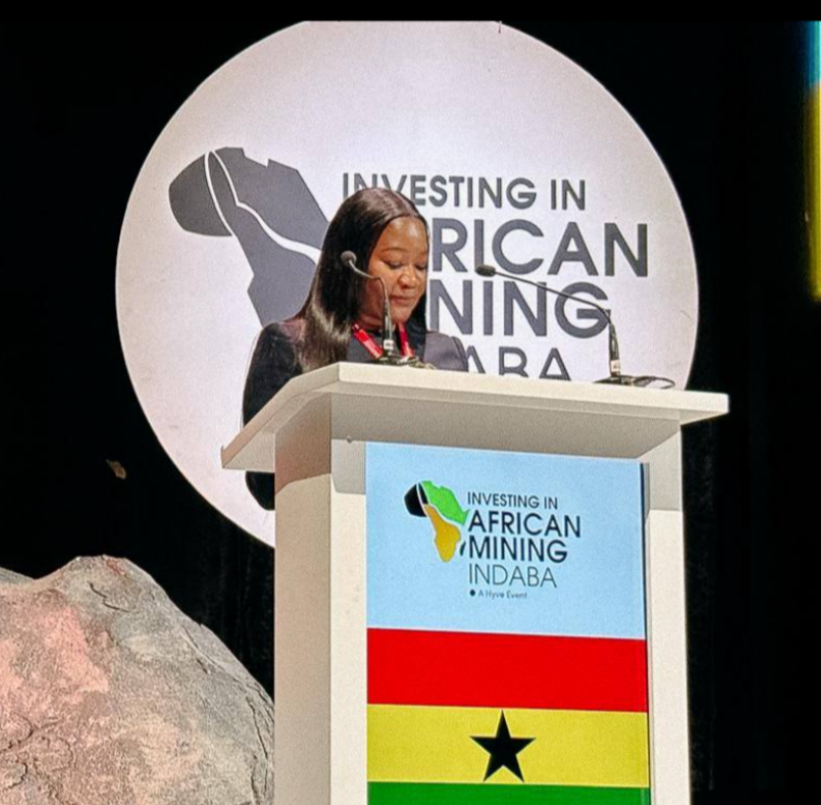
The Minerals Income Investment Fund (MIIF) has signaled a transformative shift in its operational trajectory, moving beyond its traditional role as a domestic royalty collector to become a formidable sovereign investor within the sub-regional mining landscape.
This strategic expansion aims to leverage Ghana’s mineral wealth to pursue high-impact co-investment initiatives and regional partnerships.
By recalibrating its focus toward the monetization of royalty flows and the competitive deployment of capital across diversified assets, MIIF is positioning itself to maximize long-term value for the Republic of Ghana while asserting its presence as a world-class institutional investor.
“Our goal is to ensure that institutions like MIIF bring long-term capital, governance discipline, and credibility that help improve project bankability and investor confidence,” said MIIF boss, Justina Nelson.
Building on this vision, the Fund’s recalibration is designed to capitalize on the significant mineral royalty inflows recorded in 2025, providing a robust capital base for diversification into equities, fixed income, and alternative investments.
The fund’s leadership emphasized that the move is not merely about accumulating funds but about deploying them prudently to benefit both current and future generations.
This evolved mandate includes a specific focus on value addition and downstream industrialization, ensuring that Ghana transitions from a primary producer to a sophisticated player in the global mineral value chain.
The strategy for 2026 also prioritizes collaboration with other sovereign wealth and mining-focused growth funds to de-risk projects and attract stable, ethical capital to the West African sub-region.
“There is no shortage of capital globally. What Africa needs are de-risked, feasibility-ready projects that investors can confidently support,” Justina Nelson noted in a recent strategic update.
Driving Sector Transformation and Economic Resilience
The expansion of MIIF’s mandate serves as a critical lever for the structural transformation of Ghana’s extractive sector.
By moving into the “co-investment anchor” space, the Fund is effectively bridging the gap between raw extraction and industrialization.
Research indicates that this shift allows Minerals Income Investment Fund (MIIF) to support the development of “priority minerals” such as lithium, salt, and graphite which are essential for the global green energy transition.
This proactive investment strategy not only diversifies the national revenue base but also insulates the economy from the volatility of gold prices.
Furthermore, the Fund’s commitment to “regulatory transparency and long-term value creation” acts as a beacon for international partners seeking stable, reform-driven environments.
Strengthening the Regulatory and Institutional Framework
A core component of this strategic pivot is the reinforcement of Ghana’s standing as a predictable and conducive investment destination.
Minister for Lands and Natural Resources, Emmanuel Armah-Kofi Buah, has reaffirmed that the government is committed to a “win-win partnership” where ethical and innovative partners are prioritized.
This institutional strengthening is complemented by MIIF’s focus on “sustainability and responsible resource development,” ensuring that mineral wealth translates into tangible infrastructure and community growth.
By harmonizing standards and pooling infrastructure through regional partnerships, MIIF is setting a new benchmark for how African sovereign funds can catalyze industrialization.
Positioning Ghana as a Regional Mining Hub
Ultimately, MIIF’s evolution into a world-class sovereign investor signals that Ghana is no longer content with being a passive recipient of royalties.
The Fund is now an active participant in the “sovereign wealth landscape,” ready to partner across the sub-region to unlock the next wave of mining projects.
Through focused discussions on policy reforms and investment incentives, the Fund is successfully showcasing Ghana’s readiness to lead the continent in responsible and innovative mineral resource management.