

By Nelson Ayivor
Following the government’s landmark declaration of every Wednesday as National Fugu Day, the state has moved swiftly to transition this cultural milestone into a robust industrial engine.
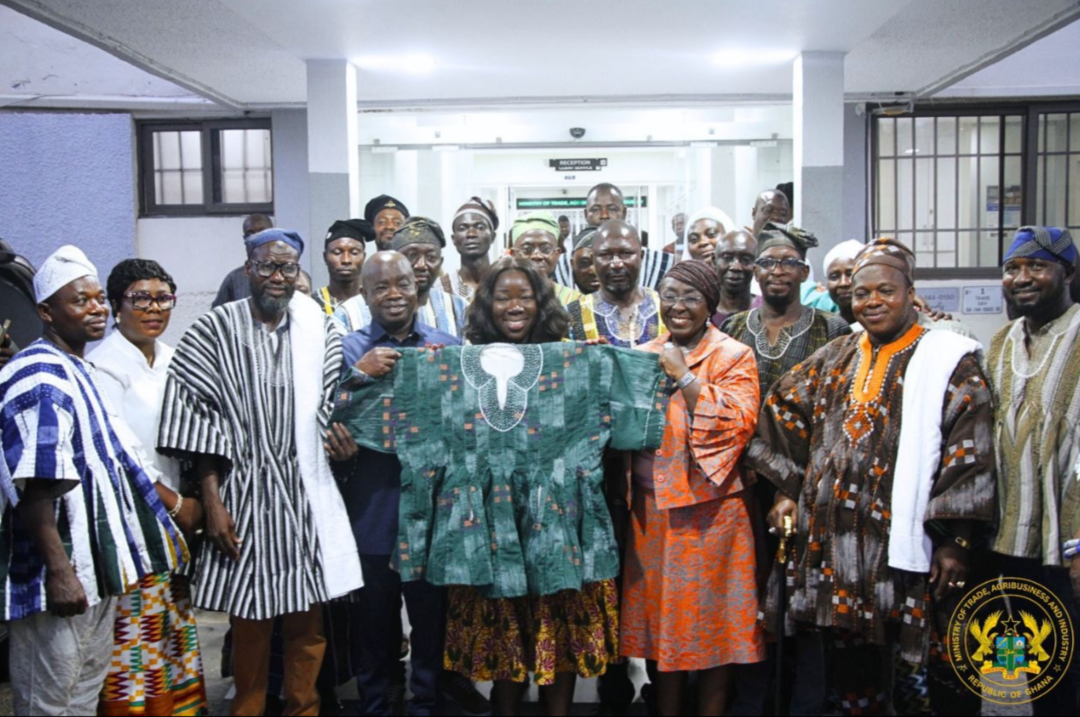
The Minister for Trade, Agribusiness and Industry, Elizabeth Ofosu-Adjare, and the Minister for Tourism, Culture and Creative Arts, Abla Dzifa Gomashie, recently convened an emergency session with smock producers and dealers.

“The objective was to ensure that the surge in domestic demand triggered by the February 10 declaration is backed by a resilient supply chain that can move the Fugu from a ceremonial garment to a global export staple.”
The recent directive, signed by the Tourism Minister just days prior, was a direct response to the national pride stirred by President John Dramani Mahama’s appearance in the attire during his state visit to Zambia.
With the “Fugu Day,” policy now in full effect, the focus has shifted toward solving the technical bottlenecks – primarily raw material scarcity – that could prevent local weavers from meeting the massive spike in orders.
During the engagement, the various smock associations were candid about the “growth pains” of the new policy. While the public has embraced the Wednesday mandate, the weavers themselves are facing a critical shortage of high-quality cotton and thread.
“The producers made it clear that ‘Fugu Day’ cannot survive on cultural pride alone; it requires a centralized ‘common market and a reliable flow of raw materials to keep the looms spinning across the northern regions and the capital.
“They drew attention to major constraints hindering their work and ability to make smock products more readily available to the public, including limited funding”
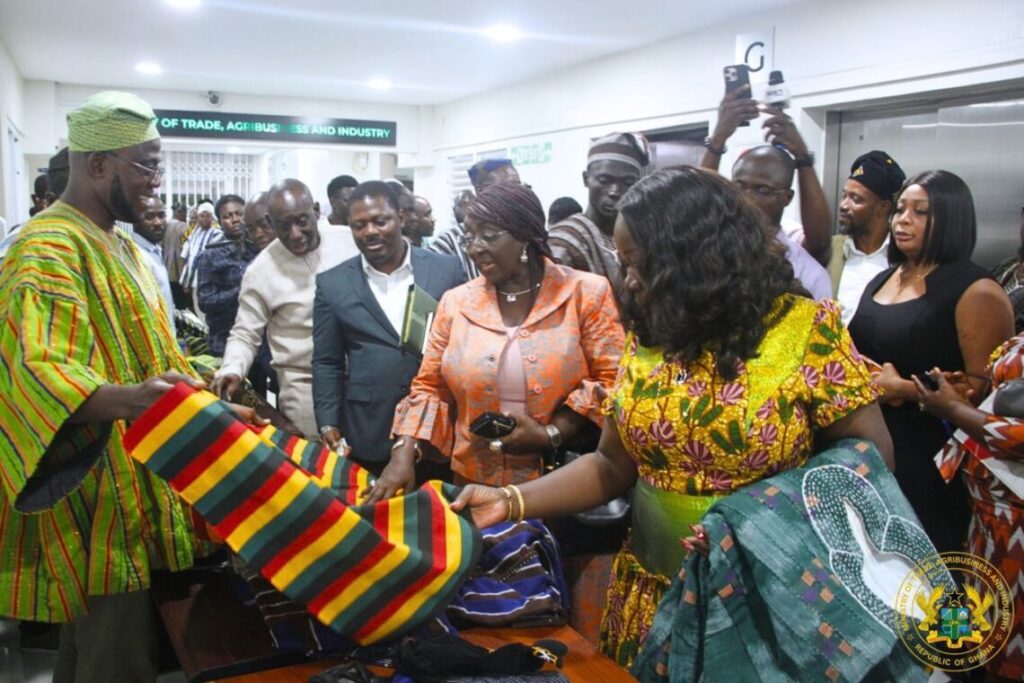
Minister Ofosu-Adjare assured the industry that the Great Industrial Reset includes dedicated interventions for the textile sector.
She revealed that the Ministry of Trade, Agribusiness and Industry (MoTAI), is currently evaluating a specialized credit facility to help weavers stockpile materials, ensuring the industry can scale from artisanal batches to mass industrial production without losing the “hand-woven” quality that defines the Fugu’s identity.
Integrating Fugu
A revolutionary proposal that emerged from this strategy session was the push to move Fugu beyond the “Wednesday Wear” mandate and into the very fabric of the Ghanaian educational system.
Producers advocated for the attire to be formally recognized and promoted within schools and tertiary institutions, arguing that this move would not only solidify the domestic market for decades but also insulate the industry against the fashion whims of the global market by sustaining demand.
Minister Gomashie emphasized that the Fugu is a “sovereign asset,” that transcends fashion. By embedding the attire into the creative economy, the government intends to use it as a primary driver for tourism and job creation, particularly for the youth who are being encouraged to modernize Fugu designs for a global audience.
She urged the smock producers to continue increasing production, noting that the sector holds significant potential for job creation, cultural promotion and tourism development.”
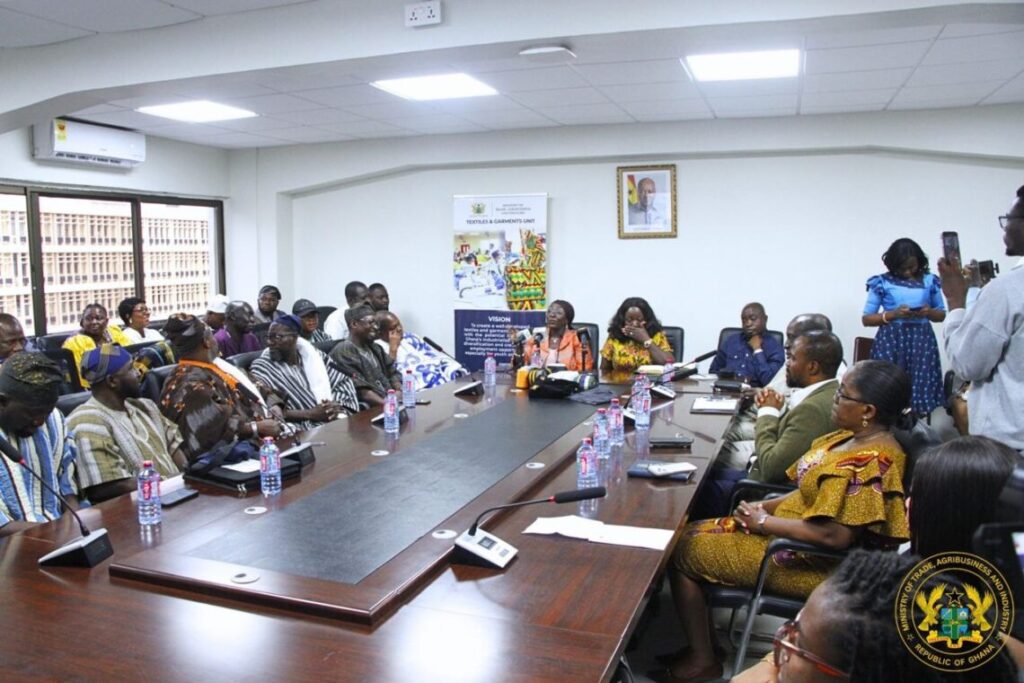
The engagement underscored that “Fugu Day,” is the starting point, not the finish line. The government is riding the wave of international interest sparked by President Mahama’s recent travels, viewing the Fugu as a high-value export that can compete with the likes of West African lace or high-end Kente.
The ministers urged producers to leverage this “Pan-African momentum” to improve their finishing and packaging, preparing the sector for the African Continental Free Trade Area (AfCFTA).
As the first official “Fugu Wednesdays” begin to roll out across public and private institutions, the Ministry of Trade is already drafting the blueprint for a dedicated Fugu Industrial Park – signalling to the world that Ghana’s heritage is no longer just for show – it is officially open for business.