

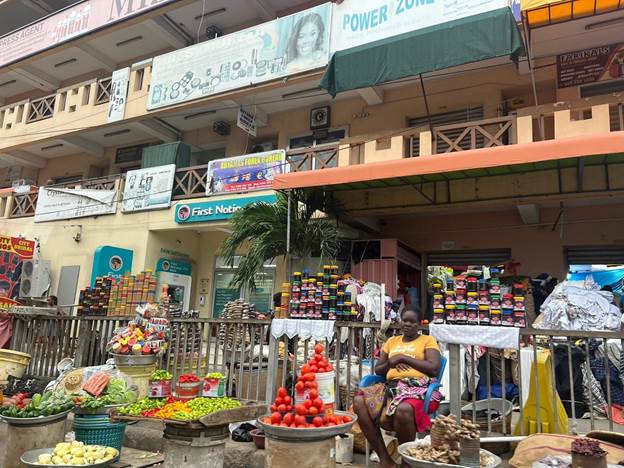
By Our Front Desk
Ghana’s economic landscape has brightened significantly as the country heads toward the Christmas season, offering a rare window of relief for households and shoppers. According to the Ghana Statistical Service (GSS), headline consumer inflation fell to 8.0% year-on-year in October 2025, down from 9.4% in September, marking the tenth consecutive month of decline and the lowest level since mid‑2021.
The drop in prices has been broad‑based. The October data reveal that food inflation slowed to 9.5%, while non‑food inflation eased to 6.8%. Month-on-month, overall consumer prices actually declined by 0.4%, a strong sign that price pressures are not simply slowing but receding.
In response to the improved inflation outlook and stronger macroeconomic conditions, the Bank of Ghana (BoG) recently trimmed its benchmark interest rate by 350 basis points to 18.0%, the third major rate cut of the year. The BoG said the decision reflects confidence that inflation will remain stable and that growth and liquidity conditions are sufficiently supportive of a looser monetary stance.
Finance‑sector analysts view these developments as the culmination of a successful disinflation effort, supported by tight monetary policy, fiscal consolidation, and improved food supply conditions across regions.
What This Means for Consumers:
For families and individuals planning Christmas/New year shopping this year, the economic indicators point to a strategic opportunity to stretch budgets and secure value. The easing of both food and non-food inflation, along with the drop in borrowing costs, makes many goods more affordable than they have been in recent years.
Food staples such as cereals, cooking oil, fish, vegetables, and other household essentials have seen the sharpest declines in price growth. This reflects better agricultural yields, reduced transportation and logistics costs, and stable fuel prices. Non-food costs, including utilities, clothing, and services, have also moderated, signalling a more benign environment for spending on everyday needs.
At the same time, with borrowing costs now lower, consumers looking to purchase household goods, appliances, or other high‑ticket items may find it more feasible, especially if they rely on credit or installment plans. The central bank’s eased policy rate may eventually translate into lower lending rates across banks, making credit more accessible.
This combination of stable prices, lower inflation, and easier access to credit could improve real purchasing power at a time when many households plan to spend more.
How Households Can Make Smart Choices This Season:
Given the shifting conditions, households can optimize spending by adopting a few strategic behaviours. First, shopping around, comparing prices at different markets, shops or neighbourhoods, can help consumers take advantage of variability in pricing, especially for staples that have experienced sharp price drops.
Second, prioritizing essential goods, particularly food staples and daily‑use items, could yield the greatest benefit, as these are the categories where price relief is most evident.
Third, leveraging the lower interest‑rate environment to spread out larger purchases or invest in durable goods may make financial sense. With borrowing costs falling, paying in instalments may increasingly become affordable.
Finally, remaining alert to macroeconomic updates from the BoG and GSS will help consumers anticipate further price shifts: timely information could enable better planning, whether to purchase now or wait for potential additional price declines.
A Moment of Relief, But Vigilance Remains Important:
The recent drop in inflation and interest‑rate cuts represent a meaningful victory for economic stability in Ghana. Yet, risks remain. Global commodity‑price swings, foreign exchange volatility, or disruptions in supply chains could still affect the prices of imported or semi‑processed goods.
Still, the current confluence of favourable macroeconomic conditions, stable inflation, reduced cost pressures, and easier access to credit provides households with a unique short‑term opportunity to improve their purchasing power, especially in view of the heightened demand associated with the festive season.