

By Nelson Ayivor
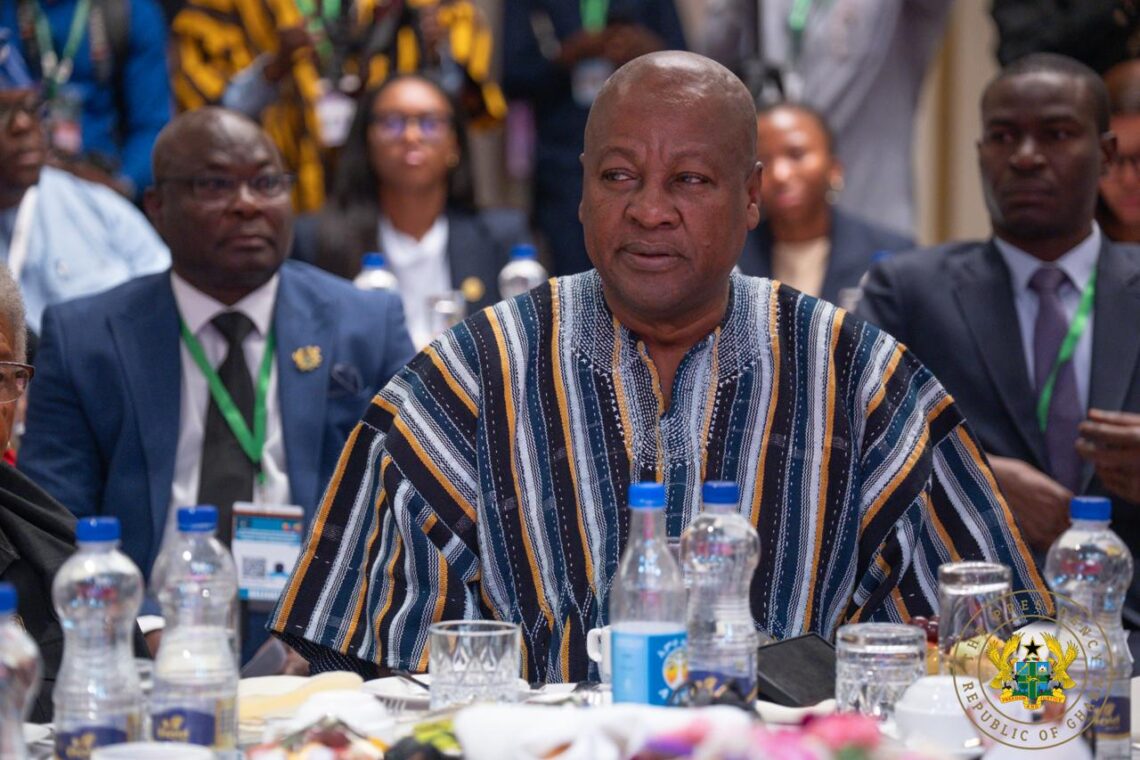
Speaking at the Accra Reset – Addis Reckoning forum on the sidelines of the AU Summit, President John Dramani Mahama has announced a historic departure from Ghana’s thirty-year dependence on international syndicated loans for cocoa purchases.
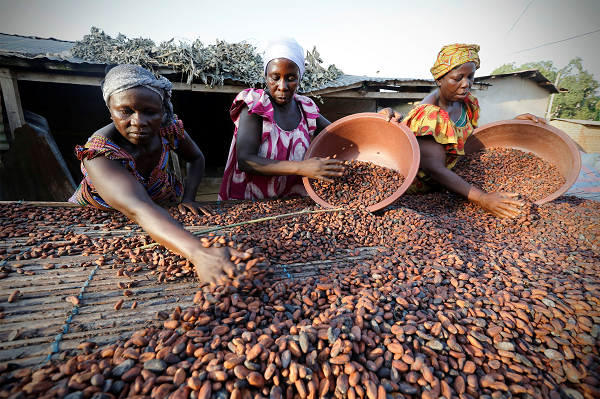
Citing a structural crisis that has long crippled the nation’s industrial potential, the President revealed that Ghana will now pivot to domestic bonds to fund its cocoa harvests. This move is designed to reclaim sovereignty over the nation’s “brown gold,” allowing the state to bypass restrictive collateral agreements that force the shipment of raw beans abroad while local processing plants sit under capacity.
“To buy cocoa from our own farmers, we rely on funding from outside, and you know what the collateral for the funding is, our own cocoa beans. So you have to collateralise the beans to the financier, buy the beans, and just ship them, and they pay you the international market price.
“One of the key decisions we’ve taken is that we’re going to stop foreign funding for the purchase of our cocoa. We are going to raise domestic bonds. We have enough Cedis in Ghana to pay for our cocoa.”
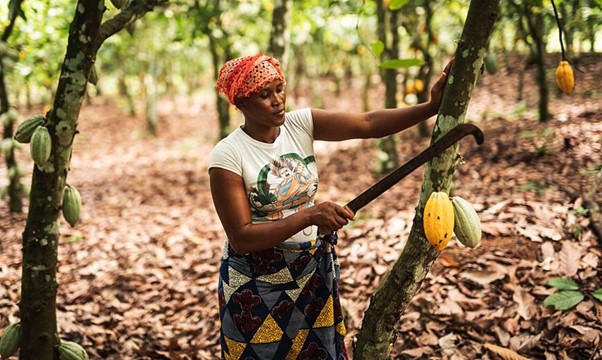
For decades, Ghana has relied on a revolving door of foreign credit to pay its farmers. However, the President detailed how this system recently backfired during a period of market volatility where international prices plummeted from $7,200 to $4,200 per tonne.
Because these foreign loans are collateralized against the actual cocoa beans, the Ghana Cocoa Board (COCOBOD) is legally bound to export the raw product to satisfy international financiers, even when domestic economic logic dictates otherwise.
This “financing trap” has created a scenario where the state loses money during price fluctuations and currency shifts, as the gap between the fixed producer price and the dwindling international market value cannot be bridged without external permission.
Unlocking Local Processing Capacity
The most significant casualty of the foreign funding model has been Ghana’s industrialization agenda.
President Mahama revealed that while Ghana possesses the infrastructure to process 400,000 tonnes of cocoa beans locally, these facilities have been starved of raw materials because the beans are “pre-sold” to foreign lenders before they even leave the farm.
By switching to domestic financing, the government intends to decouple the beans from foreign debt, finally feeding the nation’s factories. “Now, if we buy the beans ourselves, we can take 400,000 tonnes out of the beans and give to our local processors to add value,” President Mahama added.
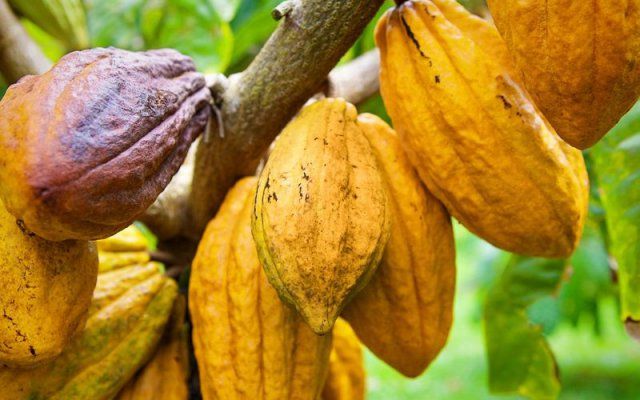
By retaining these 400,000 tonnes for local value addition, Ghana can transition from an exporter of raw materials to a dominant player in the semi-finished and finished cocoa markets. This shift is expected to create thousands of specialized jobs and retain a significantly higher percentage of the global cocoa value chain within the Ghanaian economy.
The President’s proposal centers on the belief that the Ghanaian financial market has matured enough to support its own most valuable commodity. By raising Cedi-denominated domestic bonds, the government eliminates the exchange rate risks associated with dollar-denominated loans and keeps the interest payments within the local banking sector.
This strategy aligns with the broader Accra Reset agenda, which seeks to reduce Ghana’s vulnerability to external shocks and international credit rating downgrades. President Mahama emphasized that having “enough Cedis in Ghana,” to facilitate this trade is a testament to the country’s growing fiscal resilience.
The move to end foreign syndication marks a definitive end to what many economists have called a “colonial” financial structure. Under the new roadmap, the 70% producer price policy will be supported by a more flexible domestic fund that can better absorb global price dips without triggering a national liquidity crisis.
As the AU Summit continues, Mahama’s “Addis Reckoning” serves as a bold signal to the international community that Ghana is no longer willing to pledge its future harvests for short-term liquidity.
The focus has shifted toward ownership, industrialization, and the long-awaited mastery of its own natural resources.