

By Nelson Ayivor
The National Democratic Congress has introduced a strict internal regulation aimed at separating government appointments from party executive ambitions, a move party leaders say is intended to curb political greed and strengthen internal democracy.
The directive bars certain government appointees from contesting party positions unless they resign from their public offices at least six clear months before filing nomination forms.
The new rule is contained in the party’s official Guidelines for the Election of NDC Party Executives at all levels across the country, issued pursuant to the party’s constitution.
The rule applies to internal elections leading up to the NDC’s Regional Delegates Conferences scheduled for two weeks ahead of the National Delegates Conference in December 2026.
Under the guidelines, any individual holding an office to which they were appointed by the President or government is required to step down well in advance if they wish to contest for a party position.
The policy affects ministers and deputy ministers, chief executive officers and managing directors of state institutions and their deputies, as well as metropolitan, municipal and district chief executives.
“A person appointed as a chairperson or member of any Board, or any analogous position, shall be exempt from the restrictions imposed by paragraph (1) of this section,” the rule clarified.
Party Stand against the Concentration of Power
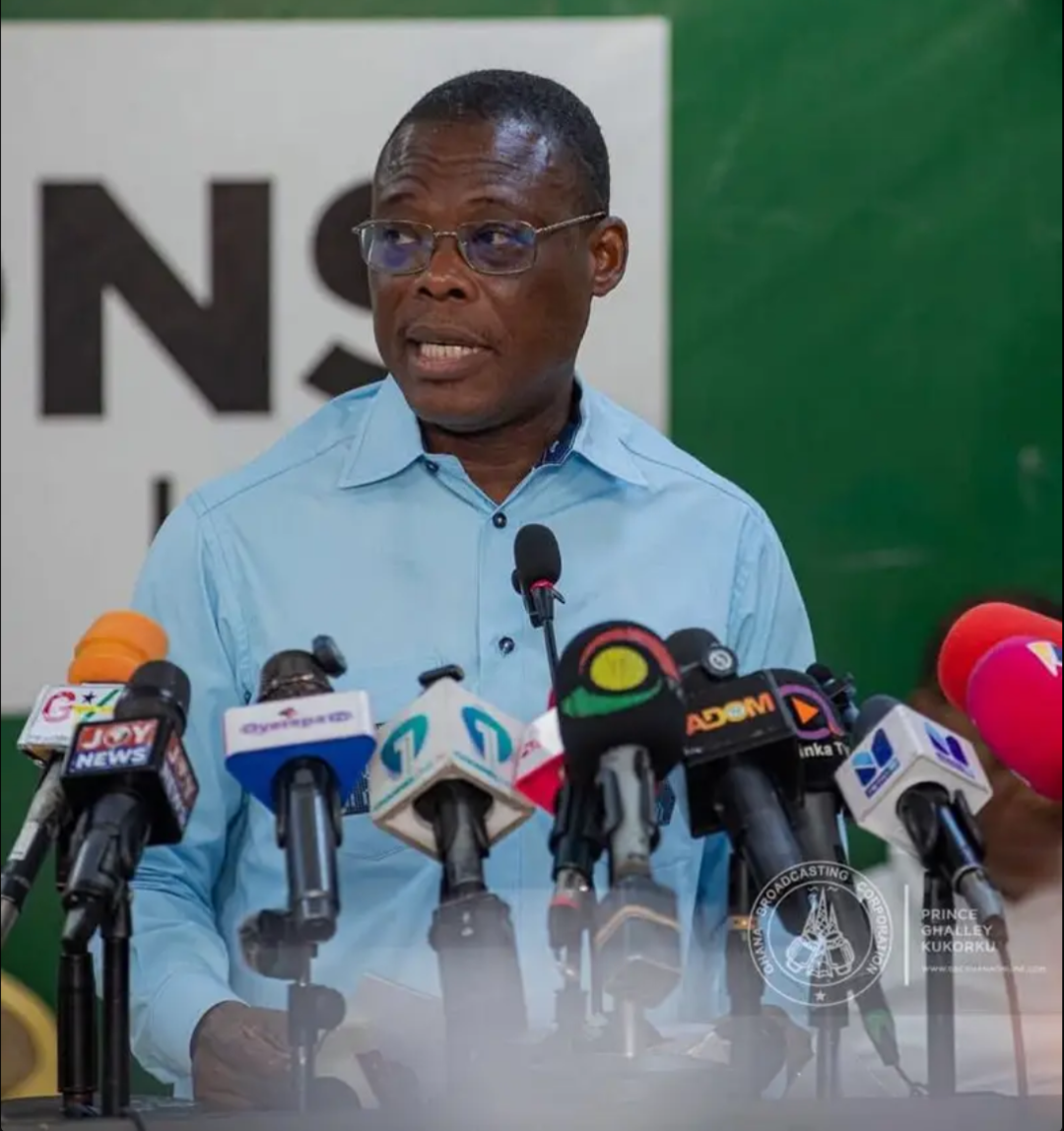
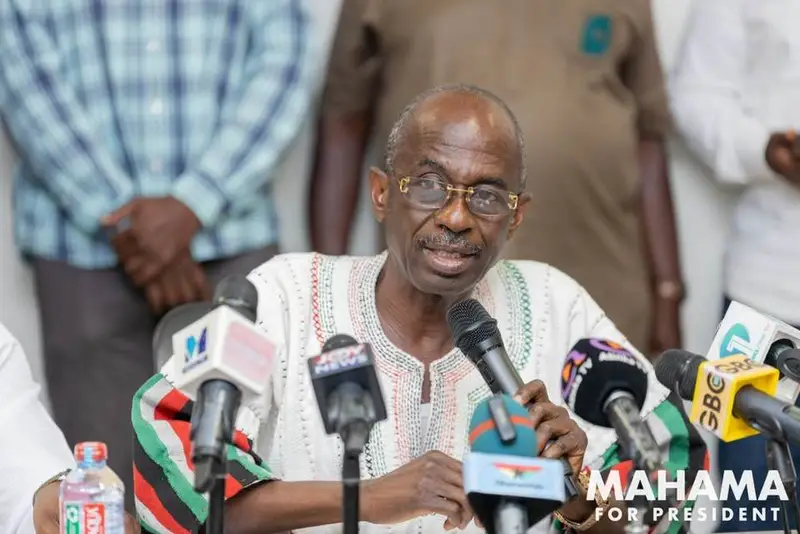
The party’s General Secretary, Fifi Fiavi Kwetey, described the decision as a principled stand against the concentration of power and self-interest in politics.
Speaking on the rationale behind the rule, he stressed that the NDC has a deep pool of capable members and should not be dominated by a few individuals attempting to hold influence in both government and party structures at the same time.
According to him, the party’s strength lies in its numbers and diversity, with millions of supporters across the country who are capable of serving at different levels.
He argued that it is unhealthy for the party to create the impression that only a small group of people are qualified to occupy both appointed public offices and key party roles.
Kwetey framed the directive as a moral and organisational issue rather than a punitive measure. He said the practice of seeking to hold multiple powerful positions reflects a broader problem of greed in Ghanaian politics, where individuals attempt to spread themselves across party and state roles for personal advantage.
” I mean, God forbid, if any of us drop dead today, and you see, I’ve got so many more people who can hold our position and do an excellent job, if not even better job. So we must have the same principle at all moments,” Kwetey noted.
In his view, the solution lies in enforcing a clear choice between serving the party and serving in government. He explained that anyone who believes strongly in working for the party should be willing to resign from government and dedicate themselves fully to party organisation and mobilisation.
In the same vein, those who prefer to remain in government should allow others within the party to take up leadership responsibilities. He described party work as a serious and demanding task that requires full commitment rather than divided attention.
The General Secretary also linked the new guideline to broader constitutional and governance reforms currently under discussion in the country. He noted that proposals emerging from ongoing constitutional review processes seek to prevent members of Parliament from simultaneously serving as ministers, a move intended to strengthen accountability and reduce conflicts of interest.
In his view, the NDC’s decision reflects the same principle of separating roles to improve efficiency and integrity. Party officials say the directive is also aimed at creating a level playing field in internal contests.
By requiring appointees to resign well ahead of elections, the party hopes to prevent the use of state influence, resources, or visibility to gain unfair advantage over grassroots party members who do not hold public office.
Supporters of the policy argue that it will encourage wider participation within the party by opening up leadership opportunities to activists and organisers who are deeply rooted in party structures but often sidelined by powerful incumbents. They believe the move will reinvigorate internal democracy and strengthen the party ahead of future national elections.
The timing of the directive is significant, coming as the NDC prepares for a major round of internal elections that will shape its leadership going into the 2028 general elections. Party insiders say the leadership is keen to avoid internal tensions and perceptions of unfairness that have marred past contests.
While the directive has been welcomed by many within the party, it is also expected to generate debate among appointees who may be weighing their political ambitions. However, the General Secretary was clear that the party is unwilling to compromise on the principle behind the rule.
Hon. Fifi Fiavi Kwetey, General Secretary NDC
He maintained that politics must be guided by service rather than accumulation of positions, adding that no individual is indispensable. In his words, the party must always be prepared for renewal, with systems that allow capable people to step in whenever others step aside.
As the NDC moves closer to its 2026 delegate conferences, the one man one job rule signals a deliberate attempt by the party leadership to redefine political culture within its ranks.
By tying internal ambition to personal sacrifice, the party is seeking to project itself as a disciplined organisation committed to ethical politics and shared responsibility.