

How Mahama’s Team turned Gh850m Deficit into Gh1.5bn Assets in just one year
By Prince Ahenkorah
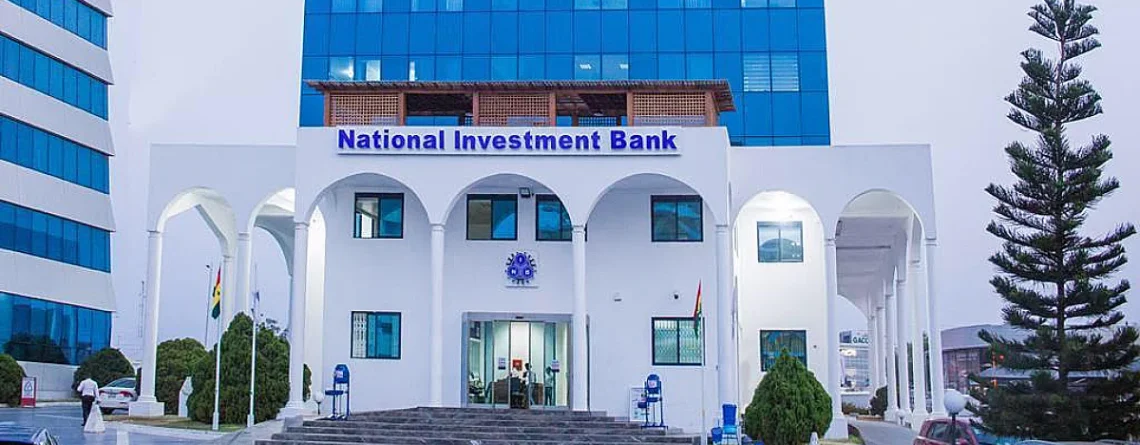
On paper, the National Investment Bank was already dead.
By early 2024, its capital adequacy ratio had plunged to negative 47%. A GH¢850 million hole sat where its capital should have been. Staff morale was so low that employees were quietly updating their CVs, preparing to abandon the 62-year-old institution. The bank’s total assets stood at just 5.8 million cedis a fraction of what a functioning development bank should hold.
The Akufo-Addo administration had a solution: get rid of it.
What happened next, according to multiple sources with direct knowledge of the discussions, was a backroom campaign to transfer one of Ghana’s oldest state-owned banks into private hands with political connections a plan that only unraveled when workers, then opposition lawmakers, and civil society organizations fought back.
In early 2024, word began circulating within banking circles that NIB was being quietly prepared for sale. The intended buyer, according to three sources familiar with the negotiations, was Data Bank an institution with direct ties to then-Finance Minister Ken Ofori-Atta.
Ofori-Atta, who has faced longstanding questions about his family’s business interests intersecting with his public duties, had previously sought to acquire stakes in other state-owned enterprises. The NIB play appeared to follow a similar pattern.
“They wanted it for themselves,” said a former NIB board member who spoke on condition of anonymity for fear of retaliation. “The plan was to run down the bank’s value, create a narrative of inevitable collapse, and then step in as saviors.”
When that approach encountered resistance including from within Ofori-Atta’s own ministry, where some officials balked at the optics the strategy shifted.
The government pivoted to proposing a merger with the Agricultural Development Bank (ADB). Publicly, officials argued that NIB was too weak to stand alone. Privately, sources say, the merger was viewed as a pathway to eventually carve out NIB’s most valuable assets, including its 24% equity stake in Nestlé Ghana a crown jewel generating steady returns.
“The merger was never about saving NIB,” said Isaac Adongo, Member of Parliament for Bolgatanga Central, who led opposition to the plan. “It was about clearing the deck so that when the bank eventually landed in private hands, nobody would ask too many questions.”
Adongo and his colleagues in the then-NDC Minority in Parliament dug into the bank’s books. What they found contradicted the government’s narrative of irreversible decline.
NIB’s problems, they discovered, were largely self-inflicted by the government itself. The state had guaranteed hundreds of millions of cedis in loans for contractors on public projects. When those contractors defaulted, the government failed to honor its guarantees. More than GH¢1 billion in unpaid obligations sat on the bank’s books, suffocating its balance sheet.
“The government was starving the bank and then blaming it for being malnourished,” Adongo said.
The Minority proposed an alternative: restructure the balance sheet. Their analysis showed that a GH¢2.75 billion reorganization could clear the GH¢2.4 billion capital deficit and leave GH¢350 million in shareholder equity.
But the government pressed forward with the merger plan until it encountered an obstacle it hadn’t anticipated.
The Workers Who Said No
NIB’s 846 employees had watched the banking sector clean-up consume rival institutions. They’d seen colleagues lose jobs, pensions evaporate, and decades of service erased overnight.
When word of the merger reached the bank’s union representatives, they organized.
“We weren’t just fighting for jobs,” said a senior union official who asked not to be named. “We were fighting for the idea that Ghana should own its own development bank. That we shouldn’t have to hand everything to private interests.”
The workers lobbied parliamentarians, held press conferences, and coordinated with civil society organizations that had grown alarmed by the pattern of state asset sales. Their message was simple: NIB could be saved if anyone in power wanted to save it.
By mid-2024, the pressure had grown intense enough that the government quietly shelved the merger plan. NIB remained in state hands, though its future remained uncertain.
Then, in December 2024, Ghanaians went to the polls. The NPP lost. And everything changed.
Dr. Doli-Wura Zakaria Awushi Abdul-Malik Seidu arrived at NIB in 2023, inheriting an institution that many had written off. He found a staff paralyzed by uncertainty, unsure whether their employer would survive the year.
His first move was counterintuitive for a turnaround artist: he focused on people, not numbers.
Through intensive engagement with unions, Seidu implemented salary increases totaling 121% not all at once, but in deliberate stages designed to rebuild trust. He introduced vehicle acquisition schemes, giving employees a tangible stake in the bank’s future. He made it clear that no one would be sacrificed to meet arbitrary targets.
“You cannot lead an institution if the people who run it are worried about feeding their children,” Seidu told participants at the National Defence College’s Strategic Leadership Course on Tuesday, reflecting on the turnaround.
With staff stability secured, Seidu turned to the balance sheet. He secured GH¢1.9 billion in funding through strategic partnerships, including support from the Ghana Armed Forces an unusual alliance that reflected the bank’s deepening integration with national development priorities.
The results have been dramatic:
· Capital: From negative GH¢850 million to over GH¢1.5 billion — nearly four times the central bank’s minimum requirement.
· Assets: From 5.8 million to GH¢12.3 billion.
· Growth: Nearly 58% in 2025, compared to an industry benchmark of 5-10%.
· Capital adequacy ratio: From negative 47% to positive 54%.
The Nestlé Ghana stake that had made NIB a target for acquisition is now generating GH¢92 million in annual earnings, after the food company returned to profitability in December 2025 with GH¢385 million in profit.
The contrast raises an uncomfortable question: What would have happened if the merger had gone through?
Had the Akufo-Addo administration succeeded in folding NIB into ADB or, in the more extreme scenario, selling it outright to politically connected buyers the GH¢92 million in annual earnings from Nestlé alone would now be flowing into private accounts. The GH¢12.3 billion in assets would be managed for private gain, not public purpose. The 846 employees who stayed would be scattered across an industry that rarely rewards loyalty.
And Ghana would have one fewer development bank at a moment when development financing has never been more urgent.
“Today, if you look at it, I took over when the organization’s total assets were 5.8 million cedis; today we have 12.3 billion,” Seidu said. “The usual growth of the organization is maybe somewhere around 5 to 10 percent. Today, it’s nearly 58 percent growth in a year.”
His voice carried no triumphalism only the quiet satisfaction of someone who has proven what’s possible when public institutions are managed for the public good.
Seidu is careful not to cast himself as a hero. He credits the staff who stayed, the unions who fought, and the partnerships that made recovery possible. He speaks of leadership as service, not power a theme he emphasized to the National Defence College participants, who included senior military officials and representatives from national security agencies.
“To the distinguished participants, you arrive here as leaders, but leave equipped to lead strategically, ethically, and purposefully,” he told them. “Let this be a commencement, not the conclusion of your journey.”
For NIB, the commencement is just beginning. The bank that was almost given away now holds more than GH¢12 billion in assets, employs nearly 1,000 Ghanaians, and generates profits that flow back into the national treasury.
But for every NIB that survives, there are others that don’t. And as Seidu’s story makes clear, the difference between collapse and recovery often has less to do with economics than with who holds power and what they choose to do with it.