

Government Resists Calls to Interfere with Judiciary as Cabinet Planned Special Tribunals
By Gifty Boateng
Ghana’s anti-corruption campaign has seized assets worth 1.5 billion cedis ($140 million) and arrested 140 suspects since February last year, a government spokesperson said on Tuesday, pushing back against criticism that the operation is moving too slowly .
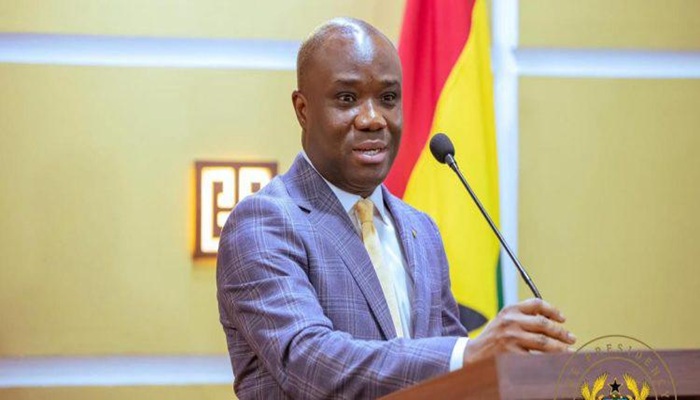
Felix Kwakye Ofosu, minister for government communications and MP for Abura Asebu-Kwamankese, told Joy News’ PM Express that investigative agencies have completed 27 dockets, with another 40 cases under review by the Economic and Organised Crime Office (EOCO) . Several suspects are already standing trial, he said.
The figures represent the first detailed accounting of the Operation Recover All Loot (ORAL) initiative since President John Dramani Mahama took office in January 2025. The campaign was a flagship promise during his election campaign, aimed at retrieving public funds allegedly misappropriated under the previous administration.
“You have to define what the expression means by government is not moving fast enough,” Kwakye Ofosu said in response to critics including former Auditor-General Daniel Domelevo, who have questioned the pace of prosecutions .
Kwakye Ofosu stressed that once cases reach court, the pace of proceedings falls under judicial authority, not executive control .
“When a case goes to court, not Mr Domelevo or any of the critics can determine how the judge conducts the case,” he said .
The government spokesperson invoked the administration’s own history as opposition critics, noting they had repeatedly accused the previous New Patriotic Party (NPP) government of manipulating the judiciary .
“We used to say that the NPP did not allow for an independent judiciary. It is not the submission of the individuals saying this that we should manipulate the judiciary to achieve certain political ends. That, government cannot do,” he stated .
To address longstanding delays in Ghana’s court system, cabinet has approved the reintroduction of special tribunals to handle corruption cases and complex financial crimes .
Kwakye Ofosu explained that the tribunal system is already provided for in the constitution but was suspended years ago following criticism .
“Very soon, it will be rolled out to deal with cases of ORAL and cases involving illegal money, other cases that clog our court system,” he said .
The tribunals represent a structural reform aimed at bypassing bottlenecks in the regular courts, which have long been criticized for slow case processing .
Kwakye Ofosu drew a distinction between assets that have been “frozen” and those actually “recovered,” clarifying that permanent seizure requires conviction by the courts .
“Where we find any assets involved, we retrieve it for the benefit of the case that has been done,” he explained, describing government’s role as building strong cases and presenting sufficient evidence before the courts .
President Mahama disclosed during his State of the Nation Address that EOCO has recovered more than 600 million cedis in misappropriated public funds, though Kwakye Ofosu noted this figure represents broader anti-corruption efforts rather than ORAL specifically
The ORAL initiative targets alleged financial misconduct across multiple state institutions, including procurement breaches, money laundering, and tax evasion. Those under investigation include former ministry officials, state-owned enterprise executives, and private businesspersons suspected of benefiting from inflated contracts.
Kwakye Ofosu acknowledged public frustration with judicial delays but insisted the executive cannot determine court timelines .
“Are we all frustrated about the pace of work of the Ghanaian judiciary? It is a long-standing criticism,” he admitted. “But it is not something that the government should bear responsibility for”
The government maintains that respecting judicial independence while pursuing structural reforms will ultimately deliver accountability without compromising the rule of law .