

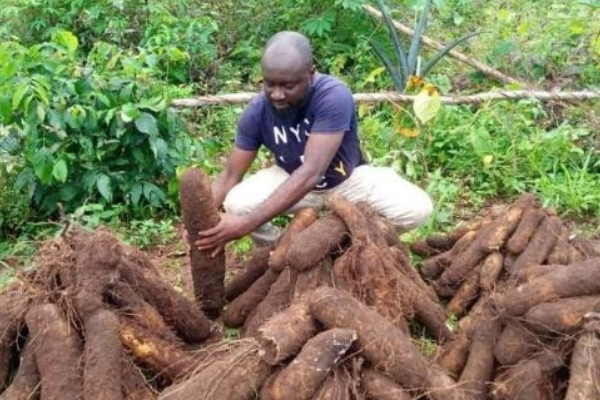
In Dormabin, a farming community in Ghana’s Krachi East Municipality, heaps of freshly harvested yams line the roadside, waiting for buyers who seldom come. For local farmers, poor roads and limited market access have become the biggest threats to their livelihoods.
Once the rains stop, the community’s red-clay roads harden into ruts that are nearly impassable for trucks. During the wet season, they turn to mud, cutting farmers off entirely. The result is the same either way, buyers stay away, and produce spoils.
“Even when we get good harvests, the bad roads make it hard to reach the market,” said Joseph Babayi, secretary of the Dormabin Yam Market. “Drivers don’t want to come here because their vehicles get damaged, so we end up selling cheap or losing everything.”
The Dormabin market, just eight years old, serves more than a dozen surrounding villages. It was meant to link small-scale farmers to traders across the Oti and Volta regions. Instead, inadequate infrastructure and a lack of transport options have left the community isolated.
Yam, the main crop grown in the area, is highly perishable. Without reliable transport or storage facilities, farmers must sell quickly, often at giveaway prices, to whoever can reach them.
“Sometimes a whole truck of yam can go bad if rain catches us before we get to Krachi,” Babayi explained. “We don’t have sheds or warehouses to keep them safe.”
Community members say that while the market has grown in volume, the absence of investment in feeder roads, storage facilities, and cold-chain systems has kept profits low. Traders from bigger towns prefer to buy from easily accessible markets in Kete Krachi or Dambai, leaving Dormabin’s farmers with little bargaining power.
Beyond infrastructure, the farmers also cite the need for government-supported aggregation centres that can guarantee stable prices and connect producers directly to processors and exporters.
“If we had a proper market structure and good roads, everyone here would benefit,” said Babayi. “Right now, the farmer suffers most.”
According to local agricultural officers, better connectivity would reduce post-harvest losses, attract private buyers, and link rural producers to urban supply chains.
Until that happens, the farmers of Dormabin continue to count their losses, trapped between fertile land and roads that lead nowhere.