

as More Dossier Emerges on Amissah’s Tragic Death
By Gifty Boateng
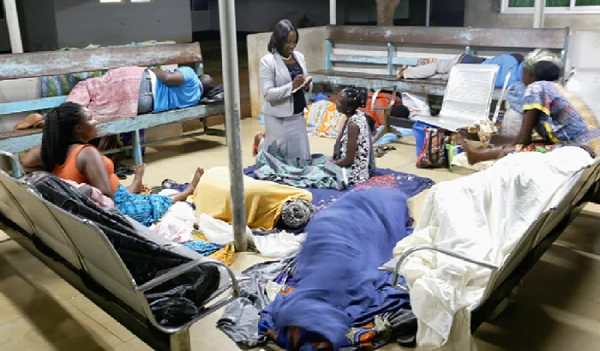
The death of 29-year-old engineer Charles Amissah has torn the gauze off a festering wound in Ghana’s healthcare system exposing not merely a lack of beds, but a catastrophic failure of professional ethics, institutional rot, and political inertia that cost a young man his life.
Amissah, an engineer with Promasidor Ghana Limited, was struck by a vehicle at the Circle Overpass in Accra on the night of 6 February 2026. What followed was a grim odyssey through the capital’s premier medical institutions all of which turned him away. The Police Hospital. The Ridge Hospital (Greater Accra Regional Hospital). Finally, Korle-Bu Teaching Hospital, Ghana’s flagship referral facility. At each gate, the same refrain: no bed.
The Emergency Medical Services team, which had stabilised Amissah at the scene, warned that further movement could prove fatal. They were ignored. At Korle-Bu, still lying in the ambulance, Amissah suffered cardiac arrest. CPR failed. He was declared dead and transported to the mortuary. His family, initially unaware, had circulated his photograph on social media as a missing person.
The Parliamentary Intervention
In an emotional address to Parliament on 24 February, Dr Titus Kofi Beyuo, MP for Lambussie and a former General Secretary of the Ghana Medical Association, sought to contain the political fallout. But his defence of the government’s record inadvertently revealed the depth of the crisis.
According to Beyuo, who sits on the Health Committee, the current Minister of Health, Kwabena Mintah Akandoh, had already commissioned a team to develop a “national integrated bed management and referral coordination system.” The IT-backed platform would, in theory, provide real-time data on bed availability stroke beds, ICU beds, maternity beds across the country’s hospitals.
“The work has been ongoing,” Beyuo told the House. “It is unfortunate that while it was in its final weeks, this incident has happened.”
Insiders suggest the Minister has now instructed the team to expedite its work, with a major announcement expected imminently. The proposed system would also integrate the ambulance service, eliminating the current practice of ambulance crews pleading with hospitals to accept patients.
The Discrimination Dimension
But Beyuo’s most damaging revelation concerned the discretionary nature of admissions. He confirmed what many Ghanaians have long suspected: when hospitals declare “no bed,” it is often a fiction one that collapses when the right person makes the right call.
“I have had calls from colleagues here. They need a patient moved to Korle-Bu and the response is that there is no bed at Emergency. But when I call, there will be a bed,” Beyuo admitted.
The MP pleaded with his former colleagues to abandon a system where admission depends on who you know. “Look at that next patient it could be you. It could be your father. It doesn’t have to be another doctor calling before you create a bed.”
The Ambulance Scandal
Beyuo also trained his sights on the National Ambulance Service, whose “scoop and run” model he described as dangerously outdated. Crews are trained to transport patients but lack the skills to provide basic life support en route.
For Amissah, this proved fatal. “When Korle-Bu checked his BP on the ambulance monitor, it had come down to 84/56. That is someone just about to die,” Beyuo revealed. “If they could at least set a line and run some fluid in transit, he could have survived.”
The MP called for a comprehensive upgrade of ambulance training, with specialised paramedics capable of delivering basic care during transfers.
Korle-Bu’s Response
Under mounting public pressure, Korle-Bu moved decisively on 23 February, interdicting two doctors and two nurses who had refused to admit Amissah. Management announced a committee of inquiry and pledged “transparency, accountability and the delivery of quality healthcare services.”
But sources close to the hospital question whether individual suspensions can address a systemic failure. The other two hospitals implicated Police Hospital and Ridge Hospital have yet to announce any disciplinary action, raising questions about selective accountability.
The Political Calculus
For the Mahama administration, the Amissah case represents an early and uncomfortable test. Beyuo’s parliamentary intervention was clearly designed to demonstrate proactive governance to show that solutions were in motion before tragedy struck.
Yet critics note that the “no-bed” syndrome is hardly new. Previous administrations have promised integrated systems, improved ambulance services, and attitudinal change. Each time, the promises have foundered on the rocks of implementation.
The proposed IT platform, while welcome, will require not merely technical deployment but a fundamental shift in professional culture. As Beyuo himself acknowledged: “Attitude is our biggest problem. All of this will not change if their attitude does not change.”
For now, the Ehiamah family like the Amissah family before them waits. The docket on Charles Amissah’s death is now a political document. Whether it becomes a catalyst for genuine reform or another chapter in Ghana’s long history of inquiries without consequences will depend on the political will of those now holding power.
The system, it seems, has beds after all just not for everyone.