

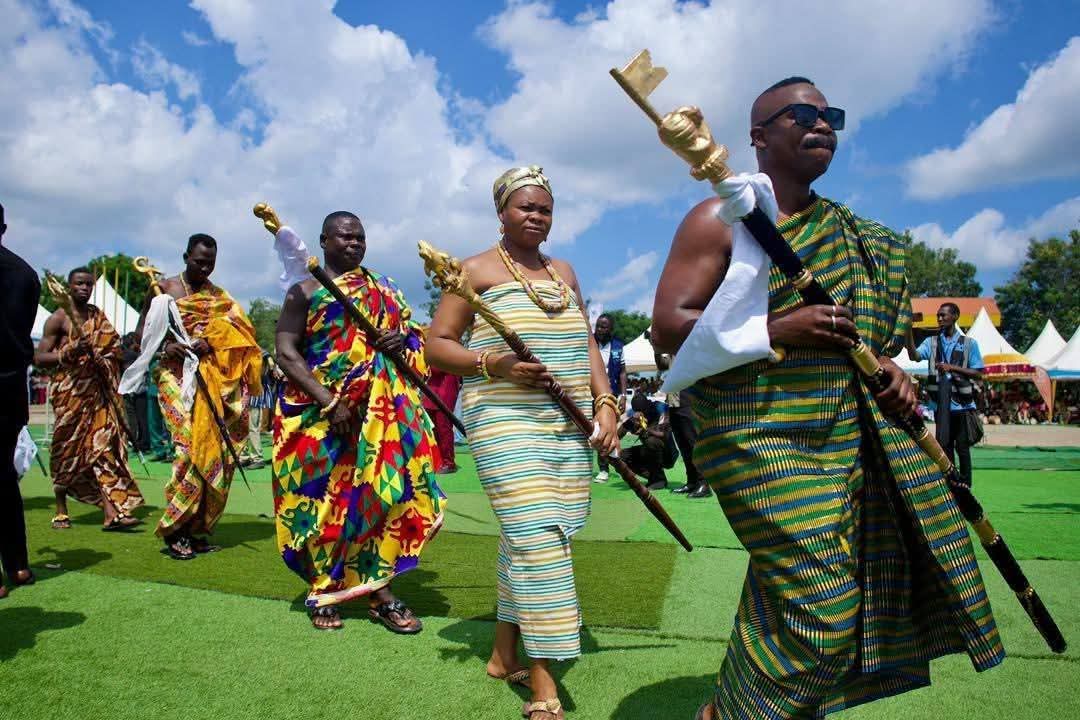
By Simon Amegashie-Viglo
Introduction
Leadership in Ghana is a complex interplay between tradition and modernity, where the enduring institution of chieftaincy coexists with the structures of constitutional democracy. Far from being a relic of the past, chieftaincy remains a vibrant and influential system of governance, deeply embedded in the socio-political fabric of Ghanaian society.
This article examines the institution of chieftaincy within the framework of constitutionalism, with particular reference to the 1992 Constitution of Ghana and the Chieftaincy Act, 2008 (Act 759). It explores the origins, structures, powers, and functions of traditional authorities, and interrogates their evolving role in governance in Ghana’s Fourth Republic.
Origins and Historical Evolution of Chieftaincy
The institution of chieftaincy predates the colonial state and is rooted in the customary practices of Ghana’s diverse ethnic groups, including the Akan, Ewe, Mole-Dagbani, and Ga-Adangbe. Chiefs emerged as custodians of land, culture, and spiritual authority, exercising political, judicial, and military leadership within their communities.
During colonial rule, the British system of indirect rule redefined chieftaincy, transforming chiefs into intermediaries between the colonial administration and the indigenous population. While this enhanced their administrative roles, it also subjected them to external control and altered their traditional legitimacy.
In the post-independence era, successive governments oscillated between weakening and strengthening the institution. However, the advent of the Fourth Republic marked a decisive constitutional recognition and protection of chieftaincy.
Chieftaincy within Ghana’s Constitutional Framework
The 1992 Constitution of Ghana firmly entrenches chieftaincy as a legitimate and protected institution. Article 270 guarantees its existence and prohibits Parliament from enacting any law that undermines it. This constitutional safeguard underscores the enduring relevance of traditional authority in Ghana’s governance system.
At the same time, Article 276 places a critical limitation on chiefs by prohibiting their active participation in partisan politics. This provision seeks to preserve the neutrality, dignity, and unifying role of chiefs within their communities.
The constitutional framework thus creates a delicate balance—protecting chieftaincy while ensuring that it does not undermine democratic governance.
The Statutory Regulation of Chieftaincy
The Chieftaincy Act, 2008 (Act 759) operationalizes constitutional provisions and provides a comprehensive legal framework for the institution. It regulates the recognition, installation, and functions of chiefs, while also establishing mechanisms for dispute resolution.
Key provisions of the Act include:
The National Register of Chiefs
This ensures the formal recognition of legitimate traditional authorities and minimizes disputes over succession.
Judicial Committees of Traditional Councils and Houses of Chiefs
These bodies adjudicate chieftaincy disputes based on customary law, thereby institutionalizing traditional conflict resolution within a formal legal system.
The National and Regional Houses of Chiefs
These institutions play vital roles in codifying customary law, advising government, and preserving cultural heritage.
The Chieftaincy (Amendment) Act, 2012 (Act 801) further strengthens these structures by improving procedural efficiency and addressing emerging governance challenges.
Structures of Traditional Authority
Chieftaincy in Ghana is hierarchically organized:
National Level: The National House of Chiefs serves as the apex body, coordinating the activities of traditional authorities nationwide.
Regional Level: Regional Houses of Chiefs address matters specific to their jurisdictions and serve as appellate bodies in chieftaincy disputes.
Traditional and Local Levels: Paramount chiefs, divisional chiefs, and sub-chiefs govern at the grassroots, working through traditional councils to administer their areas.
This multi-layered structure reflects both the diversity and unity of Ghana’s customary systems.
Powers and Functions of Chiefs
Within the constitutional and statutory framework, chiefs perform a wide range of functions:
Custodianship of Land and Culture
Chiefs hold land in trust for their communities and safeguard customs and traditions.
Dispute Resolution
Through customary arbitration, chiefs play a crucial role in maintaining peace and social cohesion.
Local Governance and Development
Chiefs mobilize communities for development initiatives and collaborate with state institutions.
Advisory Role to Government
Through the Houses of Chiefs, traditional authorities contribute to national policy discussions, particularly on culture and customary law.
Chieftaincy and Legal Pluralism in Ghana
Ghana operates a system of legal pluralism, where customary law coexists with statutory law. The Chieftaincy Act represents an effort to harmonize these systems by formalizing customary practices while preserving their flexibility.
However, tensions sometimes arise between traditional legitimacy and statutory legality, especially in matters of land ownership and succession. These tensions highlight the ongoing negotiation between tradition and modern governance.
Challenges Confronting the Institution
Despite its constitutional protection, chieftaincy faces several challenges:
Protracted Chieftaincy Disputes
Lengthy litigation undermines stability and development.
Ambiguities in Customary Law
Variations across ethnic groups complicate codification and enforcement.
Political Influence
Indirect political interference threatens the neutrality mandated by the Constitution.
Land Conflicts and Commercialization
Increasing land values have intensified disputes and raised questions about accountability.
The Dynamics of Traditional Authority in Contemporary Governance
In Ghana’s Fourth Republic, chieftaincy continues to evolve. Chiefs are no longer absolute rulers but influential actors within a broader governance framework. Their authority is now shaped by constitutional limits, statutory regulations, and the expectations of modern society.
Rather than being in competition with the state, chieftaincy complements democratic governance by providing legitimacy, continuity, and grassroots engagement.
Conclusion
The institution of chieftaincy in Ghana exemplifies the dynamic interplay between tradition and constitutionalism. Anchored in the 1992 Constitution and regulated by the Chieftaincy Act, 2008 (Act 759) and its amendment, it remains a vital pillar of governance.
The challenge for Ghana is not to choose between tradition and modernity, but to harmonize them. In this regard, chieftaincy continues to serve as a bridge—linking the past with the present, and cultural heritage with democratic governance.