

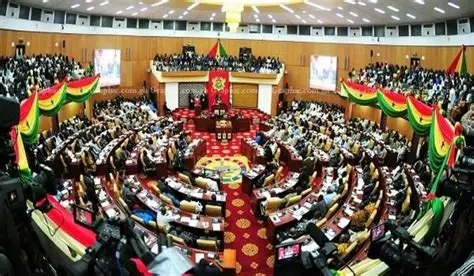
The government has with immediate effect withdrawn the Lithium agreement between Barari DV Ghana Limited and government of Ghana under the previous administration that was laid in the house for ratification.
The decision was announced by the Deputy Minister for Lands and Natural Resources, Alhaji Yusif Sulemana, announced on Wednesday.
The decision is to enable government hold further and broader engagements and consultations with stakeholders on the deal which was reduced from 10 percent to 5 percent in royalties.
Addressing the House, the Member of Parliament (MP) for the Bole Bamboi constituency said the decision was influenced by concerns raised by civil society groups, industry experts, and MPs from both sides of the chamber.
“Listening to my colleagues from the other side, they have made my work very easy. They have given reasons why there’s a need for us to withdraw this agreement,” he told Parliament.
He explained that NGOs and prominent voices within the extractives sector had also urged the government to conduct further technical and stakeholder engagements before resubmitting the deal.
According to him, the move reflects the government’s willingness to demonstrate accountability and transparency in managing the country’s mineral resources.
“It is for that reason that the listening minister, the listening government, has decided that we will withdraw this agreement, do further work involving you, so that together we can move forward,” he said.
According to government, the reduction in percentage came about due to the current price dip at the world market for the mineral resource.
Last week, IMANII-Africa led by its founding president, Franklin Cudjoe held a meeting with President John Dramani Mahama at the presidency. The meeting
The meeting was held behind closed doors, on Tuesday December 2.
Although their discussion was not made public, Cudjoe disclosed that the President wanted to hear their position on the deal. He hinted plans to submit a dossier on the agreement to the President.
“Moments ago, the President wanted to hear IMANI’s position on important national matters, primarily on the Lithium agreement. We will be submitting a dossier on the critical issues to the President”, he said brifefly in a post.
Additionally this week, the Coalition for Accountable Resource Governance (CARG-Ghana) raised strong objections to the proposed 5% royalty rate in the renegotiated Ewoyaa lithium agreement, arguing that the adjustment undermines Ghana’s long-term interests and contradicts previous commitments made by the current administration.
In a statement, they stated that the reduction from the earlier 10% rate negotiated under the previous government represents a major setback for the country’s efforts to secure optimal value from its emerging green mineral sector.
CARG-Ghana criticised the explanations offered by government officials, including the Minister of Lands and Natural Resources, Emmanuel Armar-Kofi Buah, and the Chair of Parliament’s Lands and Natural Resources Committee, Collins Dauda, describing their interpretation of the law as inaccurate.
According to the coalition, the Minerals and Mining (Amendment) Act, 2015 (Act 900) gives Ghana the authority to negotiate royalty rates beyond the earlier 3%–6% band provided under Act 703. Act 900, it argued, makes the rate “open-ended and subject to negotiations,” meaning the country is not restricted to a fixed 5%.
The coalition referenced a 2023 press conference by the National Democratic Congress (NDC) (then in opposition), where the party criticised the 10% rate as insufficient and pledged to secure higher benefits if elected. CARG-Ghana said the current proposal contradicts that promise.
In November, the Minority in Parliament led by the former sector Minister, Samuel Abu Jinapor, kicked against the renegotiated deal, requesting the government to do the needful and
The Minority Caucus on Parliament’s Lands and Natural Resources Committee described the revised term as a “Complete compromise” of Ghana’s national interest.
They group says the new rate represents a significant downgrade from the 2023 agreement approved under the previous government and leaves the country worse off in a sector they describe as strategically important.
By Gifty Boateng