

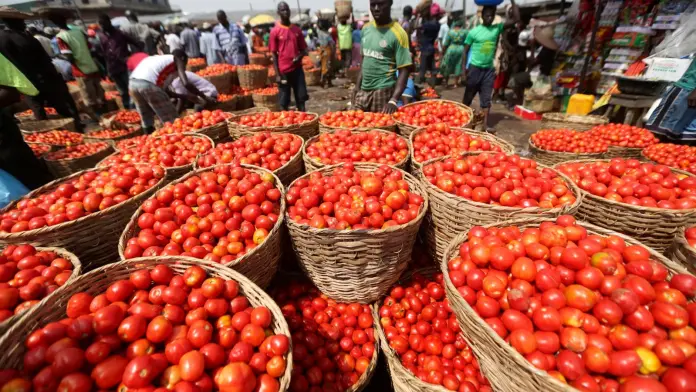
Collaboration could be Ghana’s secret ingredient to fixing its tomato shortage. With Burkina Faso halting fresh tomato exports, the country faces immediate supply gaps, rising prices, and anxious households. Yet, according to Dr. Felix Mawuli Kamassah, CEO of Maplix Trust Ghana Limited, public-private partnerships could be the recipe to stabilize the market and build long-term self-sufficiency.
“The short term is that we have to be in collaboration with the government and then the private sector,” Dr. Kamassah said in an interview with The High Street Journal on Friday, March 20, 2026. He emphasized that coordinated action is essential to mobilize resources, expand production quickly, and ensure tomatoes reach markets before prices spiral further.
Ghana has fertile soil, a conducive climate, and experienced farmers, but production has historically lagged behind demand. The country consumes over a million tons of tomatoes annually, yet domestic output covers only a fraction of this need. The rest is imported, mostly from Burkina Faso, leaving markets exposed to external shocks. The recent export halt has revealed the structural vulnerabilities of Ghana’s tomato sector and the urgent need for local solutions.
Dr. Kamassah highlighted the role of smart agriculture and field-level interventions in bridging this gap. Greenhouse cultivation, irrigation hubs, and climate-adapted tomato varieties can allow farmers to produce at scale throughout the year rather than rely solely on seasonal rains. “We can’t wait for long again,” he said, noting that regions like Dowenya and Weija are already preparing nurseries and planting seedlings to expand output in the coming months.
The collaboration he envisions goes beyond mere planting. It involves government support, private investment, research expertise, and farmer associations working together. Such partnerships can fund infrastructure, facilitate knowledge transfer, and improve access to markets. By pooling resources, stakeholders can create a network that not only meets immediate demand but strengthens Ghana’s agricultural resilience for years to come.
“This is good news for the country,” Dr. Kamassah added. He framed the crisis as an opportunity to rethink Ghana’s approach to tomatoes, turning a short-term disruption into a long-term advantage.
With decisive action and strong partnerships, Ghana could reduce reliance on imports, stabilize prices, and create a model for other staple crops, ensuring that households across the country enjoy steady access to an essential food item.