


By Nelson Ayivor
Security consultant and fraud prevention expert Richard Kumadoe has called for an urgent restructuring of Ghana’s cross border produce trade, arguing that centralized markets and controlled logistics can significantly reduce the exposure of traders to terrorist violence.
He proposed the creation of a centralized market in Bolgatanga where articulated trucks would transport tomatoes from Burkina Faso through the Bawku and Paga corridors.
According to him, traders should be willing to bear a modest increase in transportation costs in exchange for improved safety and reduced human exposure to volatile routes.
“Set up another centralised market at Tamale and let the heavy-duty truck drivers bring in tomatoes and onions from Burkina Faso through Yendi,” Kumadoe advised.
By consolidating transport into fewer, well coordinated movements, Kumadoe believes the risks faced by individual traders traveling deep into insecure areas would be substantially minimized.
Beyond logistics, the consultant advocated empowering Ghanaian farmers to establish large scale tomato and onion farms in Tamale using seeds from Burkina Faso, Mali, and Niger. He argued that this approach would preserve preferred crop qualities while drastically reducing the need for dangerous travel.
He also urged traders who must travel to high risk zones to take travel risk assessments seriously and liaise closely with embassy staff for guidance and possible security escort.
Deadly Attack Underscores Urgency
These proposals follow a disturbing terrorist attack on Ghanaian tomato traders in northern Burkina Faso. On Saturday, 14 February 2026, a truck carrying Ghanaian traders was ambushed in the town of Titao.
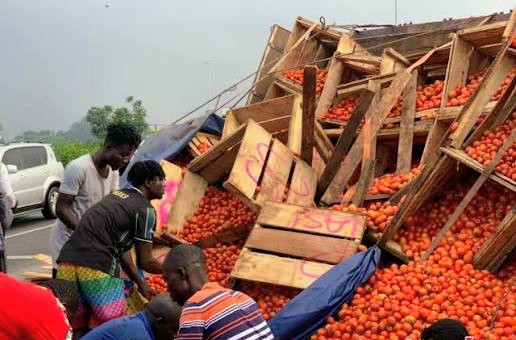
Reports indicate that male passengers seated on top of the vehicle were shot dead, while female passengers were spared gunfire but beaten and robbed of their belongings. The driver reportedly locked himself inside the cabin for protection, but the attackers later set the truck ablaze.
Exact casualty figures are still being verified, but the incident has sent shockwaves through trading communities in northern Ghana, where cross border produce trade remains a critical source of income. Many families rely on frequent journeys into Burkina Faso to secure tomatoes and onions for Ghanaian markets.
The Ministry of the Interior has confirmed the attack, describing it as a serious security incident involving Ghanaian nationals. The Ghana Embassy in Burkina Faso is coordinating with local authorities to visit the scene and formally identify the victims. Officials say the process is ongoing, given the difficult security conditions in the area.
The attack has renewed calls for stronger protective measures for traders who continue to operate along northern routes that have become increasingly dangerous in recent years.
Worsening Sahel Insecurity
The Titao incident occurred amid rising insecurity across the Sahel, where armed groups have intensified attacks on highways used by traders, transporters, and civilians.
In a related development highlighting the fragile border environment, reports emerged that 17 armed Burkinabe soldiers were recently detained and later released after crossing into Ghanaian territory near Wuru in the Upper West Region. The soldiers reportedly claimed they were on a routine patrol and had lost their way.
Such incidents reflect the fluid nature of borders in the region and the heightened risks faced by civilians moving along major trade corridors. For traders, the combination of terrorism, banditry, and weak road security has transformed routine commercial travel into a life-threatening activity.
Ghanaian traders traveling to northern Burkina Faso for produce have long faced vulnerabilities. In previous years, similar highway robberies and ambushes have resulted in loss of lives and the theft of millions of CFA francs. Despite these dangers, the trade has persisted due to limited alternatives for sourcing affordable tomatoes and onions at scale.
Security analysts note that the continuation of this model reflects economic necessity rather than informed risk acceptance. Many traders operate on thin margins and lack access to structured transport systems that could offer better protection.
Centralized Markets as Preventive Strategy
Kumadoe argued that centralized markets represent a shift from reactive responses to preventive planning. By concentrating buying and transport activities at designated hubs, authorities and market associations could better coordinate security, monitor movement, and reduce the number of individuals exposed to high risk routes.
He maintained that while centralized markets and expanded local production will not eliminate all threats, they can significantly lower the probability of mass casualty incidents involving traders. The modest increase in transport costs, he argued, is a reasonable trade-off for safeguarding lives.
The latest attack has intensified pressure on policy makers to rethink how cross border trade is conducted under persistent insecurity. As Ghana continues to rely on regional supply chains for essential food commodities, the proposals put forward by security experts highlight the need for coordinated action involving government agencies, trader associations, and transport unions.
For many traders, the issue is no longer convenience or profit margins, but survival. The call for centralized markets and strengthened domestic production offers a practical pathway to reduce risk while maintaining the flow of produce into Ghanaian markets, at a time when insecurity in the Sahel shows no signs of abating.