

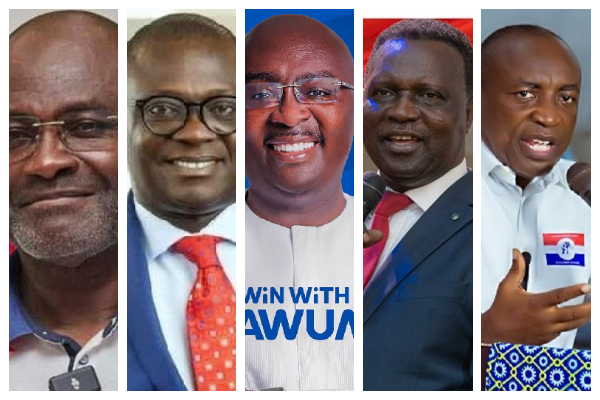
NPP’s Big Five Forced to Sign Peace Pact to Stop All-Out War in Party
By Prince Ahenkorah
In an extraordinary preemptive move to avert internal war, the opposition New Patriotic Party (NPP) will on Thursday compel its five presidential aspirants to sign a binding peace pact, supervised by former party presidents and the National Peace Council.
The high-stakes ceremony is designed to quarantine the party from the factional violence and bitter recriminations that have crippled it after past primaries, with the singular goal of preserving a united front for the 2028 general election.
The initiative, confirmed by Isaac Yaw Boamah-Nyarko, MP for Effia and a member of the NPP’s Presidential Election Committee, leaves no room for ambiguity. The pact will legally commit all contenders to accept the primary’s outcome and “work collectively in the interest of the party,” regardless of victory or defeat.
“It is to make it clear that whether you win or lose, you owe it to the party to carry everyone along,” Boamah-Nyarko told The New Republic. He framed the move as a critical firewall against the “machismo” and “bodyguardism” that have marred previous contests, warning that the Ghana Police Service will be the sole security authority and any disruption will be “firmly dealt with.”
The peace pact underscores the existential stakes for the NPP, which is navigating its first presidential primary from a position of opposition in over a decade. The shadow of the party’s tumultuous 2023 primaries which left deep rifts only partially healed by the 2024 election defeat looms large. Party elders are determined to prevent a repeat, where internal discord and a fractured base contributed to electoral failure.
The five aspirants seen as the ‘Big Five’ must now campaign on policy and competence, not personal attacks. “Unity after the flagbearer election is critical if the party is to rebuild trust,” Boamah-Nyarko emphasized, directly linking internal discipline to the party’s chances of unseating the governing National Democratic Congress (NDC) in 2028.
This enforced concord is a stark admission of past vulnerability. The NPP’s history is punctuated by primary contests that spilled into public acrimony, draining resources, alienating swing voters, and gifting opponents potent attack lines. By institutionalizing a peace pact, the party aims to signal maturity and stability to a skeptical electorate.
Analysts view the pact as both a necessary safeguard and a potential pressure cooker. While it may suppress open conflict during the campaign, it cannot eliminate the deep-seated ambitions and regional loyalties that fuel the contest. The true test will come on the morning after the results are announced, when the signatures on the document will face the strain of conceding power within the party.
For the NPP, this is more than a procedural formality; it is a public audition for governance. The party is betting that a visibly orderly, respectful, and united primary process will be the first compelling chapter in its narrative for a 2028 comeback. The world will be watching to see if the ‘Big Five’ can keep the peace or if the old divisions will shatter the pact.