

By Prince Ahenkorah
The Abossey Okai Spare Parts Dealers Association, has assured the public that spare parts prices will remain stable despite the recent surge in global petroleum prices triggered by escalating tensions in the Middle East.
The assurance comes at a time when global crude oil prices are experiencing volatility due to renewed geopolitical instability in the region, a development that has placed upward pressure on fuel prices on the global market.
However, the Association says it will not be compelled into immediate price increments, insisting that dealers are committed to cushioning consumers from sudden market shocks.
According to the leadership of the Association, while rising fuel prices naturally increase freight charges, clearing costs, and distribution expenses, the current macroeconomic environment provides some relief.
They pointed specifically to the relative stability of the Ghana cedi against the US dollar and the recent reduction in the monetary policy rate as important buffers that could prevent automatic price hikes.
Head of Communications for the Association, Takyi Addo, speaking in an interview with Citi Business News, explained that the industry had anticipated possible global shocks and taken precautionary measures.
“Even though the impact will affect us, it shouldn’t affect us more than what has happened because you have already prepared. The NPA boss, Edudzi Tameklo, said we have petrol and diesel for the next six months,” he stated.
Mr. Addo emphasized that proactive measures taken by authorities have helped stabilize the domestic petroleum supply chain. He praised the government’s preparedness in building fuel reserves, noting that external economic shocks are often unpredictable.
“It means the government has done well. As a government, you should prepare because external forces can hit at any time,” he added.
When pressed on whether dealers would reconsider their position if fuel prices continue to rise, Mr. Addo responded firmly, dismissing any immediate plans to adjust prices.
“No, no, no, because I believe in this administration. The dollar has been relatively stable, and we are monitoring developments and hoping the situation does not escalate,” he stressed.
His remarks align with recent assurances from the National Petroleum Authority that Ghana has adequate fuel reserves to sustain domestic consumption for several months, reducing the likelihood of supply-driven price instability in the short term.
Industry players say that spare parts pricing in Ghana is heavily influenced by three main factors: exchange rate fluctuations, import duties and port charges, and transportation costs driven by fuel prices.
With the cedi showing relative stability in recent months and monetary tightening easing slightly, dealers appear confident that they can absorb short-term cost pressures without passing them on to consumers.
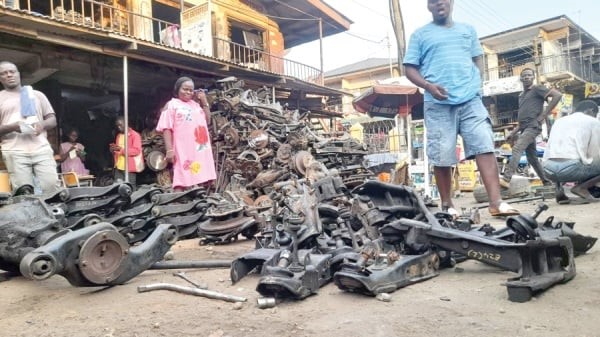
The Abossey Okai enclave, regarded as the hub of Ghana’s automobile spare parts trade, plays a critical role in maintaining the country’s transport sector. Any significant price movement within the enclave often has ripple effects across commercial transport operators, logistics companies, and individual vehicle owners nationwide.
Despite rising global crude prices and heightened geopolitical uncertainty, the Association insists it will prioritize consumer protection while keeping a close watch on international market trends. Dealers say any future price review would be carefully considered and based on sustained cost pressures rather than temporary global fluctuations.