

By Leo Nelson
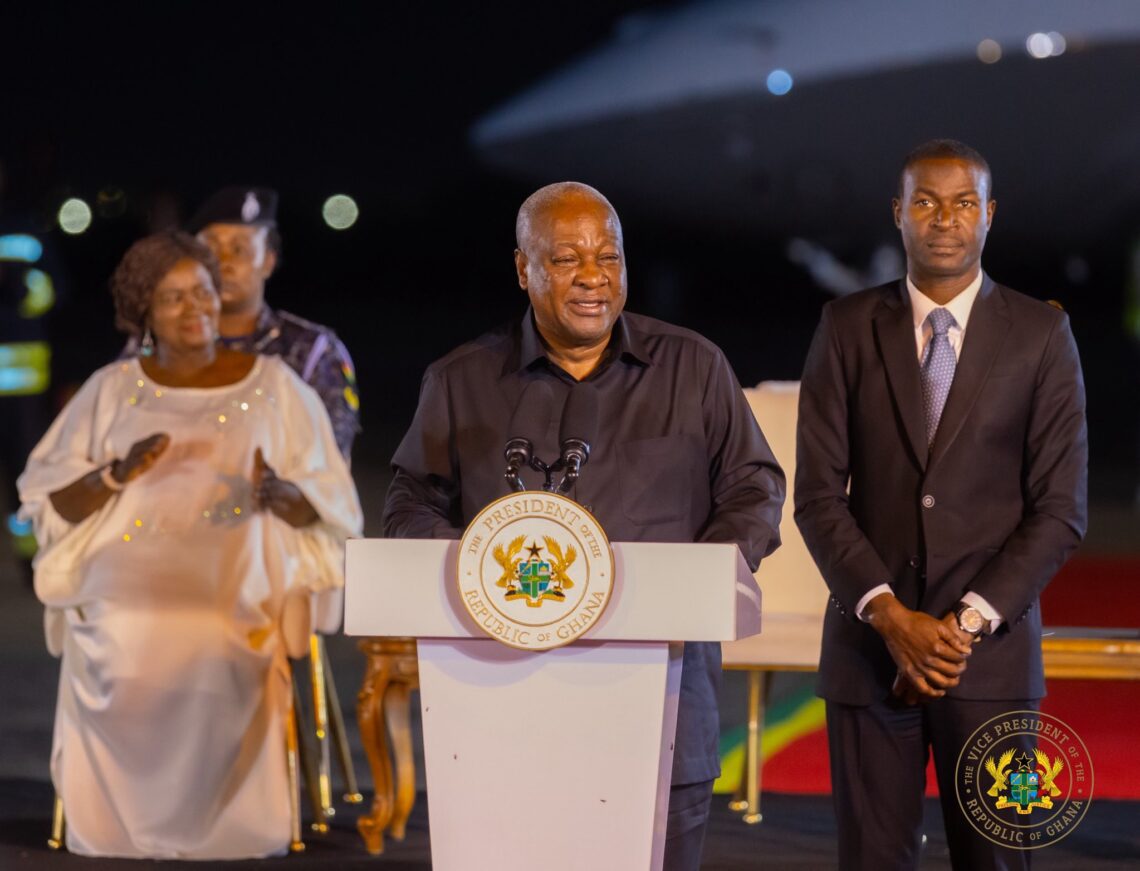
President John Dramani Mahama has declared that Ghana’s success at the United Nations in securing recognition of the Trans Atlantic Slave Trade as a grave crime against humanity is a shared victory for Africa and people of African descent worldwide.
Speaking upon his return to Ghana, the President expressed gratitude for the warm reception from traditional leaders, government officials, and citizens, emphasizing that the achievement extends far beyond national boundaries. He described the moment as one of collective triumph built on unity, persistence, and global cooperation.
“This is a victory not only for Ghana. It is a victory for a broad coalition of all Africans, all people of African descent, and indeed all people of good conscience around the world”.
President Mahama highlighted that for decades, the issue of the Trans Atlantic Slave Trade had been addressed in fragmented ways, with isolated acknowledgements and apologies that failed to capture the full magnitude of the injustice.
He explained that Ghana’s leadership in advancing the resolution was aimed at consolidating these efforts and placing the issue firmly on the highest global platform. By doing so, the resolution establishes a unified and authoritative recognition of the slave trade as the gravest crime against humanity.
“The significance of what we did was to put it all together and put it on the highest global platform and put on record that this was the gravest crime against humanity.”
The resolution, supported by 123 countries, represents a decisive step toward a clearer and more consistent global understanding of one of history’s darkest chapters.
The President credited the achievement to the dedication of Ghana’s diplomatic team and international partners. He singled out Ghana’s Foreign Affairs Minister Samuel Okudzeto Ablakwa for his extensive efforts in building support across nations.
According to the President, the groundwork involved extensive engagement, with Ghana’s representatives traveling across multiple countries to secure backing for the resolution.
He also acknowledged the role of Ghana’s permanent mission to the United Nations, Ghana-US Ambassador Victor Smith and his diplomatic staff for their contributions. “I gave the guidance, but they did the legwork,” he said, underscoring the collaborative nature of the success.
The President further recognized the support of the Caribbean Community, known as CARICOM, and other global partners who aligned with Ghana’s position despite not being directly affected by the slave trade.
President Mahama described the resolution as more than a historical statement, emphasizing its broader implications for justice, dignity, and truth. He stressed that the recognition is not solely about revisiting the past but about addressing its enduring consequences.
“This is not about the past alone. It is about justice, dignity, and truth. It is about ensuring that the legacy of slavery is neither forgotten nor trivialised.”
The President noted that by placing the issue on record at the United Nations, the resolution reduces ambiguity and strengthens the foundation for future discussions on reparative justice. It also ensures that the narrative surrounding the slave trade is anchored in clarity and global consensus.
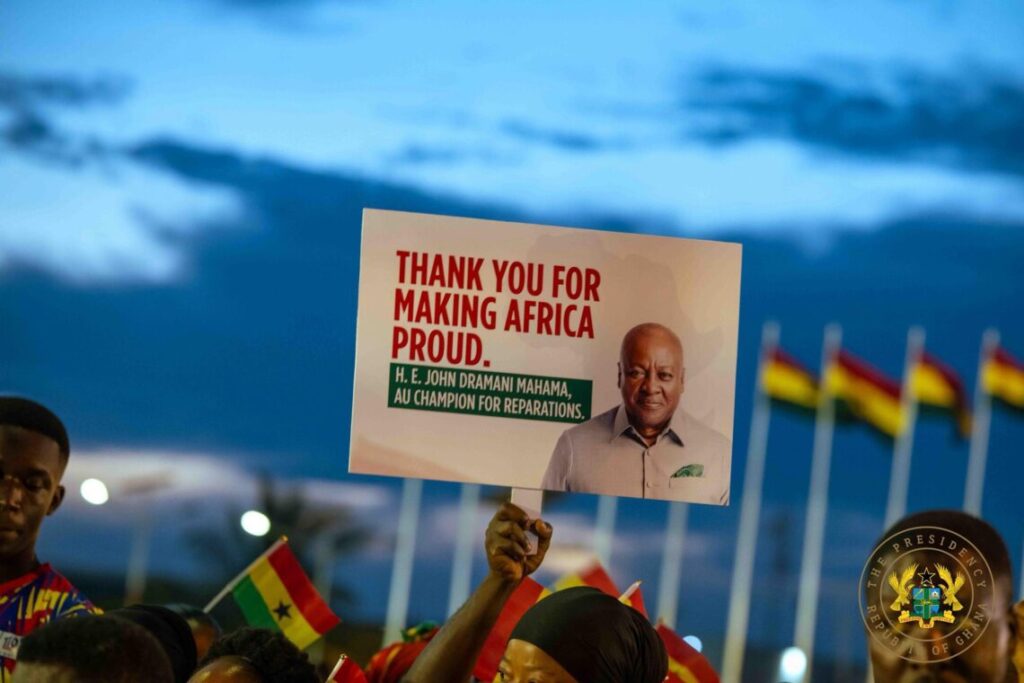
Positioning the achievement within Ghana’s broader historical trajectory, President Mahama said the country has once again demonstrated moral leadership on the global stage.
He linked the moment to Ghana’s longstanding commitment to justice and human dignity, dating back to its independence movement. Working alongside the African Union and other partners, Ghana has played a central role in reshaping global discourse on historical accountability.
The President emphasized that this leadership reflects a consistent national identity rooted in advocacy for fairness and equality. “This is consistent with our history, from our independence to today, of standing for justice and human dignity,” he affirmed.
While celebrating the milestone, President Mahama made it clear that the resolution marks the beginning of a longer process rather than its conclusion. He indicated that Ghana will work with international partners to translate the symbolic victory into tangible outcomes.
A key focus will be collaboration with CARICOM’s ten point plan for reparative justice, which outlines pathways for addressing the legacy of slavery through development, education, and restitution initiatives.
“This resolution is just the beginning. It is not an end. We will work with our partners to translate this moral victory into concrete outcomes.”
The President emphasized the importance of sustained dialogue, education, and remembrance as part of efforts to ensure that the lessons of history inform present and future policies.
In closing, President Mahama described the resolution as a proud moment not only for Ghana but for Africa and the global African diaspora. He expressed gratitude for the support and encouragement that contributed to the achievement, noting that it reflects what can be accomplished through unity and purpose.
“This is a proud moment for Ghana. It is a proud moment for Africa. It is a proud moment for people of African descent wherever they are in the world.”
As Ghana moves forward, the focus will shift toward building on this momentum, ensuring that the recognition achieved at the United Nations leads to meaningful and lasting change.