

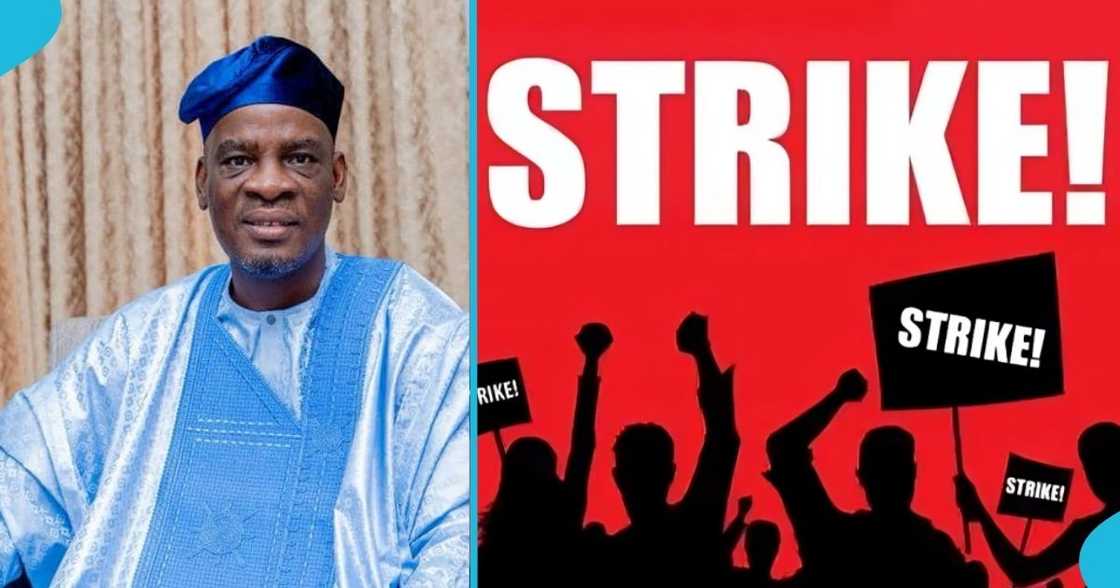
as Government Breaks Pay Deal
By Philip Antoh
The Senior Staff Association–Universities of Ghana (SSA-UoG) has declared an indefinite nationwide strike, escalating a protracted dispute over broken wage agreements and unpaid arrears that threatens to paralyse the country’s premier public universities.
The action, announced by National Chairman George Ansong, follows what the union describes as “bad faith” negotiations by the Fair Wages and Salaries Commission (FWSC), systematic delays by the National Labour Commission (NLC), and the government’s failure to honour critical financial commitments.
The immediate trigger is the unilateral abrogation of a legally-binding Conditions of Service agreement signed in 2021, which guaranteed overtime pay for senior administrative and technical staff.
In May 2025, the University of Ghana ceased overtime payments, replacing them with a significantly reduced “call-in allowance,” citing financial constraints and audit directives.
The union alleges this move was instigated by the FWSC, which first affirmed the validity of the overtime agreement before secretly instructing the university to halt payments a move Ansong termed “a betrayal of trust and a violation of collective bargaining.”
The dispute took a more contentious turn in November 2025 when the FWSC performed a stark volte-face during an NLC hearing, retracting its earlier support and declaring senior staff ineligible for overtime altogether.
This reversal, coupled with the FWSC’s failure to attend a critical hearing in January 2026, has convinced the union that the state is orchestrating a coordinated effort to dilute their compensation package.
The new “call-in allowance” model has already been adopted by the University of Health and Allied Sciences and the University for Development Studies, setting a dangerous precedent for the sector.
Beyond the overtime battle, the strike is fuelled by accumulated grievances reflecting broader fiscal negligence.
The union highlights the non-payment of four years of salary arrears and allowances owed to staff following the absorption of NAFTI, GIL, and GIJ into the University of Media, Arts and Communication (UniMAC).
Despite NLC intervention, the Ministry of Finance has remained silent. Furthermore, five months of mandatory Tier 2 pension contributions (August-December 2024) remain unpaid, jeopardising retirement security and violating NPRA regulations.
The strike exposes the fragile state of public sector wage administration and the government’s strained fiscal capacity.
Analysts see the FWSC’s contradictory positions as indicative of internal policy confusion or a deliberate strategy to contain wage costs by reneging on settled agreements.
The NLC’s perceived inability to enforce its directives further erodes its credibility as an impartial arbiter.
The industrial action risks major disruptions to the academic calendar, research activities, and university administration at a critical time. The government’s response will be a test of its commitment to social dialogue and its ability to manage public sector unrest amidst broader economic pressures.
A prolonged strike could galvanise other public university unions, creating a cascading crisis the administration can ill afford. For now, the halls of the nation’s flagship universities are set to fall silent, awaiting a resolution that hinges on the government’s willingness to honour its own signed agreements.