

By Nelson Ayivor
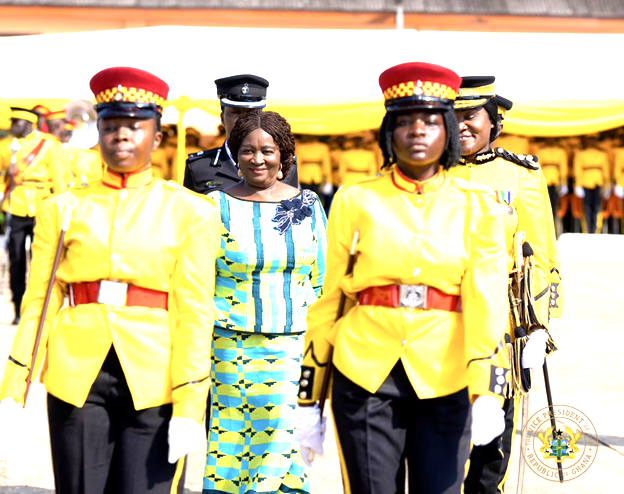
Ghana’s correctional framework is undergoing a profound recalibration, with Vice President Professor Jane Naana Opoku-Agyemang declaring that public safety hinges on a resourced system treating every citizen with inherent dignity irrespective of status as she commissioned 265 new Superintendents of Prisons from Officer Cadet Intake 32 (162 men, 103 women) in Accra.
Opoku-Agyemang framed the officers’ mandate as a fusion of justice and compassion, urging integrity and discipline to balance enforcement with humanity.
“Every Ghanaian deserves dignity, care, and humane treatment,” she asserted, embedding this ethos as the service’s guiding principle amid chronic strains like overcrowding and unrest.
The administration’s immediate interventions target inmate welfare head-on: a tripling of the daily feeding allowance from GHS 1.80 to GHS 5.00, set to nourish over 14,000 detainees and combat malnutrition.
Complementing this, President Mahama’s amnesty for 998 inmates signals a merciful pivot towards decongestion, reinforcing the correctional ethos of redemption and second chances.
Shifting from containment to contribution, Opoku-Agyemang spotlighted the service’s agricultural ventures as pathways to self-sufficiency, while announcing bold expansions into large-scale production of textiles, furniture, sanitary goods, and construction materials.
These programmes aim to equip inmates with marketable skills, generate internal revenue, and drive economic reintegration transforming prisons into innovation centres that bolster national development.
To fuel this ambition, she launched an appeal for contributions to the Prisons Improvement and Sustainability Persuasive Fund, framing donations as strategic investments in societal stability rather than mere philanthropy. “Every cedi rebuilds lives and secures our collective future,” she implored, targeting citizens, institutions, and partners.
In her parting charge to the cadets, Opoku-Agyemang stressed public outreach to reframe perceptions of the service, positioning the new officers as architects of transformative justice that underpins Ghana’s peace and security.
This blueprint reflects Accra’s strategic bid to modernise a beleaguered system, potentially easing fiscal burdens through revenue streams but implementation will test political will against entrenched resource constraints.