

Forum Joins Call to Oust Jinapor Over “Regulatory Capture”
A powerful new coalition accuses the tertiary education regulator of systemic failure, shielding unaccredited degrees, and burying a damning audit, demanding presidential intervention.
A significant new front has opened in the battle over governance in Ghana’s tertiary education sector.
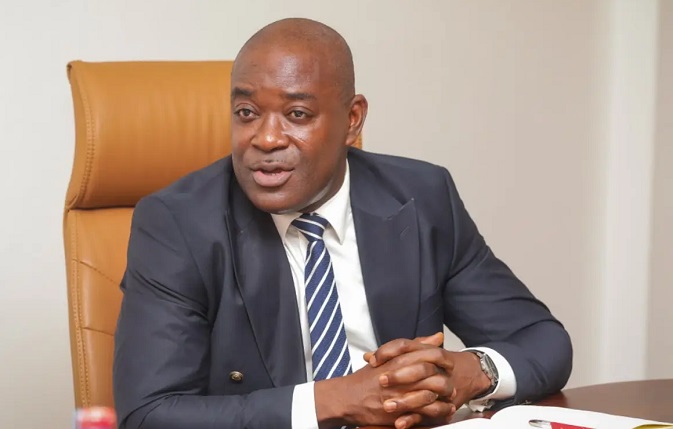
The Governance, Accountability and Transparency Forum (GATF), a coalition of senior academics and sector activists, has issued a scorching declaration of solidarity with the University of Ghana branch of the University Teachers’ Association of Ghana (UTAG-UG), demanding the immediate removal of Prof. Ahmed Jinapor Abdulai, Director-General of the Ghana Tertiary Education Commission (GTEC).
The statement, signed by Lead Convenor Prof. Quist-Aphetsi Kester and Coordinator Sena Divine Normenyo, amounts to a formal indictment of GTEC’s leadership. It alleges “persistent regulatory failure, selective application of authority, abuse of office, conflict of interest, and the apparent cover-up of deep-rooted governance decay,” with a primary focus on the Ghana Communication Technology University (GCTU).
At the core of the allegations is what GATF describes as GTEC’s “inexplicable refusal” to act on a formally petitioned case involving Ms. Vera Graham Asante, a Director at GCTU. The forum states she continues to use the title “Dr.” based on a 2021 doctorate from an institution that was neither recognised nor accredited by GTEC at the time of award, and which had already attracted regulatory warnings.
Despite a formal petition and “clear documentary evidence,” GATF asserts that Prof. Jinapor Abdulai whom they imply has a close association with Asante has failed to issue any public determination or sanction. This “prolonged silence and inaction” is labelled “gross dereliction of duty, regulatory capture, and a clear conflict of interest.”
Most strikingly, the statement claims Prof. Jinapor Abdulai has administratively treated this degree, and reportedly his own from a similar institution, as a “PhD equivalent,” a move GATF calls a “dangerous abuse of office” and a “direct assault” on academic standards.
The allegations extend to an active suppression of accountability. GATF reveals that a GTEC-supervised audit of GCTU, led by Deputy Director-General Prof. Augustine Ocloo, has been “effectively buried.”
The audit was mandated to investigate “fake credentials, financial mismanagement, procurement irregularities, and governance failures” but its findings have neither been published nor acted upon, raising “grave” questions about what is being concealed.
Similarly, GATF questions the legitimacy of the current Vice-Chancellor of GCTU, whose continued tenure is allegedly backed by Prof. Jinapor Abdulai despite unresolved allegations and an irregular secondment.
The forum argues the GTEC Director-General has “arrogated to himself powers he does not possess,” sidelining the Minister of Education in key appointments.
GATF frames these incidents not as isolated lapses but as evidence of a “broader and deeply troubling pattern.” Under Prof. Jinapor Abdulai, GTEC is accused of morphing from an impartial regulator into “a political or personal power-brokering centre” and “a shield for favoured individuals.”
This “climate of fear and administrative paralysis,” GATF warns, is actively damaging Ghana’s international academic reputation, threatening student mobility, research collaborations, and the global standing of its degrees.
Moving beyond internal sector disputes, GATF’s statement constitutes a direct, public appeal to the Presidency. It calls for an “immediate institutional reset” at GTEC, starting with the removal of its leadership, a forensic review of its decisions, and the restoration of transparent regulation.
The forum issues a “final notice”: without decisive presidential action, they will escalate to structured public disclosures, petitions to state oversight bodies, and international notifications. The message is clear: the coalition views this as a definitive battle for the integrity of Ghana’s higher education system and will not back down. The ball is now in the government’s court.