

By Prince Ahenkorah
The Mahama administration has unveiled a significant policy intervention aimed at one of Ghana’s most intractable educational challenges: the reluctance of teachers to accept postings to rural and deprived communities.
Deputy Education Minister Clement Apaak announced a 20 per cent salary top-up for teachers willing to serve in hard-to-reach areas, coupled with accommodation support, under the flagship “Teacher Dabre” Programme.
The announcement, made during a courtesy call by top BECE awardees, is the latest expression of the government’s stated commitment to bridging the urban-rural divide in educational outcomes.
But beneath the benevolent rhetoric lies a complex calculus of political messaging, fiscal sustainability, and the practical challenges of implementing policy in Ghana’s notoriously difficult education sector.
Dr. Apaak was explicit about the programme’s dual objectives: attraction and retention. Teachers who accept postings to rural communities will receive a 20 per cent top-up on their gross salary, a premium designed to compensate for the hardships associated with remote postings. Additionally, the government promises accommodation support to ease the burden of relocation.
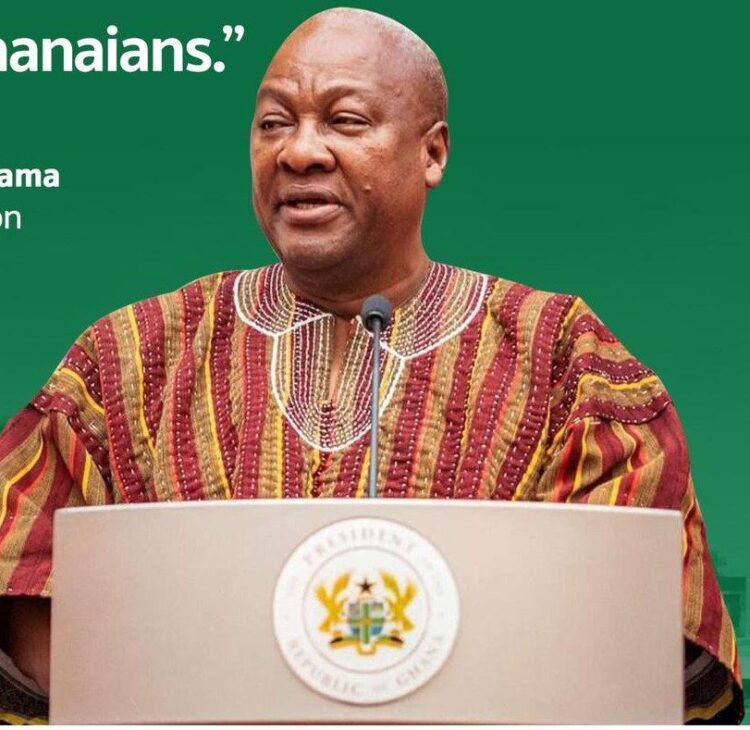
The initiative, first flagged by President John Dramani Mahama during his State of the Nation Address, positions itself as a direct response to decades of teacher shortages in deprived districts.
It acknowledges what education stakeholders have long documented: that without targeted incentives, qualified teachers will continue to gravitate toward urban centers, leaving rural schools understaffed and their students disadvantaged.
Timing and delivery matter in Ghanaian politics, and the Teacher Dabre announcement carries unmistakable political weight. By framing the policy as a presidential initiative and announcing it alongside high-achieving students from the BECE cohort, the government is signaling its commitment to an equity agenda ahead of the next election cycle.
The choice of Dr. Apaak as the messenger is also significant. As a deputy minister with academic credentials, he provides the policy with intellectual heft while remaining sufficiently distant from the presidency to allow for adjustments if implementation stumbles. The courtesy call setting low-key yet symbolically charged—allowed the government to project competence without the risks of a major standalone event.
For all its rhetorical appeal, the Teacher Dabre Programme raises immediate questions about fiscal sustainability. A 20 per cent salary top-up, multiplied across thousands of teachers and compounded by accommodation costs, represents a substantial recurrent expenditure commitment.
In an era of constrained public finances and IMF programme targets, the government will need to demonstrate that it has identified corresponding savings or revenue streams.
Education sector insiders will be watching closely to see whether the allowance is protected from the delays and partial payments that have plagued similar initiatives in the past. The Ghana Education Service (GES) has a mixed record on allowance disbursement, and teachers in deprived areas are particularly vulnerable to bureaucratic slippage.
The policy’s architects acknowledge that money alone cannot solve the rural posting problem. The underlying issues poor roads, unreliable electricity, limited healthcare, social isolation require multi-sectoral solutions that extend far beyond the education ministry’s mandate.
A teacher may be attracted by a 20 per cent top-up, but retention depends on whether they can live decently in the communities where they serve.
This is where the accommodation support component becomes critical. If the government can deliver on its housing promise, it may address the single biggest practical barrier to rural postings. If, as has happened with past housing initiatives, the accommodation fails to materialize or falls into disrepair, the salary incentive alone will likely prove insufficient.
Organized labour, particularly the teacher unions, will be studying the fine print. The Ghana National Association of Teachers (GNAT) and the National Association of Graduate Teachers (NAGRAT) have long advocated for differentiated pay to reflect the hardships of rural service.
Their response to the Teacher Dabre Programme will depend on whether they view it as a genuine reform or a politically convenient announcement lacking implementation teeth.
For the teachers themselves, the calculation is more personal. A 20 per cent top-up may tip the balance for some, particularly younger teachers without family ties binding them to urban centers.
But for those with school-aged children or spouses in formal employment, the professional isolation of rural postings may outweigh any financial inducement.
Despite the implementation questions, the policy’s underlying rationale is difficult to dispute. Ghana’s educational outcomes show a persistent and troubling correlation with geography.
Students in well-resourced urban schools consistently outperform their rural counterparts, not because of innate ability differences, but because of accumulated advantages in teaching quality, infrastructure, and learning materials.
The Teacher Dabre Programme represents an acknowledgment that market forces alone will not correct this imbalance. Without state intervention, teachers will continue to cluster in cities, and rural children will continue to pay the price.
As with many Ghanaian policy initiatives, the gap between announcement and execution will determine the programme’s ultimate impact. Key questions remain unanswered: How will “deprived communities” be defined and verified? What mechanism will ensure timely payment of the top-up? Who will deliver the accommodation support, and to what standard?
Dr. Apaak expressed optimism that the policy would improve teacher morale and learning outcomes. Education stakeholders, while welcoming the intent, will be watching for the operational details that will separate this initiative from its predecessors.
For the Mahama administration, the Teacher Dabre Programme offers an opportunity to demonstrate that it can deliver on its equity promises. But in a sector littered with well-intentioned policies that foundered on implementation, the proof will be in the posting—and whether, this time, the teachers actually stay.