


Ghana’s Ministry of Foreign Affairs has announced the rescue of forty-four (44) Ghanaian nationals from a fraudulent recruitment network operating in Nigeria, in what officials describe as a coordinated effort to combat human trafficking and cross-border scams.
In a press release issued on March 21, 2026, the Ministry confirmed that the victims had been lured out of Ghana through deceptive schemes, including false promises of employment and travel opportunities.
The rescue follows an earlier public warning by the Ministry against the activities of “QNET” and similar fraudulent networks, which continue to target unsuspecting Ghanaians.
According to the Ministry, the victims were recruited through informal channels, particularly social media, where traffickers presented what appeared to be legitimate opportunities abroad. Upon arrival in Nigeria, however, the victims were subjected to harsh and exploitative conditions.
“Affected individuals were lured through deceptive means, including social media and informal recruitment channels, with false promises of employment and travel opportunities.”
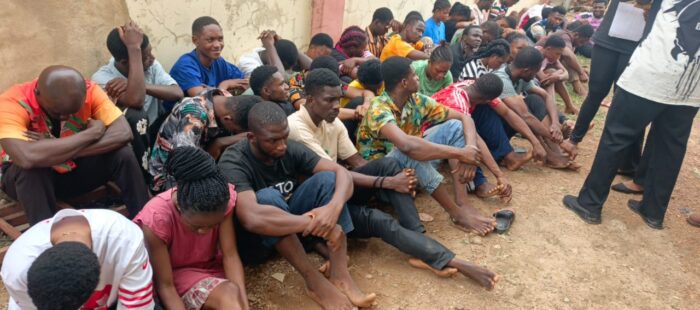
The Ministry further revealed that victims experienced restricted movement, psychological pressure, and coercion to recruit others into the same scheme.
This pattern reflects a broader trend in trafficking networks, where victims are often manipulated into becoming part of the system that initially deceived them.
The successful rescue was the result of a joint operation carried out on March 16, 2026, by Nigerian security agencies, including the Department of State Services (DSS), in collaboration with Ghanaian authorities.
The victims were subsequently repatriated to Ghana, arriving in Accra on March 20, 2026. “Following a coordinated operation, the victims arrived in Accra on 20th March, 2026.” Authorities say such operations rely heavily on international cooperation, particularly between security agencies and diplomatic missions.
The Government of Ghana has indicated that efforts are ongoing to dismantle the criminal syndicates behind these trafficking operations. The Ministry noted that it is working closely with Nigerian counterparts and other stakeholders to investigate and disrupt the networks involved.
This aligns with broader regional efforts to tackle human trafficking, which has increasingly taken on a transnational dimension involving multiple countries and coordinated criminal groups.
Beyond the rescue, the government has outlined measures to support the victims, including rehabilitation and reintegration into society. The ministry also said these steps are critical to helping survivors recover from the psychological and economic impact of trafficking.
“Steps are also being taken to ensure the protection, rehabilitation and reintegration of the victims,” the statement said, adding that previous cases have shown that victims often face long-term trauma and financial hardship after such experiences, making post-rescue support essential.
The Ministry has also issued a strong warning to the public to remain vigilant against fraudulent recruitment schemes. Ghanaians have been advised to verify all travel and employment opportunities through official channels and avoid engaging with unverified individuals or organisations.
“The public is advised to exercise utmost caution, verify all travel and employment opportunities through official channels, and avoid engagement with unverified individuals or entities.”
Authorities emphasise that many victims are targeted due to a lack of awareness, particularly among young people seeking opportunities abroad. The Ministry reaffirmed its commitment to protecting Ghanaian citizens both at home and abroad, stressing that safeguarding nationals remains a top priority.
It also expressed appreciation to the Government of Nigeria for its cooperation and prompt intervention in the rescue operation. “The Ministry reaffirms its unwavering commitment to the protection of Ghanaian citizens both at home and abroad,” the Ministry of Foreign Affairs concluded.
The latest rescue adds to a growing number of similar operations in recent years, as authorities intensify efforts to combat human trafficking and fraudulent recruitment schemes across the region.