

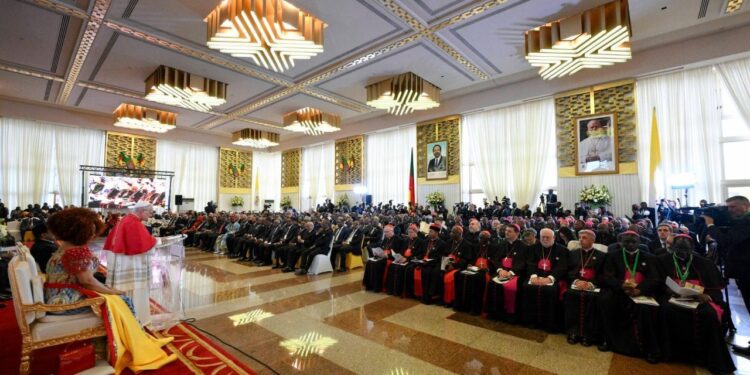
Pope Leo XIV has called for peace, justice, and a renewed focus on the common good, encouraging Cameroonians to embrace their diversity as a source of national unity and strength.
Speaking at the beginning of his Apostolic Journey to the Central African country, the Pope thanked the people for their warm reception and described Cameroon as “Africa in miniature” because of its rich cultural and natural diversity. “This variety is not weakness but a treasure,” he said, noting that it represents “a promise of fraternity and a solid foundation for building lasting peace.”
The Holy Father added that his visit is meant to express solidarity with all Cameroonians and to inspire continued efforts toward strengthening the common good and also acknowledged the global climate of discouragement, observing that “hopelessness is rampant” and that many feel powerless in the face of urgent challenges.
Yet, Pope Leo XIV insisted, there remains “a hunger and thirst for justice for courageous choices and for peace,” particularly among young people, whom he called to take an active role in shaping a more just society.
The Holy Father also reaffirmed the Holy See’s commitment to strengthening its collaboration with Cameroon, grounded in respect for human dignity and religious freedom.
Recalling the legacy of his predecessors, the Pontiff pointed to the enduring relevance of their calls for hope, reconciliation and responsible governance.
Drawing on the words of Saint Augustine, he reminded leaders that authority is fundamentally a form of service: those who govern, he said, must do so “not from a love of power, but from a sense of the duty they owe to others.” Such service, he explained, requires dedication to the good of all, including minorities, and the promotion of harmony within society.
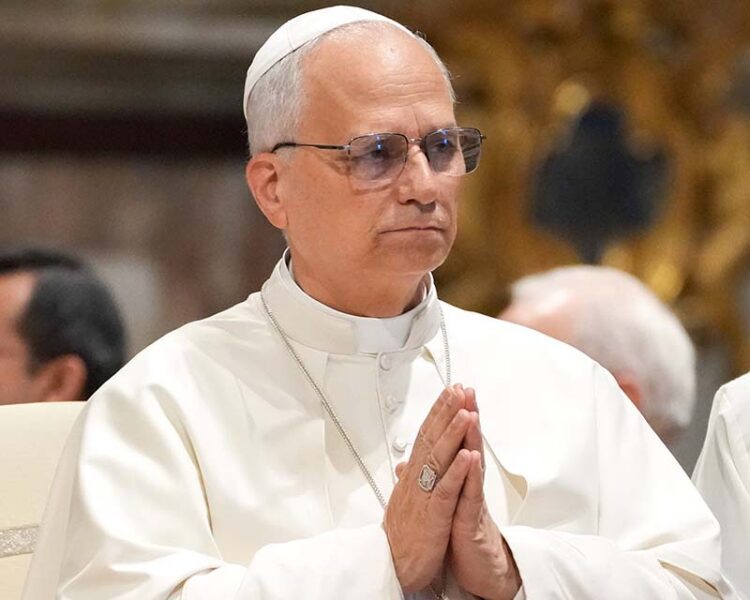
Pope Leo XIV expressed deep concern over ongoing violence in Cameroon’s Northwest, Southwest, and Far North regions, highlighting the “profound suffering” caused by conflict, including loss of life, displacement of families, and diminished prospects for young people and stressed that behind statistics are real human stories and broken hopes.
Renewing his appeal for peace, he called for rejection of “the logic of violence and war” in favour of peace grounded in love and justice, urging that peace be actively lived, not merely spoken.
In addition, the Holy Father, indicated that, peace is a collective duty, starting with those in leadership, stressing that governing requires genuinely listening to citizens and incorporating their input in shaping sustainable solutions.
The Pontiff added that, transparency, respect for the rule of law, and strong, credible institutions are essential for rebuilding public trust and urged leaders to act as “bridges, never as sources of division,” ensuring security operations uphold human rights.
In his concluding address, the Holy Father called for stronger interreligious dialogue and greater participation of faith leaders in mediation efforts, reaffirming the Church’s commitment to providing education, healthcare, and charitable support to all people without distinction.
Earlier aboard the papal plane, he delivered a brief address, thanking the Algerian authorities and reflecting on the first leg of the journey.
Pope Leo XIV, expressed his gratitude to all the authorities in Algeria, who made this visit possible. “As youʼve seen, theyʼve even granted us the full honor of an escort as we fly over Algerian airspace,” he added.
He reflected on his visit to Annaba and the ruins of Hippo, the ancient city closely associated with St. Augustine. He described the experience as both personally meaningful and symbolically significant, noting that it highlighted Augustine’s enduring call to seek truth and foster human community.
According to the Holy Father, Augustine’s writings and spiritual legacy continue to hold relevance today, extending beyond Christianity to broader society.
This remarks came after the first leg of his 11-day tour across four African countries, during which he spent two days in Algeria. While there, he observed that St. Augustine continues to be widely honoured even in a country where most of the population is not Christian, describing this shared respect as a powerful example of cultural and religious understanding.
Furthermore, Pope Leo XIV described his time in Algeria as an important opportunity to strengthen bridges between communities and promote interfaith dialogue between Christians and Muslims.
“I think the visit to the mosque was significant to say that although we have different beliefs, we have different ways of worshiping, we have different ways of living, we can live together in peace. And so I think that to promote that kind of image is something which the world needs to hear today, and that together we can continue to offer in our witness as we continue on this apostolic voyage.”