

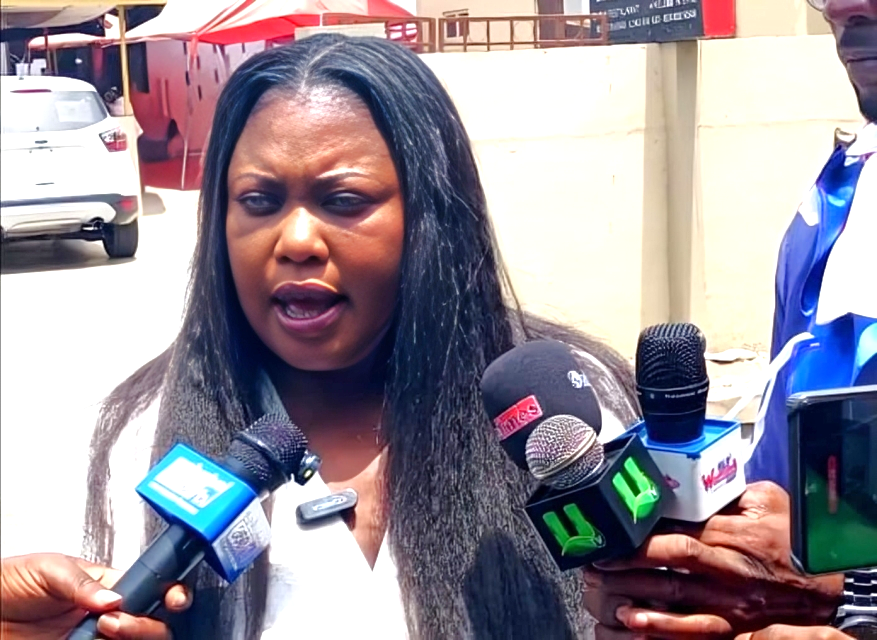
By Gifty Boateng
An aspiring NPP parliamentary candidate, Beatrice Nana Yaa Owarewaa Siaw, has made a claim so extraordinary that it has drawn disbelief across Ghana’s political class.
She says she has already spent GH¢40 billion (approximately $2.7 billion at official rates) on community projects in her constituency before even securing her party’s nomination.
By comparison, Ghana’s entire 2023 national budget was roughly GH¢200 billion. Mrs Siaw claims to have personally invested a fifth of that.
The figure defies logic. The Centre for Democratic Development (CDD) estimates the cost of becoming an MP at about $400,000. Mrs Siaw, a businesswoman who styles herself “Mampong dehyie” (royal of Mampong), insists her spending is not only real but possibly higher.
“It could be beyond 40 billion… or within 40 million. It’s 40 billion. Pepepe, 40,” she told Joy News, when pressed.
The only project she named is an astroturf football pitch, which she said costs a minimum of GH¢500,000. When the interviewer noted the vast discrepancy, she replied that the astroturf was merely an example. She declined to itemise any project costing even GH¢1 million.
Sources of wealth. Mrs Siaw says she owns a large rubber plantation in the Eastern Region, heavy-duty equipment, a construction firm, and real estate. She denies any state financing. “Security reasons,” she said, explain why she cannot disclose all her businesses.
Political context. The incumbent NPP MP for Asante Mampong, Kwaku Apramtwum-Sarpong, has not commented. Mrs Siaw’s boast places her alongside party financiers like Ken Agyapong and Bryan Acheampong, but she has not yet fought a primary, let alone a general election.
She rejects accusations of vote-buying, calling the practice “disgusting.” Yet her method large-scale visible projects before a vote is a classic Ghanaian political investment strategy, albeit at a historically unprecedented scale.
Women and barriers. She also spoke of systemic barriers facing female politicians, including financial constraints and personal attacks. Her own case, however, raises a different question: if GH¢40 billion is what it takes to enter Parliament, what chance does any ordinary woman have?
Verdict: Either Mrs Siaw is wildly exaggerating, or she has deployed a sum equivalent to a medium-sized national infrastructure fund without any electoral mandate. Either way, her claim will be closely watched not least by Ghana’s tax authorities and anti-corruption agencies.