

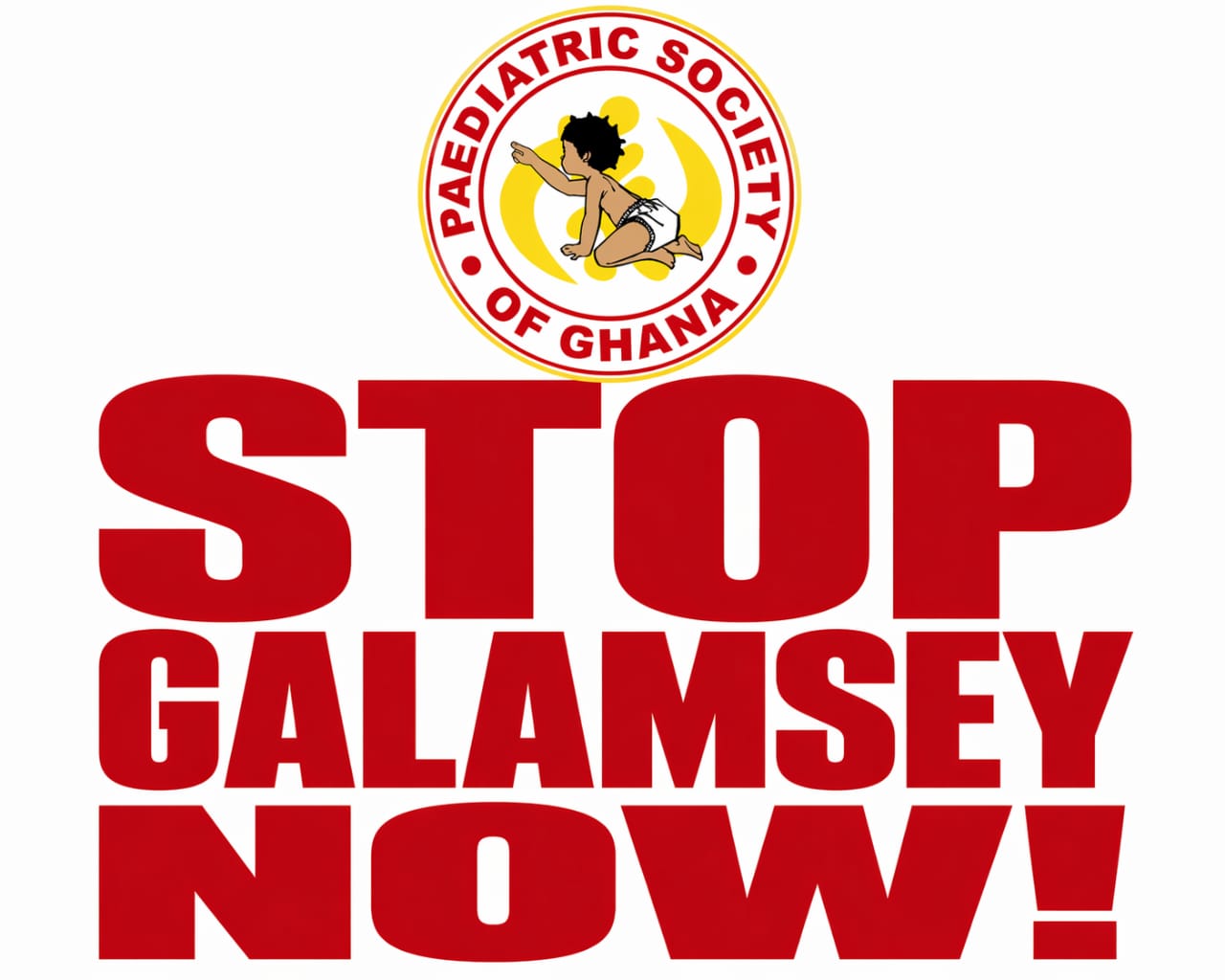
The Paediatric Society of Ghana has issued a strong appeal to the government, urging urgent and decisive action to address the growing threat of illegal mining, widely known as galamsey.
In a formal statement addressed to the President, the Society warned that the environmental destruction caused by illegal mining is rapidly evolving into a major public health emergency, particularly for children.
The statement combined both a message of commendation and a call to action, with the Society acknowledging the government’s role in advancing global recognition of historical injustices, particularly the classification of the transatlantic slave trade as a crime against humanity.
However, it stressed that Ghana now faces a pressing modern crisis that demands similar moral clarity and urgency. “This recognition is not merely symbolic. It is a profound moral correction in global history,” the statement noted, before drawing attention to the need to confront present challenges with equal resolve.
Galamsey as a Public Health Threat
The Society framed illegal mining not only as an environmental issue but as a direct threat to public health, especially for children. It warned that the contamination of water bodies and food systems by toxic substances such as mercury and arsenic poses severe risks to human health.
From a paediatric perspective, the statement described galamsey as a danger to both present and future generations. It emphasized that exposure to heavy metals can lead to long term health complications, particularly in children whose bodies and brains are still developing.
“Galamsey is actively poisoning our rivers, contaminating our food systems, and exposing children to toxic heavy metals,” the statement said, highlighting the scale of the threat.

The Society further noted that the damage extends beyond immediate health effects, warning that environmental degradation could compromise water security and impose lasting developmental challenges on children yet to be born.
Evidence of Health Impact
Citing emerging clinical and environmental evidence, the Society outlined the specific health risks associated with galamsey. It pointed to research linking prenatal exposure to mercury with irreversible brain damage, reduced cognitive ability, and neurodevelopmental disorders.
The statement also highlighted the broader health consequences of polluted water sources, which can increase the prevalence of chronic diseases, infections, and malnutrition among children. These conditions, it noted, place an additional burden on the healthcare system and hinder national development.
Environmental degradation was also identified as a driver of poverty, food insecurity, and displacement, factors that disproportionately affect children and limit their opportunities for growth and development.
The Society described the situation as a “slow, silent assault on the Ghanaian child,” underscoring the urgency of addressing the crisis.
Moral and Historical Perspective
In its statement, the Paediatric Society drew parallels between the current environmental crisis and historical injustices, emphasizing the long term consequences of inaction.
It argued that just as the transatlantic slave trade had lasting impacts on generations, the effects of environmental destruction could similarly shape the future of the nation.
“The transatlantic slave trade robbed generations of Africans of their future. Galamsey risks doing the same, not through chains, but through poisoned rivers and degraded lands.”
The Society stressed that crimes against humanity are defined not only by intent but also by the scale of harm and their generational consequences. It warned that failing to address galamsey could result in irreversible damage to both the environment and the health of future generations.
Call for Coordinated National Response
The Paediatric Society called for a comprehensive and coordinated national response to the crisis. It urged the government to elevate galamsey to the level of a national emergency, recognizing its implications for both public health and national security.
The statement emphasized the need for a science driven approach involving multiple sectors, including health, environment, education, and security. It also called for strict enforcement of laws protecting water bodies and forest reserves.
In addition, the Society highlighted the importance of investing in child centered environmental health systems. These systems would focus on early detection, diagnosis, and treatment of health conditions linked to environmental exposure, including heavy metal toxicity.
The Society also encouraged the government to take a leading role in advocating for global recognition of environmental destruction as a broader crime against humanity.
While urging action, the Paediatric Society reaffirmed its willingness to collaborate with the government. It offered its expertise in research, advocacy, and public health to support efforts aimed at safeguarding the health of children.
“The children of Ghana, both present and unborn, depend on the decisions we take today,” the statement concluded, emphasizing the responsibility of leadership in shaping the future.
The Society expressed hope that its appeal would prompt decisive action to address the crisis and protect the well being of future generations.