

TNR||Aljazeera
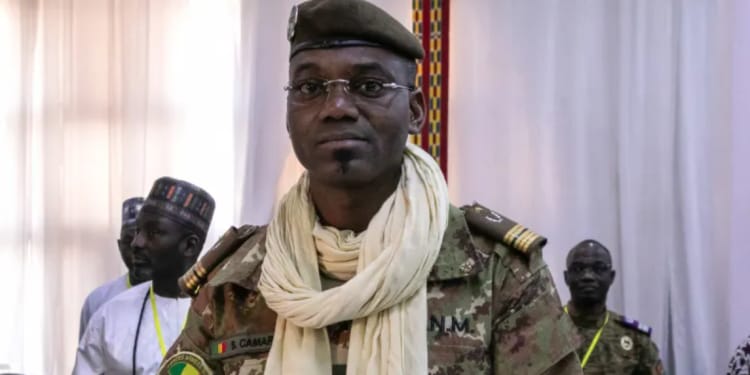
Mali has been plunged into mourning after Defence Minister General Sadio Camara was killed during a series of brazen, coordinated attacks on military installations across the country, sources confirmed to Al Jazeera Sunday.
The announcement came barely 24 hours after Camara’s residence in the heavily fortified garrison town of Kati was struck in simultaneous offensives launched by an al-Qaeda affiliate and Tuareg insurgents.
A crucial architect of the military junta that seized power through consecutive coups in 2020 and 2021, Camara was regarded as a linchpin of the ruling establishment.
“He was one of the most influential figures within the ruling military leadership and had been seen by some as a possible future leader of Mali,” said Al Jazeera’s Nicolas Haque, who has reported extensively from Mali.
“His death is a major blow to the country’s armed forces.”
Haque reported that assailants executed a suicide car bomb attack on Camara’s residence in Kati, a strategic military bastion located roughly 15km northwest of the capital, Bamako, where Interim President Assimi Goita also resides.
“Kati is considered one of the most secure locations in the country, yet fighters from the al-Qaeda-linked Jama’at Nusrat al-Islam wal-Muslimin (JNIM), along with Tuareg fighters from the Azawad Liberation Front (FLA), were able to launch the attack.”
Interim President Goita was “alive and well in a secure location,” Haque added.
“When the attack took place, he was moved to safety, so he remains in command of the military,” he said.
The gunmen unleashed attacks on multiple fronts nationwide, striking Bamako, the northern strongholds of Gao and Kidal, and the central city of Sevare.
Haque noted that the reverberations of heavy gunfire and thunderous explosions were still audible in Kidal on Sunday, according to local accounts. “This remains an ongoing operation more than 24 hours after it began,” he added.
Analyst Bulama Bukarti warned that “more battles for control of territory and strategic locations” were likely to erupt in the coming days.
He underscored the unprecedented convergence of armed factions that once battled each other but have now forged an alliance against the Malian state.
“These are two groups fighting for different objectives,” Bukarti told Al Jazeera.
“But they came together last year and said they would work together going forward, and what we have seen over the last few days is the actual implementation of this agreement.”
The African Union, the Secretary-General of the Organisation of Islamic Cooperation, and the United States Bureau of African Affairs have all condemned the attacks.