

By Philip Antoh
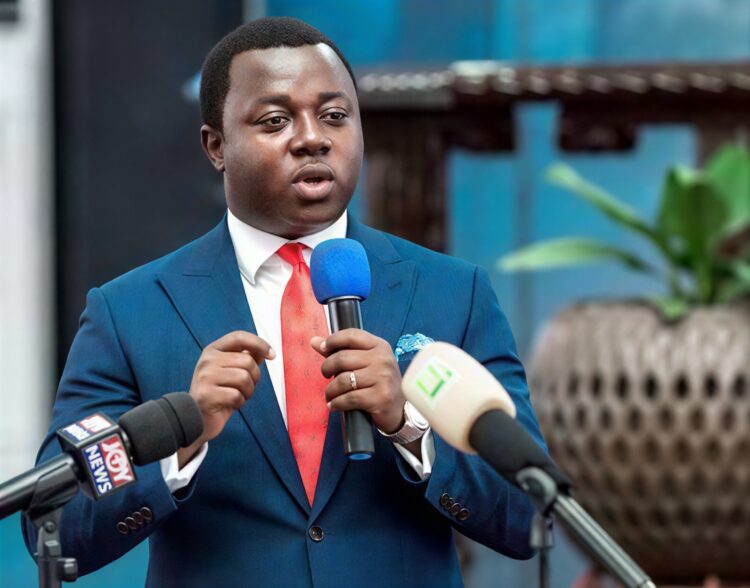
Ranking Member on Parliament’s Defense and Interior Committee, Rev. Ntim Fordjour says, public safety remains the most critical pillar of any prosperous nation. He explained that the structural integrity of security sector governance determines the state’s ability to provide a safe environment for both citizens and visitors.
He noted that his role requires holding the executive accountable through constructive engagement. He emphasized that his interventions are intended to support the effective functioning of the national security architecture.
The Assin South Member of Parliament (MP) added that his team consistently raises proactive concerns to prevent policies or directives that could pose risks to public safety. While some recommendations receive attention, he observed that ignored advice has, in several cases, led to consequences the nation has had to confront.
Fordjour expressed concern over Ghana’s declining international standing in peace and stability, recalling that Ghana ranked as the second most peaceful country in Africa in 2021.
However, recent data from the Global Peace Index shows a decline, with the country falling to 61st globally by late 2025, compared to its previous position as the 38th most peaceful country in the world.
He warned that Ghana risks losing its reputation as a beacon of peace and stability. He urged the executive to take deliberate steps to restore the country’s standing.
According to him, the Government appears increasingly focused on reacting to trivial matters rather than strengthening public safety. He added that this misplaced focus risks diverting attention and critical resources away from addressing serious security threats, ultimately weakening the country’s ability to protect its citizens.
“I believe the government should focus more on actions that enhance our safety and security, rather than becoming vindictive or overly sensitive, and should be able to overlook minor, trivial issues.”
Ntim Fordjour cited examples from other countries where leaders tolerate satire and creative expression without deploying state security agencies.
“We have a sitting President of the United States who has been portrayed in various ways, including through dances and exaggerated mannerisms, as I am sure you have seen. Yet no one has been arrested in the United States.”
The Ranking member criticized the arrest of individuals over minor comments or dissenting views, describing such actions as a sign of intolerance and a misuse of security resources that should be directed toward more pressing threats.
Comparing the current administration to previous ones, he noted that past leaders tolerated dissent even when boundaries were tested. He stressed that effective leadership requires the ability to overlook minor provocations and focus on broader national stability.
Fordjour also recounted a personal experience in which security personnel entered his residence without a warrant after he raised concerns about suspicious flights. He described this as an example of the need for greater respect for civil liberties.
He advised the leadership to prioritize ensuring that citizens feel safe in their homes, schools, and workplaces. He argued that a climate of vindictiveness undermines efforts to make Ghana a secure place for all.
Absence Of Substantive Defense Minister Raises Concerns Over Military Oversight
Fordjour further addressed vulnerabilities within the security sector, noting that he remains cautious about disclosing sensitive information in public to protect national interests.
He stated that his focus is often on specific issues such as recruitment challenges and the welfare of security personnel. He referenced his previous concerns about the killing of traders in Burkina Faso by suspected terrorists.
He also pointed to the politicization of chieftaincy disputes as a factor worsening security challenges in several regions, emphasizing that security matters should remain objective and free from partisan influence.
The Assin South MP expressed concern over the absence of a substantive Minister for Defense, noting that the country has operated for eight months without one. He described this as a significant lapse that is difficult to justify in a stable democracy.
According to him, the lack of a dedicated minister affects both strategic direction and administrative efficiency within the armed forces.
He maintained that his criticisms are constructive and aimed at improving national safety. He reiterated his commitment to speaking candidly about policy effectiveness and continuing his oversight role without fear or favor.
He argued that some recent security breaches could have been avoided with a proactive policy decisions. He called on the government to demonstrate stronger commitment to national defense through consistent leadership and proper appointments.
The MP stressed that the safety of Ghanaian citizens remains the ultimate measure of any government’s success and called for the immediate appointment of a substantive Defense Minister to strengthen national confidence.
He concluded by reaffirming his commitment to raising issues that safeguard citizens in their daily lives and urged the executive to heed the recommendations of the Defense and Interior Committee to prevent further decline in Ghana’s peace ranking.