

By Leo Nelson
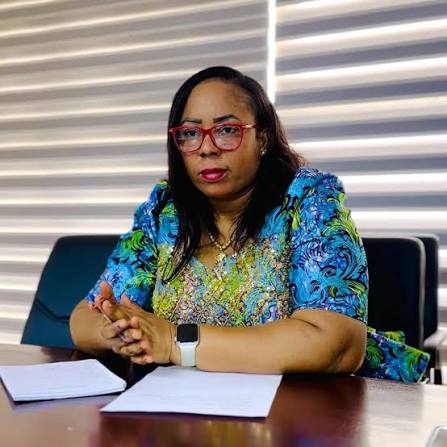
Greater Accra Regional Minister, Linda Obenewaa Akweley Ocloo, has issued a formal clarification and apology following public backlash over remarks suggesting that postings to parts of northern Ghana could be perceived as punitive.
The apology, contained in a press release, comes after a widely circulated video captured her comments during a media interaction. The remarks sparked concern among sections of the public, particularly residents of the Northern Regions, who viewed the statement as inappropriate and potentially undermining national unity.
In her statement, the Minister moved quickly to address the controversy, describing the remarks as a miscommunication rather than a reflection of policy or intent.
“I wish to state, without reservation, that the comments captured in the video were a genuine slip in communication and do not reflect my considered views.”
She further clarified that her comments do not represent the policies governing postings within Ghana’s Public Service and should not be interpreted as such.
Providing context, Ocloo explained that her comments were made in response to a media question regarding administrative practices involving some technocrats. The issue under discussion centred on allegations that certain officials engaged in the issuance of development permits without due process were sometimes transferred to nearby districts, allowing such practices to persist.
In addressing the concern, she referenced situations where individuals had been posted to areas far from their usual places of residence. However, she acknowledged that her wording created an unintended and misleading impression.
“Regrettably, my choice of words created the unintended impression that such postings were punitive.”
She emphasised that postings and transfers within the Public Service are guided by administrative needs and due process, not as a form of punishment.
The clarification is significant given the sensitivity of regional balance and fairness in national discourse. Ghana’s public administration framework is built on principles of equity and inclusiveness, making such interpretations particularly consequential.
In a direct appeal to the public, the Minister admitted she was wrong and offered an unreserved apology, especially to residents of the Northern Regions.
“I sincerely acknowledge the concerns that this has generated and offer my unreserved apology to all Ghanaians, especially my brothers and sisters in the Northern Regions, for any misunderstanding, offence, or discomfort caused.”
Her statement reflects an awareness of the emotional and cultural weight attached to regional identity, as well as the importance of maintaining respectful and balanced communication in public office.
Ocloo, who has served as Greater Accra Regional Minister since 2025, occupies a role that involves overseeing administrative coordination across Ghana’s most urbanised region, Greater Accra. As such, her public statements carry both administrative and symbolic significance.
She used the opportunity to reaffirm her commitment to fairness and professionalism in governance.
“I hold the highest regard for due process, equity, and professionalism.” She added that all administrative decisions, including staff postings, are undertaken in line with established rules and without prejudice.
Beyond the apology, the Minister addressed the broader issue of public trust and leadership responsibility. She acknowledged the expectations placed on her office and pledged to uphold high standards in her conduct and decision-making.
“I deeply value the trust reposed in me and remain dedicated to serving the people of the Greater Accra Region with integrity, fairness, and accountability.”
Her remarks come at a time when public officials are increasingly held accountable for their statements, particularly in an era where digital platforms amplify and scrutinise public communication in real time.
Observers note that swift clarifications such as this play a key role in managing public perception and maintaining confidence in leadership.
They also highlight the importance of precision in communication, especially when addressing sensitive governance issues.
The Minister concluded by urging the public to accept her explanation and allow the matter to be laid to rest.
“I respectfully urge the public to treat this matter as clarified.”
While reactions to the apology may vary, the statement represents a clear attempt to correct the narrative, reaffirm institutional principles, and maintain public trust.