


By Leo Nelson
After years of back and forth, Ghana’s Parliament has passed the Human Sexual Rights and Family Values Bill 2025, also known as the Anti-LGBTQ+ Bill, following a heated sitting marked by strong political debate and competing interpretations of its constitutional implications.
The bill was passed under the leadership of First Deputy Speaker Bernard Ahiafor, who chaired proceedings during the final stages of deliberation. The legislation, which has been one of the most contentious policy proposals in recent years, was approved after its third reading in the House.
It seeks to regulate issues relating to sexual orientation and the promotion of LGBTQ activities in Ghana. The passage of the bill has revived national and international attention due to its legal, social, and human rights implications, as well as its alignment with earlier legislative efforts in the previous Parliament.
Following the passage of the bill, Majority Leader and Leader of Government Business Mahama Ayariga addressed the House, expressing appreciation for Members of Parliament who participated in the process and contributed to its approval.
He specifically thanked the Minority Leader, Alexander Afenyo-Markin, for remaining in the chamber during deliberations, noting that both sides of the House had engaged in discussions that led to the final passage of the legislation.
He stated that the passage of the bill fulfilled a long standing promise and expressed confidence that it would soon receive presidential assent. According to him, President John Dramani Mahama is expected to sign the bill into law upon his return to the country.
“We have not yet printed a copy of the bill for him. But upon return to Ghana, I can assure Ghanaians that His Excellency the President will, as promised, assent to this bill and it will come into force.”
He added that the President is currently out of the jurisdiction, which has delayed the formal assent process.
Debate Over Constitutional Clauses
Mahama Ayariga also addressed concerns raised during the legislative process, particularly regarding Clauses 9 and 10 of the bill, which he said were subject to constitutional interpretation.
He explained that the committee responsible for reviewing the bill had elaborated on the phrase “subject to the Constitution” to ensure that provisions relating to legal representation and freedom of expression were not misinterpreted as criminal acts.
According to him, the committee clarified that lawyers representing persons accused under the law cannot be considered as promoting LGBTQ activities simply by performing their professional duties.
He further noted that media practitioners reporting on related matters and academics conducting research should not be penalized under the legislation. He argued that these clarifications were necessary to ensure that the law does not infringe on professional rights while still achieving its intended purpose.
Political Tensions in Parliament
The Majority Leader also accused members of the Minority of leaving the chamber and holding a press conference outside Parliament to present what he described as a misleading interpretation of the bill.
The Bawku Central Member of Parliament claimed that some Minority MPs had abandoned the debate and were attempting to misinform the public about the content and intent of the legislation.
According to him, the bill remains consistent with its original purpose and has not been fundamentally altered in a way that changes its core intent. He maintained that attempts to describe the legislation as watered down were inaccurate and misleading.
Mahama Ayariga emphasized that the law explicitly prohibits the promotion of LGBTQ activities in Ghana. He said the bill reflects long-standing public sentiment and legislative intent expressed in earlier sessions of Parliament.
He argued that the legislation is consistent with previous versions of the bill passed in the Eighth Parliament and that its core provisions remain intact.
Ayariga stated that the bill responds to what he described as a national desire to preserve moral and cultural values. According to him, the passage of the bill reflects the collective will of many citizens who believe that existing social structures must be protected.
He further urged the public to understand that Parliament’s decision was not new, but a continuation of earlier legislative efforts on the same subject.
Background and Broader Context
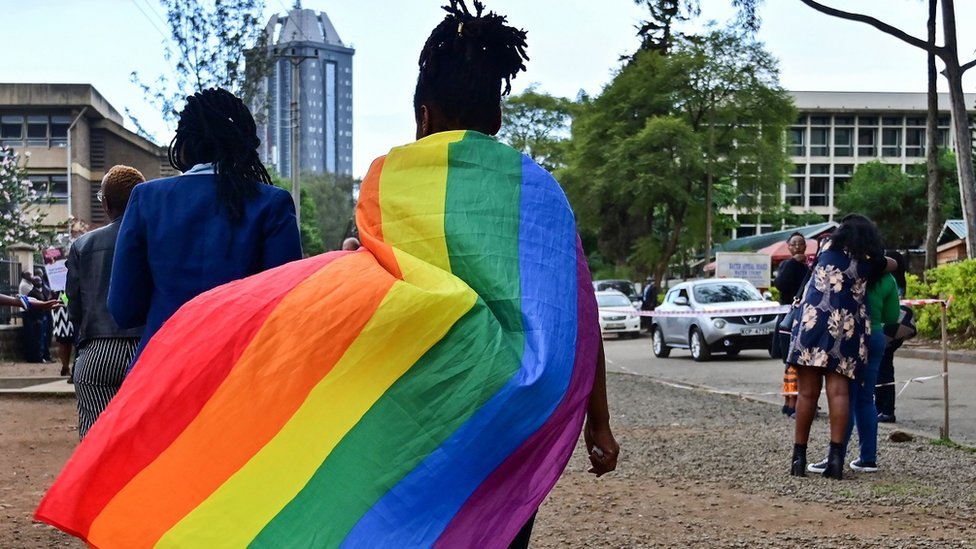
The Human Sexual Rights and Family Values Bill, also known as the Anti-LGBTQ+ bill has been the subject of extensive public debate both within Ghana and internationally. The legislation criminalizes identifying as LGBTQ with penalties of up to three years in prison.
It also imposes stricter penalties, including up to ten years imprisonment, for individuals or groups found to be promoting or financing LGBTQ related activities.
The bill had previously been passed by Parliament in February 2024 but was not signed into law by former President Nana Akufo Addo. At the time, he cited ongoing legal challenges before the Supreme Court regarding its constitutionality.
The Supreme Court later dismissed the challenges on procedural grounds, ruling that they were premature because the bill had not yet been signed into law, yet former President Akufo-Addo refused to sign the bill.
Despite sustained international criticism and pressure from human rights organizations, the bill has maintained strong support among socially conservative and religious groups in Ghana. These groups argue that the legislation is necessary to protect cultural identity and traditional family structures.
At the same time, institutions such as the Commission on Human Rights and Administrative Justice have previously advised Parliament to amend aspects of the bill to ensure compliance with international human rights obligations.
The passage of the Human Sexual Rights and Family Values Bill 2025 marks a significant moment in Ghana’s legislative history, reflecting deep divisions over social policy, constitutional interpretation, and human rights.
With presidential assent expected, attention now turns to the next stage of the legislative process and its potential legal and diplomatic implications.
Meanwhile, reactions among Ghanaians remain divided. While some citizens have applauded Parliament for taking what they see as a firm moral stance, others fear the legislation may undermine democratic freedoms and damage the country’s image as a tolerant democracy.
The bill now awaits presidential assent before it can become law. Observers say the decision by the President will be closely watched both within Ghana and abroad, as debates over human rights and cultural values continue to shape public discourse across the country.