

By Lawrence Odoom
President John Dramani Mahama has proclaimed a watershed moment in Ghana’s economic trajectory, announcing that for the first time in years, Ghana will refine its own crude oil on Ghanaian soil , a decisive stride toward industrial sovereignty, job creation, and value retention.
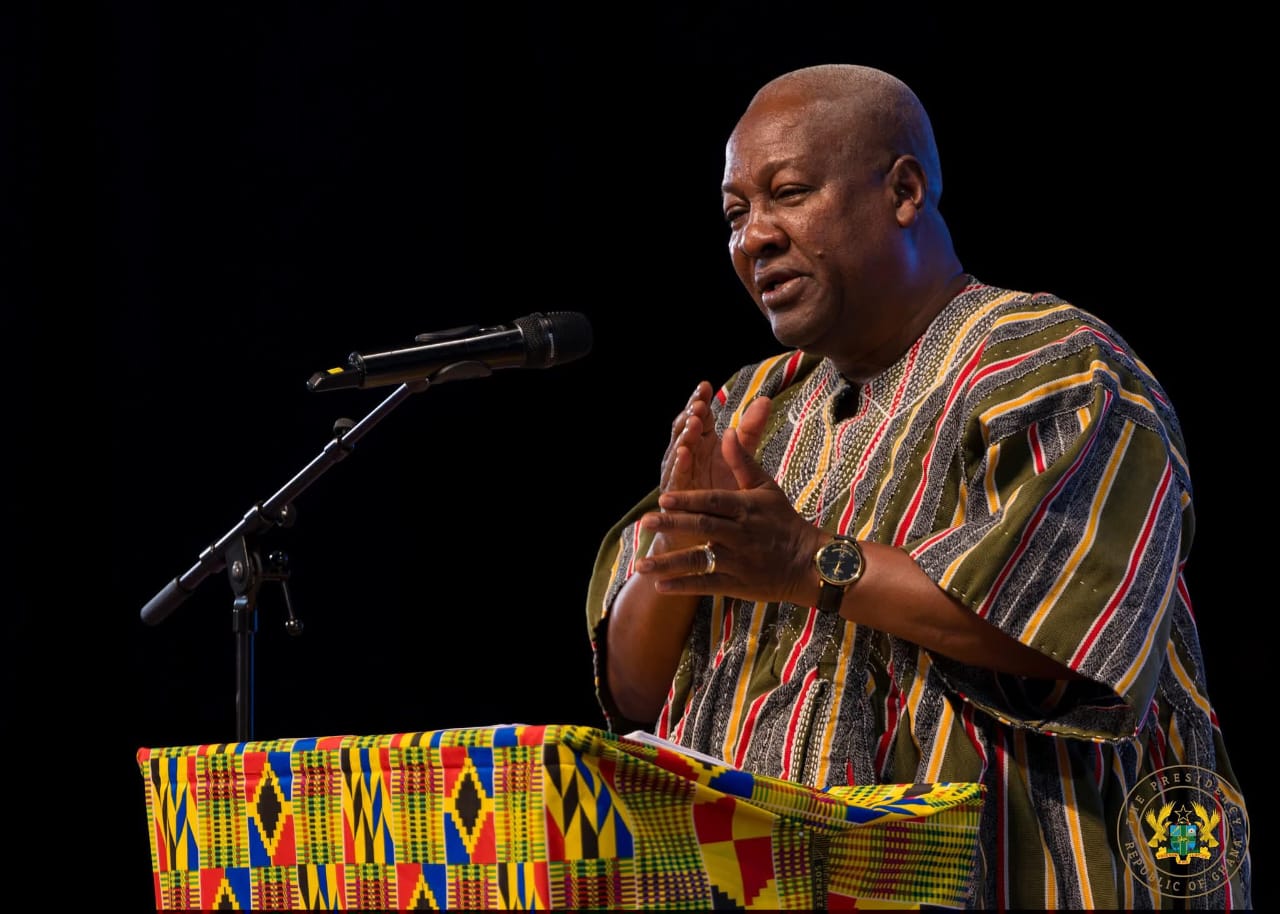
Speaking before a distinguished assembly of Ghanaians, investors, technocrats, and business leaders at the Ghana Diaspora Town Hall Meeting in London, the President articulated a bold vision to metamorphose Ghana from a mere exporter of raw commodities into a modern industrial powerhouse anchored on beneficiation and domestic production.
On Ghana’s energy future, President Mahama disclosed that his administration is concurrently intensifying offshore oil and gas exploration while fortifying the country’s capacity to process its natural endowments at home.
According to the President, Ghana has secured pivotal upstream investments, including a renewed commitment of approximately US$1.5 billion from ENI for the Offshore Cape Three Points (OCTP) Field to amplify both oil and natural gas output.
Yet, he emphasized that augmented production devoid of domestic processing is insufficient.
“We are about to make history again. We did it during my first term, but after we left office it did not continue. In June, we will deliver a parcel of Ghanaian crude from our own oil fields to a refinery in Ghana for processing,” President Mahama announced to resounding applause.
The pronouncement is being hailed as a defining inflection point for Ghana’s petroleum sector and a strategic recalibration to diminish reliance on imported refined fuels.
For decades, Ghana has exported crude while re-importing refined products at exorbitant cost. The President condemned this paradigm as an inadvertent export of employment, expertise, and industrial momentum.
“Normally we produce the oil and export it. Then we import finished petroleum products or import crude again to refine. That cycle must change,” he stated.
He elucidated that local refining will empower Ghana to capture superior value from its resources, conserve foreign exchange, fortify domestic supply chains, galvanize industrial expansion, and generate thousands of direct and ancillary jobs for Ghanaians.
The President underscored that this refining initiative constitutes a cornerstone of a broader national industrial blueprint aimed at constructing a fully integrated petroleum value chain spanning extraction, refining, storage, petrochemicals, distribution, manufacturing, and exportation.
Beyond hydrocarbons, President Mahama issued a clarion call for nationwide commitment to value addition across every productive sector.
Illustrating with Ghana’s mineral wealth, he observed that raw gold, manganese, bauxite and other minerals continue to be exported for foreign processing, only for high-value derivatives to be re-imported at premium.
“When we export raw materials and somebody else processes them, we create jobs in their economy instead of our own. The finished products are then exported back to us. That model cannot deliver sustainable prosperity,” he said.
The President asserted that Ghana’s enduring prosperity hinges on a deliberate ascent up the value chain through strategic investments in manufacturing, agro-processing, mineral beneficiation, fertilizer production, petrochemicals, food processing, and industrial parks.
Economic analysts posit that this doctrine could reposition Ghana as West Africa’s preeminent industrial hub, accelerating technology transfer, export growth, and employment.
The scheduled June delivery of indigenous crude to a domestic refinery is poised to become one of the most emblematic milestones in Ghana’s contemporary economic annals — a resounding testament to self-reliance and industrial resolve.
President Mahama concluded with an unequivocal directive:
“We must pursue value addition not only in oil and gas, but in mining, agriculture, manufacturing and every sector of our economy.”
The address formed a central pillar of the London Diaspora Town Hall, where President Mahama engaged the global Ghanaian community on investment prospects, industrial reforms, and strategies to entrench Ghana as a competitive manufacturing and processing nexus on the African continent.
With Ghana on the cusp of refining its own crude once more, the initiative transcends energy policy. It embodies a audacious national vision: to forge jobs, expand indigenous industries, strengthen economic resilience, and bequeath a prosperous industrial legacy to posterity.