

By Kwesi B. Randolph Johnson, Contributor
A team from the Marine Unit of the Ghana Police Service has undertaken an assessment mission to flood-affected communities downstream of the Weija Dam following recent heavy rains that forced the opening of the dam’s spillways.
Acting on intelligence and reports of extensive flooding in communities along the Densu River Basin, the Ghana Police Service Administration, under the leadership of Inspector-General of Police (IGP) Christian Tetteh Yohuno, directed the Marine Police to conduct an on-the-ground assessment of the situation.
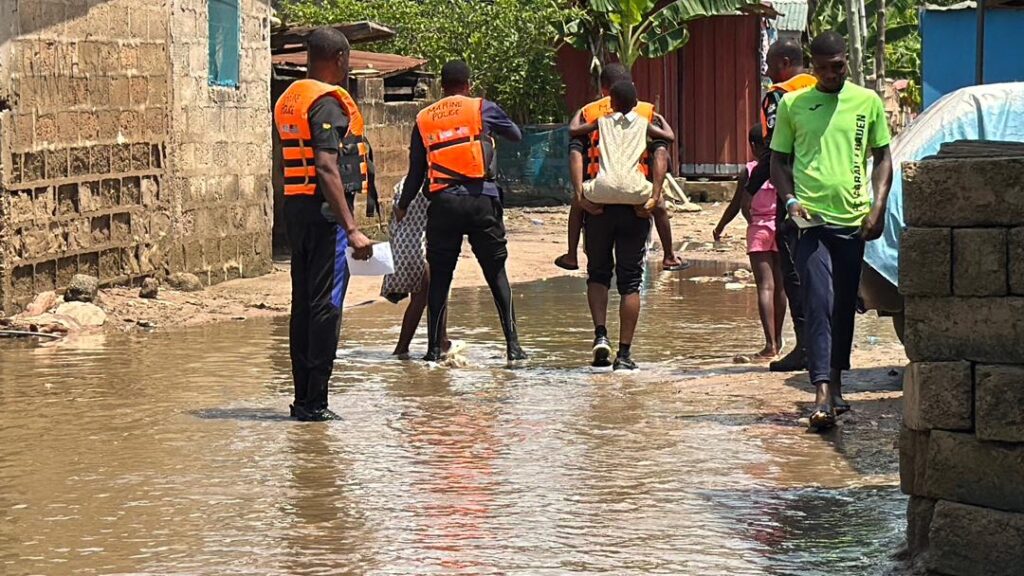
The mission, coordinated through the Director-General in charge of Special Duties, saw a team of marine police personnel from the Eastern Command in Tema deployed to Tetegu on Saturday, May 30, 2026.
Upon arrival, the team discovered that New Tetegu, Old Tetegu, and Tsidikope had been significantly affected by floodwaters resulting from the controlled release of excess water from the Weija Dam.
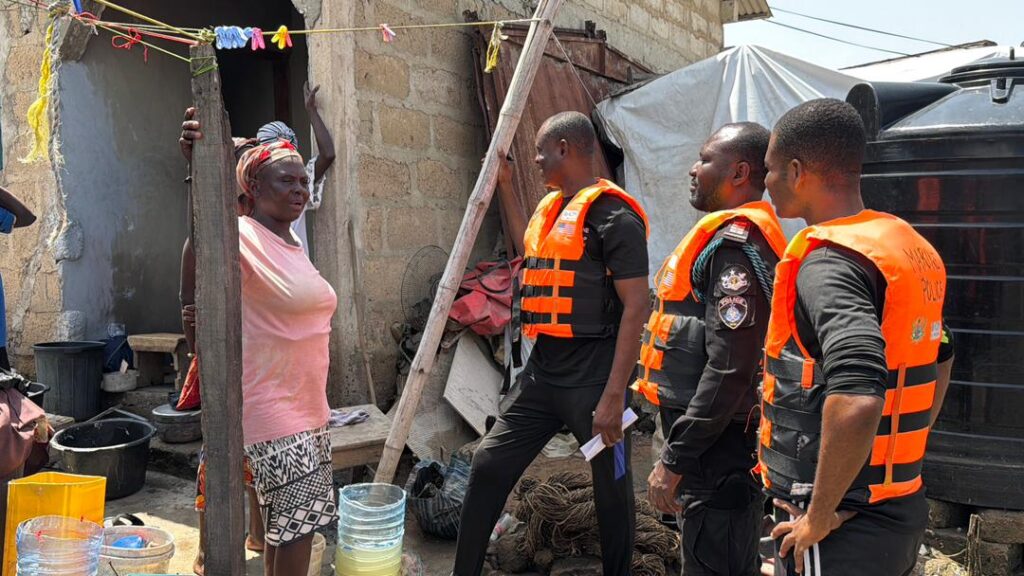
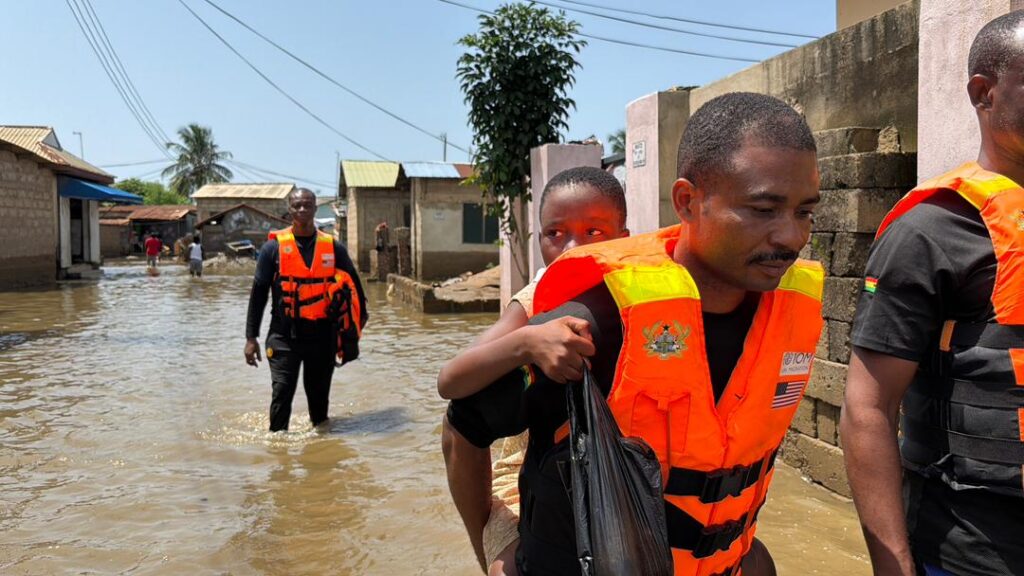
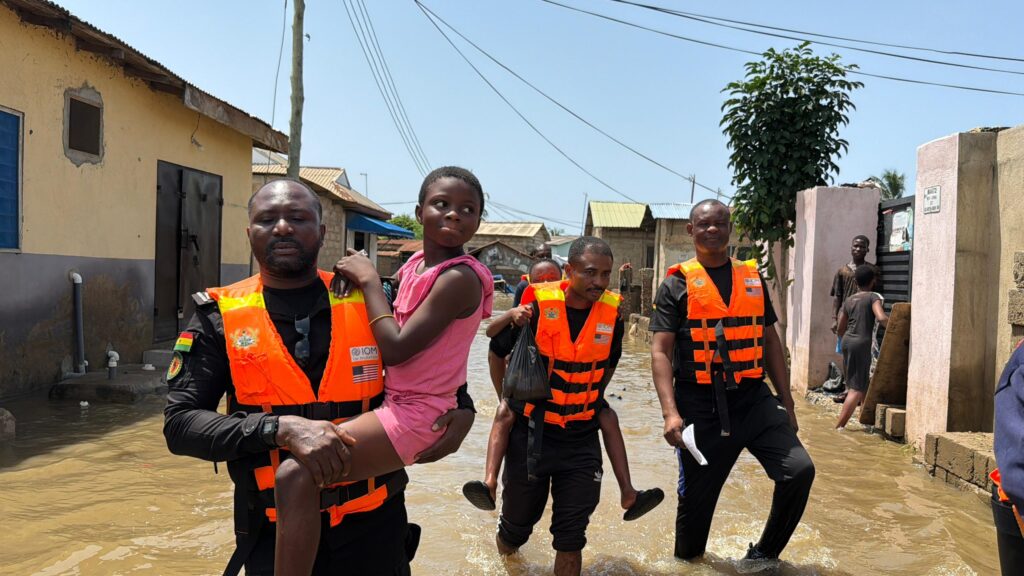
The officers waded through knee-deep floodwaters to assess the extent of the damage and engage directly with affected residents. While some community members had already evacuated to safer locations, others remained trapped in their homes.
In a demonstration of public service and community support, the marine police assisted several residents, including children who were afraid to navigate the floodwaters to purchase food and other essentials. The officers helped them move safely through the affected areas.
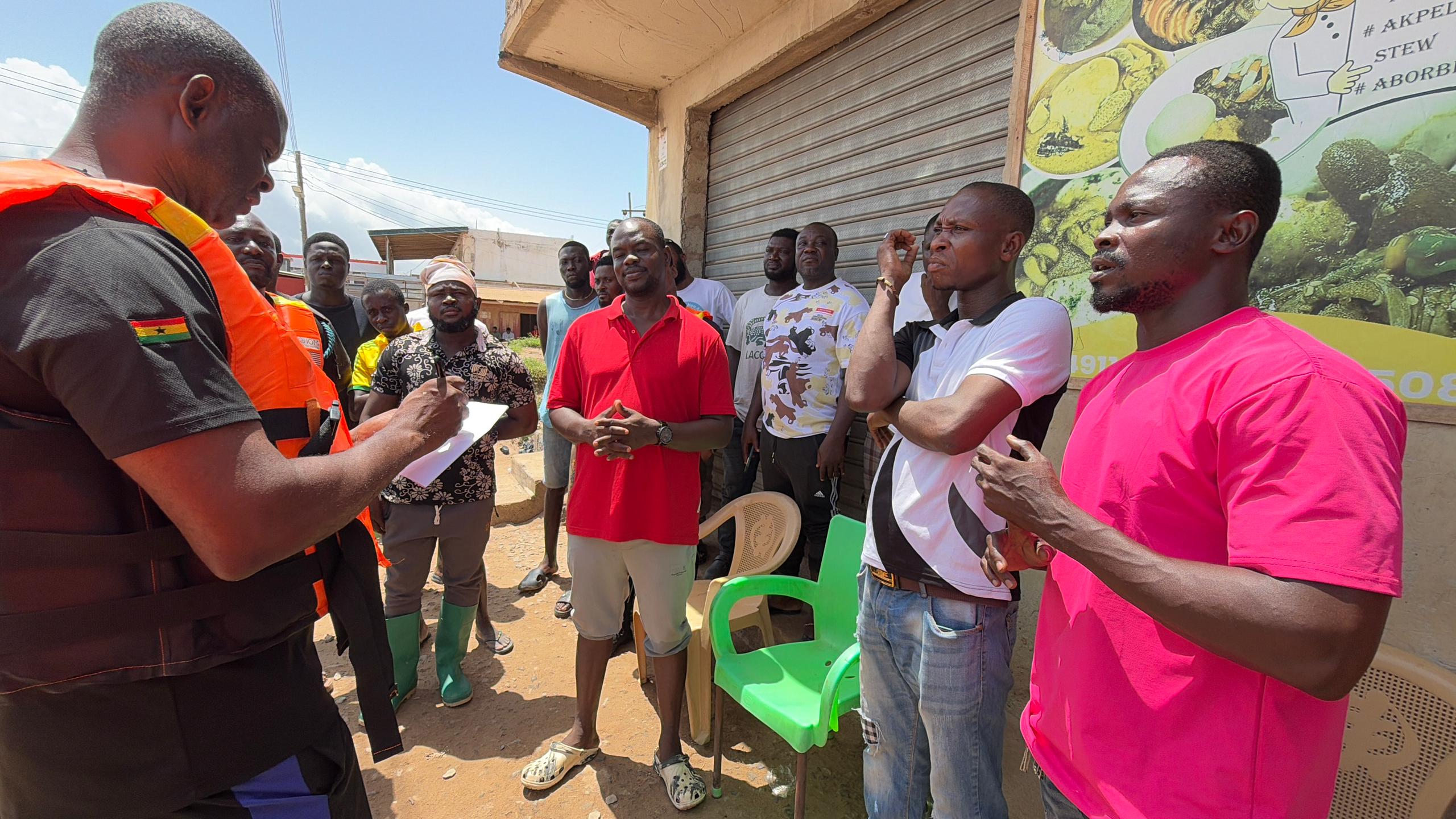
The team also held discussions with the Assembly Member for the area, Honourable Bright Adabra, and several community leaders and residents.
According to Hon. Adabra, the flooding began after the Weija Dam spillways were opened on Monday, May 25, and Tuesday, May 26, 2026, following a rise in water levels caused by persistent rainfall in recent days.
He explained that water released from the dam flows downstream through Tetegu and adjoining communities before entering the Bojo Lagoon and eventually reaching the estuary at Tsokome, where the lagoon meets the sea. Communities along this route reportedly experienced varying degrees of flooding.
During the engagement, residents appealed to government authorities and relevant agencies to implement long-term solutions to the recurring flooding problem. Key among their requests were the dredging of the Densu River and the estuary to ensure the free flow of water into the sea, as well as the construction of proper roads and drainage systems within the affected communities.
The Marine Police used the opportunity to educate residents on flood safety and disaster preparedness.
Community members were advised to avoid activities that contribute to flooding, particularly the construction of buildings on waterways and wetlands.
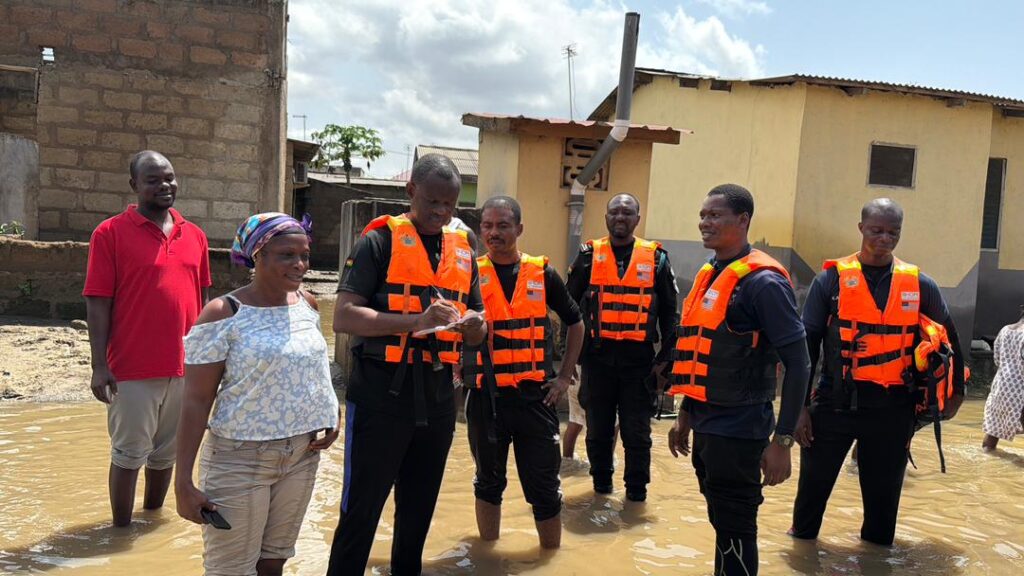
As part of efforts to strengthen emergency response and community-police collaboration, the officers exchanged contact information with local leaders and residents to facilitate rapid communication and intervention whenever necessary.
The assessment mission was led by Police Chief Inspector Ernest Torpey. Other members of the team included Chief Inspector Martin Kateye Tetteh, Chief Inspector Hanford Sakyi, Inspector Isaac Ampofo, General Sergeant Pieterson Robert Baah, and General Sergeant Francis Akyer.
The operation underscores the Ghana Police Service’s commitment to protecting lives and property and responding swiftly to emergencies affecting vulnerable communities across the country.