

Author: Godson Bill Ocloo
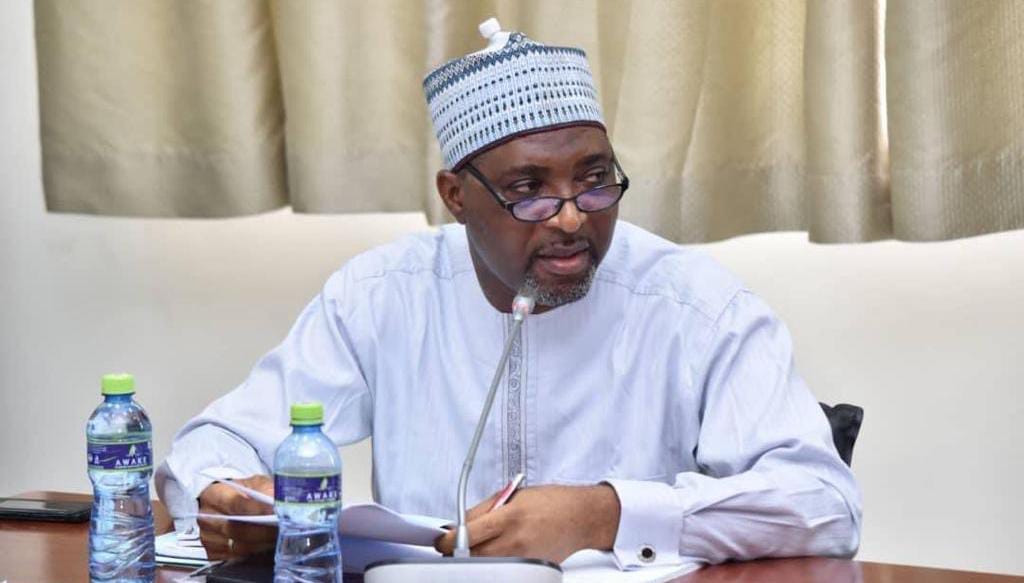
The recent remarks by the Minister for the Interior, Hon. Mohammed-Mubarak Muntaka, concerning the identification of over one hundred unauthorized entry routes along the Volta-Togo border have generated significant public discussion.
While some reactions have sought to frame the issue through the lenses of history, culture, and traditional cross-border relations, the Minister’s warning raises a far more important question that deserves national attention:Can Ghana effectively protect its national security if large numbers of people continue to enter the country through routes that bypass official immigration and security controls? This is the real issue.
The Minister’s statement was not directed at the hardworking people of Aflao, Denu, Dzodze, Akanu, Weta, Agbozume, or the numerous border communities that have, for generations, maintained social, cultural, and economic ties with their counterparts in neighbouring Togo. Nor was it an attack on legitimate trade, family relationships, religious interactions, or traditional networks that have existed long before the colonial partition of Africa.
Rather, the Minister’s concerns were informed by intelligence assessments and security reports indicating the existence of multiple unauthorized routes through which individuals are entering Ghana outside established legal and security procedures. This distinction is important. There is a difference between a market woman travelling from Aflao to Lomé to trade and an unidentified individual entering Ghana through an unapproved route without documentation, registration, or security screening.
The first represents legitimate human mobility.The second represents a potential security vulnerability.As Ghana’s principal gateway to Togo and one of the busiest border corridors in West Africa, Aflao occupies a strategic position in national security planning. Every day, thousands of people and large volumes of goods pass through the official border post. This movement contributes significantly to economic activity, regional integration, and social interaction. However, the same strategic importance that makes Aflao an economic hub also makes it a potential target for criminal exploitation.
Across West Africa, porous borders have become conduits for a range of transnational threats, including human trafficking, arms smuggling, drug trafficking, cyber-enabled crime, money laundering, and the movement of violent extremist actors. The security challenges confronting the sub-region today are fundamentally different from those that existed decades ago.
The instability in parts of Burkina Faso, Mali, and Niger has altered the regional security environment. Security experts increasingly warn that coastal states, including Ghana, cannot assume immunity from emerging threats.In this context, intelligence-driven border management is no longer optional. It is essential.
The concern raised by the Interior Minister must therefore be viewed through the broader lens of prevention. The first responsibility of any state is to know who enters its territory. Without that knowledge, effective governance becomes difficult. Without proper documentation and screening, authorities cannot determine:Who has entered the country;Where they originated from;Their intended destination;Their purpose for entering; or Whether they pose any risk to national security. This is not speculation. It is a fundamental principle of modern border governance.

Indeed, some have argued that many of the so-called unauthorized routes are historical pathways that predate the Ghana-Togo border. That observation is accurate. The Ewe people and other communities along the frontier shared common ancestry, language, culture, and economic systems long before colonial boundaries were imposed.
Families continue to live on both sides of the border. Traditional authorities maintain relationships across national boundaries. Commerce remains deeply interconnected. These realities cannot and should not be ignored. However, acknowledging historical realities does not remove the responsibility of the state to regulate international movement. The fact that a route existed before Ghana’s independence does not automatically make it appropriate for modern border management.
History explains the existence of these routes. It does not eliminate the risks associated with their misuse. This is where the discussion must shift from emotion to policy. The question before Ghana is not whether these routes should exist. The question is whether the state possesses the capacity to monitor, regulate, and manage their use in a manner that protects both national security and community livelihoods.From a Human Security perspective, border security is not separate from community security.
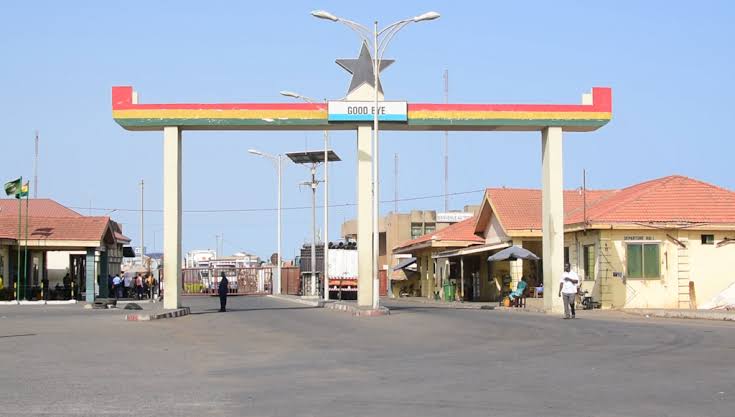
They are interconnected. The residents of Aflao, Denu, Akanu, and other border communities are often the first victims when criminal networks exploit weak border controls. Human trafficking, illicit drug trade, armed robbery, smuggling, and organized crime ultimately undermine local safety, economic opportunities, and social cohesion. For this reason, strengthening border governance should not be viewed as a threat to border communities. It should be viewed as an investment in their security and future prosperity.
The solution therefore lies not in dismissing the Minister’s concerns nor in stigmatizing border communities. Rather, Ghana must pursue an integrated border governance strategy that combines security, intelligence, community engagement, and development.Traditional authorities should be incorporated into local security frameworks.
Community-based intelligence gathering should be strengthened. Border surveillance technologies should be expanded. Immigration and security agencies should deepen collaboration with local residents who possess invaluable knowledge of the terrain and movement patterns within their communities. Most importantly, public discourse on border security must be guided by facts rather than sentiment.
The identification of more than one hundred unauthorized routes along a strategic international frontier is not a matter that should be trivialized or politicized. It is a matter that deserves serious national attention. The Interior Minister’s warning was not an indictment of the people of the Volta Region. It was a reminder that in an increasingly complex and uncertain security environment, Ghana cannot afford to ignore vulnerabilities along its borders.
History matters. Culture matters. Cross-border livelihoods matter. But national security matters too.
And in the final analysis, securing Ghana’s borders is not only about protecting the state. It is about protecting the people.
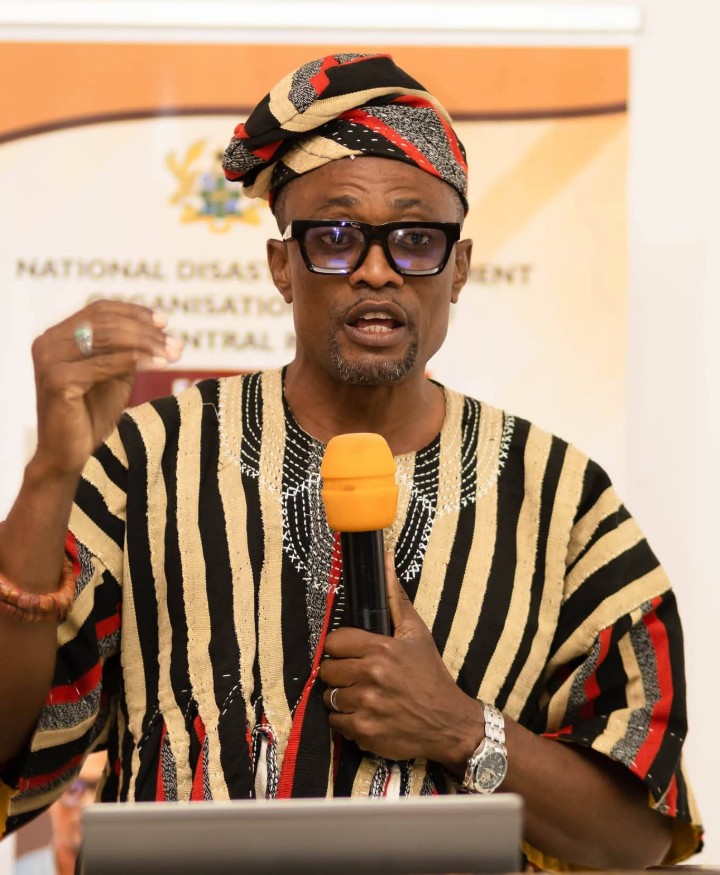
Godson Bill Ocloo is a Human Security Analyst, Disaster Risk Management Practitioner, and Executive Director of the Africa Centre for Human Security and Emergency Management (ACHSEM).