

By Joseph Quarm
Ghana is set to introduce a major overhaul of its vehicle registration system, as the Driver and Vehicle Licensing Authority (DVLA) rolls out a new generation of number plates. The redesigned plates incorporate digital technology, advanced security features, and improved tracking capabilities.
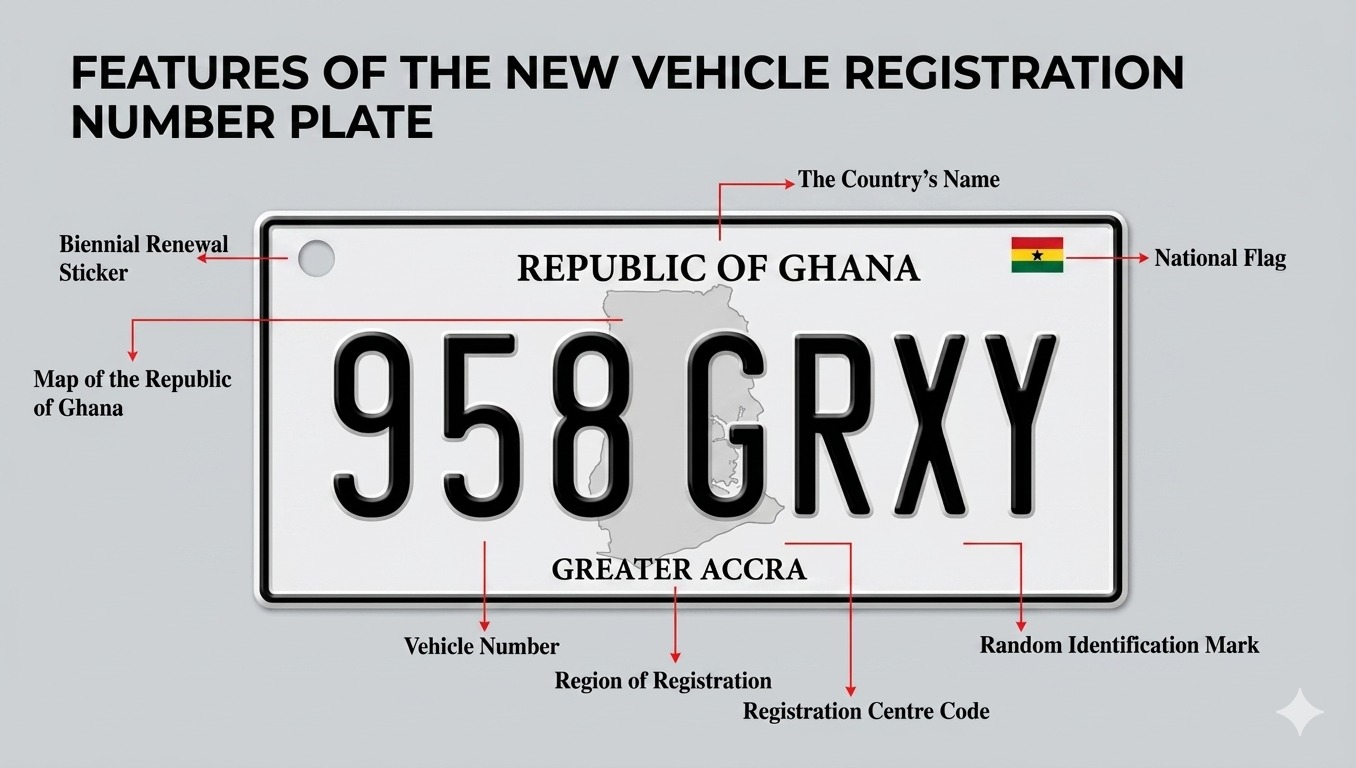
Key Features of the New Plates
National Identity and Design: Plates will display the Ghanaian flag with the Black Star, a silhouette of the country, and the inscription “Republic of Ghana.”
Regional Registration: For the first time, the plate will show the full name of the region where the vehicle is registered.
Unique Vehicle Number and Random Identifier: Each vehicle will have a distinct number along with a randomly generated alphabetical code to prevent duplication.
Registration Centre Codes: Year-based codes will be replaced with DVLA office identifiers, improving traceability.
Biennial Renewal Stickers: Indicate roadworthiness compliance under Road Traffic Regulations (L.I. 2180).
RFID Technology: Embedded chips link each vehicle to the DVLA central database for real-time verification, automated toll payments, and improved law enforcement.
Reflective and Anti-Fraud Features: Plates will be fully produced under DVLA supervision, reducing forgery and enhancing night-time visibility.
Impact on Drivers
The reform promises faster registration and better record management. Standard plates are expected to cost between GHS 600 and GHS 1,200, with production targeted at a 48-hour turnaround. Personalized plates will remain available, though costs may rise due to RFID integration. Drivers currently using Defective Vehicle (DV) or Drive from Port (DP) stickers will transition according to an official timetable.
Reforming DV and Temporary Plates
The new system addresses the misuse of DV and TMP plates, originally meant for temporary dealer use. Stronger controls and digital traceability will ensure compliance, with DP stickers revealing owner details, destination, arrival date, and expiry when scanned.
A Digital Shift for Ghana’s Roads
According to DVLA, the changes aim to strengthen road safety, reduce fraud, and modernize vehicle management nationwide. Once implemented, the number plate will serve as a digital identity for every vehicle, moving Ghana closer to international registration standards.
DVLA Chief Executive Julius Neequaye Kotey described the rollout as a critical step toward “a safer, more accountable, and technologically advanced road transport system.”