

By Lawrence Odoom
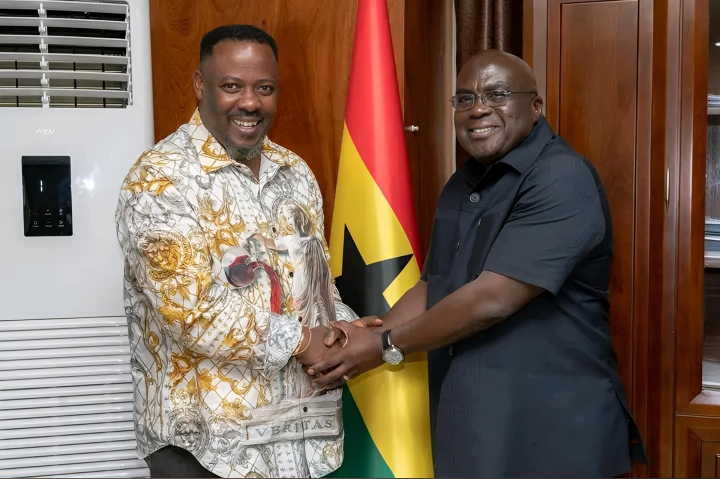
Founder and Leader of Prophetic Hill Chapel, Prophet Nigel Gaisie, has lavished public commendation on the Chief of Staff, Mr. Julius Debrah, following a courtesy call at the Jubilee House.
The engagement, which forms part of ongoing consultations between faith leaders and government officials, has since ignited widespread discourse after the revered prophet recounted the encounter on social media.
In a photograph shared on his official Facebook page, Prophet Gaisie extolled Mr. Debrah as “a man that respects prophets” , a declaration that has reverberated across his followership and the broader public sphere.
The statement has been widely construed as a profound expression of admiration for the Chief of Staff’s disposition toward religious institutions and his demonstrated willingness to engage faith-based stakeholders.
Analysts and observers contend that the prophet’s remarks underscore a cordial rapport between spiritual authority and public office, affirming the indispensable role of mutual respect in entrenching national cohesion and constructive dialogue.
Supporters of Prophet Gaisie have lauded the endorsement, describing it as compelling evidence of Mr. Debrah’s openness and his recognition of the clergy’s contribution to national development.
While the Chief of Staff is yet to issue a public response, the interaction has catalyzed renewed conversation on the imperatives of synergistic engagement between government and the faith community.
Political and religious commentators assert that such interfaces provide fertile ground for collaboration and the articulation of shared perspectives on issues of national significance.
Consequently, the meeting is being regarded as transcending the conventions of a routine courtesy call.
The symbolic weight of the prophet’s characterization of the Chief of Staff as a leader who “respects prophets” has become the defining resonance of the engagement, epitomizing a spirit of deference and mutual recognition.
As public commentary persists, the phrase “a man that respects prophets” endures as the salient takeaway — a testament to the atmosphere of esteem that permeated the encounter.