

By Lawrence Odoom
The Ghanaian government has launched a formidable legal offensive to pursue full restitution for citizens whose businesses, investments, and life savings were decimated in the latest eruption of anti-immigrant violence in South Africa.
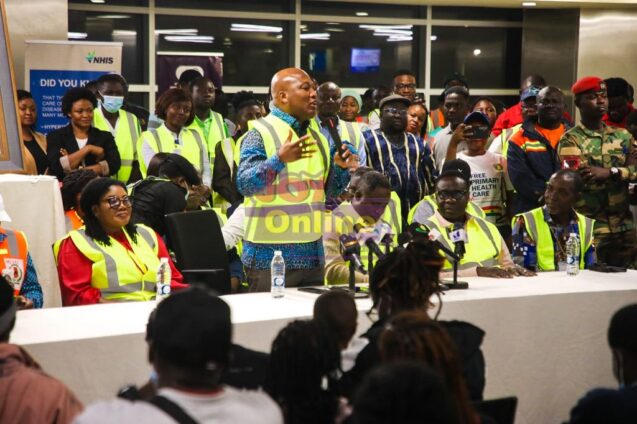
Foreign Affairs and Regional Integration Minister Samuel Okudzeto Ablakwa made the commitment on Saturday night, June 6, 2026, Accra International Airport as he welcomed the second cohort of 345 distressed returnees.
Many arrived with little more than the clothes on their backs after abandoning decades of enterprise to escape marauding vigilante mobs.
Acknowledging the profound economic trauma etched on the faces of the evacuees, Mr. Ablakwa asserted that the state’s responsibility extends far past emergency evacuation. Retail shops, warehouses, and homes painstakingly built over years now lie in ashes, and the government, he vowed, will not allow that sacrifice to go unanswered.
Addressing the returnees directly, the Minister declared:
“…your shops and what have you. So we are putting together legal processes that we will activate to ensure that those properties you invested in, and some of you, your life savings – you have worked for more than two decades, three decades, to put together businesses that were thriving. We are going to make sure that we go all out to obtain compensation for you.”
The xenophobic onslaught has inflicted one of the gravest disruptions to Ghana’s diaspora in recent memory. Hundreds of returnees had spent 20 to 30 years cultivating robust businesses in South Africa, enterprises that not only sustained families but also fortified Ghana’s economy through vital remittances.
The surge of hostility forced an urgent exodus. Over 1,500 Ghanaians registered for the emergency airlift orchestrated by the Foreign Ministry and Ghana’s High Commission in Pretoria. Saturday’s flight raised the total number of repatriated citizens to nearly 700, following the safe return of about 300 evacuees on May 27. Despite logistical complexities and initial bureaucratic bottlenecks, the evacuation corridor has operated with remarkable efficiency.
Ghana’s compensation drive is poised to be both diplomatic and juridical. Officials hinted at bilateral negotiations with Pretoria and possible petitions before regional human rights institutions to hold the South African state accountable for its duty to protect foreign nationals and their property.
Immediately after the Minister’s address, teams from NADMO and the Ghana Immigration Service began meticulously documenting every claim asset losses, business registrations, property deeds to construct an airtight legal dossier.
With a third emergency flight carrying over 300 more citizens expected to touch down in Accra on Sunday, June 7, 2026, the government has reaffirmed its resolve to act with urgency and precision.
The mission, Mr. Ablakwa emphasized, is not only to safeguard Ghanaian lives but to defend their economic rights with equal tenacity.