

By Kwesi B. Randolph Johnson
Released on 6 March 1958, barely a year after Ghana attained independence, the black-and-white documentary Family of Ghana, directed by Julian Biggs and produced by David Bairstow for the National Film Board of Canada, is one of the most important audio-visual records of Ghana’s coastal fishing communities during the mid-twentieth century.
This 28-minute documentary follows the daily life of a fisherman’s family living in a coastal community in Ghana. Through the eyes of a young fisherman, viewers are introduced to a world shaped by the sea, communal labour, indigenous knowledge, traditional authority, and the aspirations of a new generation seeking to improve their lives through modernization.
Although archival records do not definitively identify the exact fishing community where the film was shot, many of its scenes resonate strongly with fishing settlements along Ghana’s coast (e.g., Keta, Osu, Jamestown, Anomabo and Elmina etc.).
The portrayal of beach-seine fishing, fish processing and marketing by women, canoe fisheries, and the social role of traditional leaders reflects practices common to many coastal communities. The presence of fishermen singing in Ewe powerfully situates the film particularly within the Keta-Anloga area of the Volta Region.
At its core, Family of Ghana is a story about fishing. Yet it is also a story about people, culture, resilience, and change.
The documentary captures a period when indigenous knowledge governed virtually every aspect of fishing life.
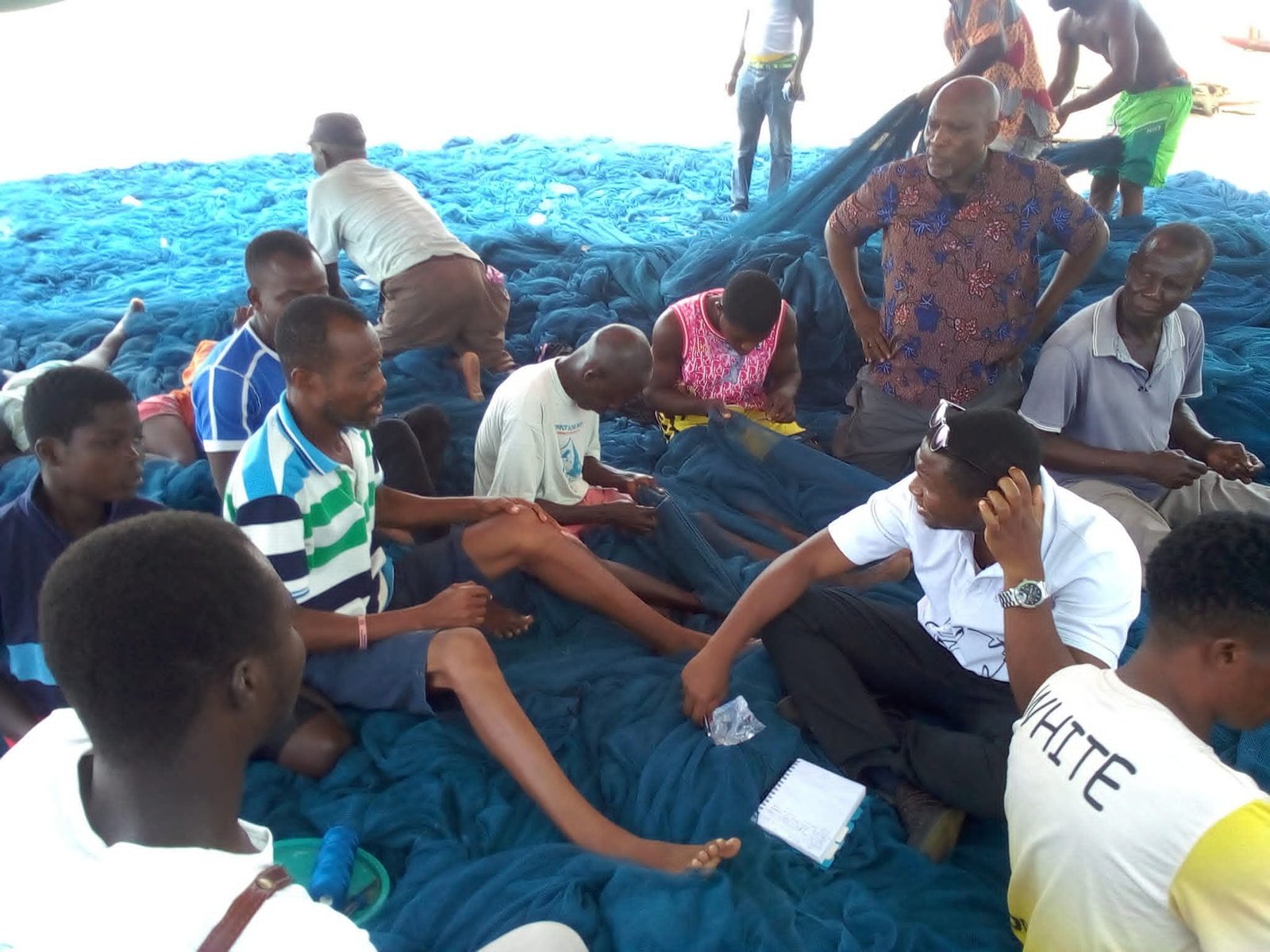
Fishermen relied on generations of accumulated wisdom to read the winds, tides, currents, moon phases, and fish movements. Canoe construction, net making, fish preservation, and navigation were skills passed down through families and communities.
Traditional institutions, including chiefs, chief fishermen, and elders, played important roles in regulating access to fishing resources and maintaining social cohesion.
One particularly striking aspect of Family of Ghana is the fishermen’s observation that their most abundant catches traditionally occurred during the months of June and July. This seasonal knowledge, passed down through generations, reflected a deep understanding of ocean conditions, fish migration patterns, currents, winds, and spawning cycles.
Remarkably, this local ecological knowledge aligns closely with contemporary scientific research. Findings from the Sankofa Project, implemented by the University of St Andrews in collaboration with the Fisheries Commission of Ghana (FC), the Fisheries Committee for the West Central Gulf of Guinea (FCWC), and the Canoe and Fishing Gear Owners Association of Ghana (CaFGOAG), similarly identified June and July as historically important months for small pelagic fisheries in Ghana’s marine waters.
The convergence between the observations recorded in a 1958 documentary and the findings of modern fisheries science demonstrates the enduring value of indigenous knowledge systems. It also underscores the importance of integrating the experience and observations of fisherfolk into contemporary fisheries management and marine conservation efforts.
Far from being relics of the past, the insights of fishing communities remain indispensable for understanding long-term changes in fish abundance, seasonality, and ecosystem health.
The film also highlights the important role of women. Fishmongers, processors, and traders formed the economic backbone of coastal communities. Their labour connected the sea to inland markets and ensured that fishing households survived during difficult seasons.
Long before the term “gender inclusion” entered development discourse, women were already indispensable actors within Ghana’s fisheries economy. The documentary’s scenes of women carrying, processing, and marketing fish remind us that fisheries have never been solely about those who harvest fish at sea, but also about those who add value to the catch and sustain household and community economies onshore.
The documentary’s central theme, however, is the tension between tradition and modernization. The young fisherman dreams of acquiring a larger mechanized vessel capable of venturing farther offshore and landing bigger catches. His ambition reflects the optimism that characterized the early years of independence, when technological progress was widely seen as the pathway to prosperity.
Nearly seven decades later, that dream continues to resonate. Yet history has shown that modernization brings both opportunities and challenges.
Motorized canoes, synthetic nets, improved preservation technologies, fish-finding devices, and larger fishing vessels have increased fishing capacity. However, they have also contributed to growing pressure on marine resources when not accompanied by effective management and enforcement measures.
Today, many fishing communities across Ghana face a crisis that the filmmakers of Family of Ghana could scarcely have imagined. Fish catches have declined significantly in many areas due to overfishing, illegal, unreported and unregulated (IUU) fishing practices, habitat degradation, marine pollution, and changing ocean conditions. Species that were once abundant have become increasingly scarce, forcing many fishermen to travel farther and spend more money in search of dwindling catches.
For many coastal households, the annual fishing seasons that once provided relative certainty have become increasingly unpredictable.
Climate change has added another layer of uncertainty. Coastal erosion threatens homes, landing beaches, fish processing facilities, and community infrastructure.
Rising sea levels are swallowing portions of historic communities, particularly along vulnerable stretches of the eastern coast such as the Aflao-Keta-Dzita-Ada stretch, the Bortianor-Kokrobite-Oshiye in Greater-Accra, Biriwa-Ekon in the Central Region, Achonwa-Akwidaa-Miamia-Esiama etc in the Western Region and the surrounding settlements.
Changes in ocean temperatures, currents, and weather patterns affect fish migration and distribution, making traditional forecasting more difficult and placing additional pressure on fishing livelihoods.
Yet despite these challenges, the indigenous knowledge systems documented in Family of Ghana remain highly relevant. Increasingly, researchers, policymakers, and development practitioners recognize that sustainable fisheries management must combine scientific approaches with local knowledge held by fishermen, fishmongers, chief fishermen, queen fishmongers, and community elders.
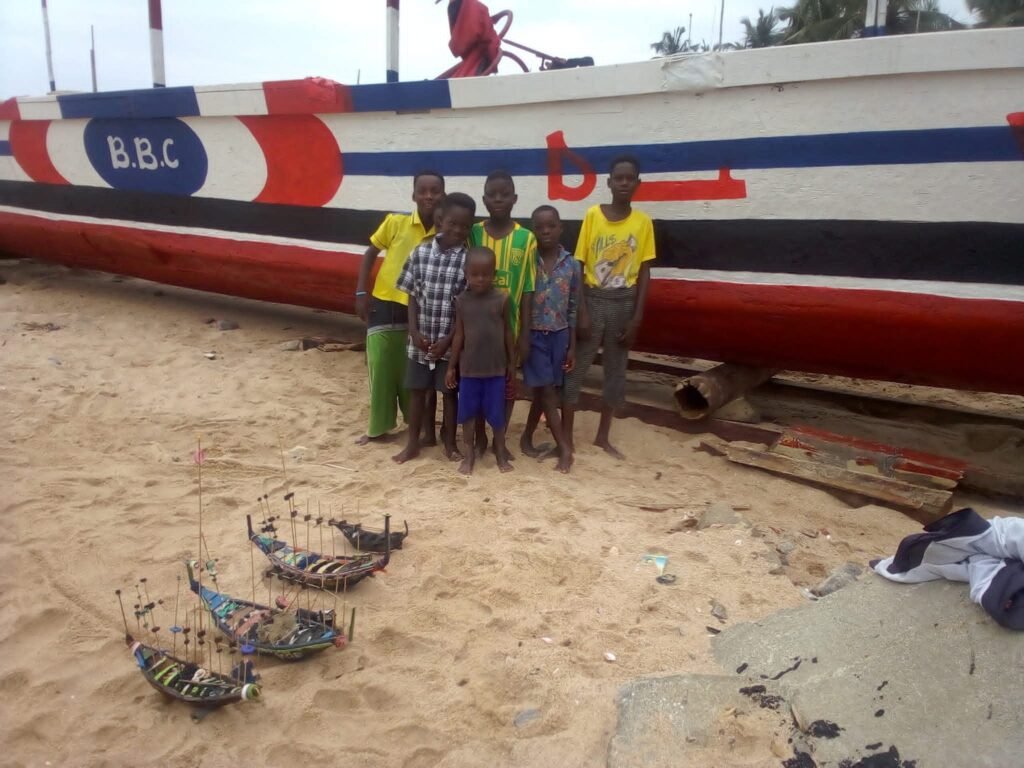
The future of fisheries conservation may depend as much on listening to fishing communities as on introducing new technologies.
The film also reminds us that fishing communities are places of remarkable cultural diversity and social interaction. Along Ghana’s coastline, generations of migration have created vibrant settlements where ethnic identities intersect and blend.
Fante, Ewe, Ga-Adangbe, Nzema, Ahanta, and many other groups have long interacted through fishing, trade, and settlement. Intermarriages between fishing families from different regions have strengthened social bonds, fostered cultural exchange, and facilitated the transfer of fishing knowledge and traditions across communities. Fishing settlements therefore serve not only as economic centres but also as living examples of Ghana’s multicultural heritage.
Viewed today, Family of Ghana is more than a documentary. It is a historical archive, a cultural record, and a reminder that fisheries are ultimately about people.
Discussions about conservation often focus on fish stocks, marine ecosystems, and biodiversity. These are undeniably important. Yet the film reminds us that behind every canoe, every net, and every basket of fish stands a family whose well-being is inseparable from the health of the marine environment.
Perhaps the most remarkable aspect of revisiting Family of Ghana today is the realization that many of the issues confronting fishing communities in 1958 remain relevant in the twenty-first century.
The aspirations of young fishermen seeking better livelihoods, the central role of women in fisheries, the importance of traditional ecological knowledge, and concerns about sustaining fish catches across generations continue to shape conversations about fisheries development and governance.
The fact that observations made by fishermen nearly seventy years ago regarding seasonal abundance in June and July, arguably find support, albeit indirectly in contemporary scientific studies demonstrates that traditional knowledge and modern science are not competing systems of understanding, but complementary sources of wisdom.
The challenge before Ghana today is therefore not to choose between tradition and modernity, but to bring the two together.
Sustainable fisheries will require modern science, improved management, responsible technology, and effective regulation. Equally, they will require respect for the accumulated knowledge, experience, and stewardship traditions of fishing communities themselves.
The lessons captured in Family of Ghana suggest that the most durable solutions will emerge when policymakers, scientists, and fisherfolk work as partners rather than as separate actors.
Despite the many difficulties facing coastal communities today, hope endures. Across Ghana’s shoreline, fishermen continue to launch their canoes before dawn, women continue to trade and process fish, and young people continue to dream of better futures.
Festivals, community celebrations, and traditional ceremonies still bring people together. In the Volta Region, fishfolks during the annual Higbetsotso gather to dance Agbadza and other rites; in Greater-Accra, the Homowo and Asafutufiam of the Ga and Dangbe people; the Okyir and Bakatue of the Fantes in the Central Region; and the Kuntum/Kundum of the Ahantas and the Nzemas of the Western Region respectively celebrating their heritage, resilience, and connection to the sea.
Elsewhere, younger generations blend tradition with modernity, sometimes dancing to highlife, hiplife, gospel, and Afrobeat music in local bars, and beachside gatherings when the harvest is good – “when sea good, pocket good” as a saying along the coadt goes.
As the sun sets over the Atlantic Ocean, the songs of the fishermen, the laughter of market women, the rhythm of traditional drums, and the melodies of modern music all tell the same story. It is a story that stretches from the black-and-white images of Family of Ghana in 1958 to the vibrant coastal communities of today; a story of adaptation, solidarity, cultural pride, and enduring hope.
While the sea may change and the challenges may evolve, the resilience of Ghana’s fisherfolk remains constant. Their knowledge, culture, and determination continue to provide a foundation upon which a more sustainable and prosperous future for Ghana’s fisheries can be built.