

Businesses in Ghana must take a more proactive role in leveraging opportunities under the African Continental Free Trade Area (AfCFTA) if the country is to fully benefit from Africa’s expanding single market – policymakers, trade experts and business leaders have said.
They opine that stronger private sector participation, policy coordination and trade financing are critical to maximising benefits from Africa’s $3 trillion single market.
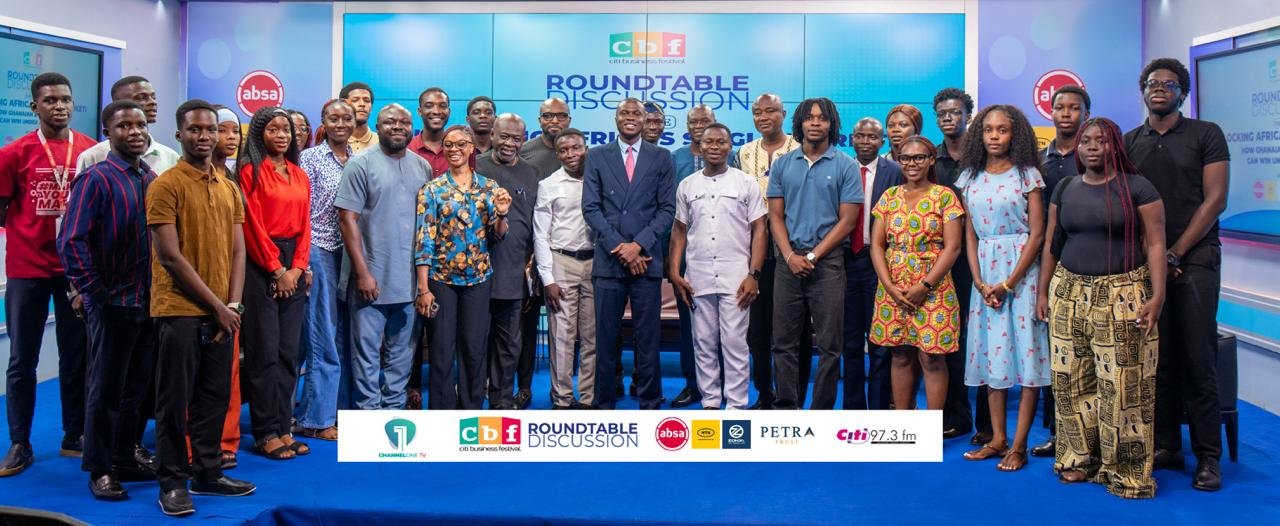
This call came at the first Roundtable Discussion of the 2026 Citi Business Festival, where participants stressed that closer collaboration between governments, businesses and financial institutions is needed to accelerate intra-African trade and position local enterprises for growth across the continent.
Held under the theme, “Unlocking Africa’s Single Market: How Can Ghanaian Businesses Win Under AfCFTA?”, the discussion focused on the progress, opportunities and implementation challenges surrounding the trade agreement, which seeks to create a market of more than 1.4 billion people.
Senior Technical Advisor on AfCFTA Implementation Committees, Dr. Fareed Arthur, said many of the challenges confronting the agreement stem from weak coordination among African governments rather than flaws in the framework itself.
“The problems of AfCFTA that have been pointed out are real, but it is not because the AfCFTA is not working. It’s because the governments that are supposed to work to make this successful have still not appreciated the fact that it is not their individualistic approaches that will solve the challenges,” he said.
Acting Head of the National AfCFTA Coordination Office at the Ministry of Trade, Agribusiness and Industry, Benjamin Asiam, argued that increased trade among African countries could help retain more wealth within the continent and strengthen economic resilience.
“We have a population of over 1.4 billion people and also a GDP of more than $3 trillion. And so if we trade with each other, see Africa as one market, and trade with each other, we’ll benefit from the wealth of Africa. That wealth will stay in Africa, and Africa will be better off,” he said.
Chief Executive Officer of the Ghana National Chamber of Commerce and Industry, Mark Badu-Aboagye, said policy consistency and effective implementation remain key obstacles to realising the full benefits of the agreement.
Referring to recent tensions involving foreign businesses in South Africa, he cautioned that actions perceived as hostile to regional integration could undermine confidence in the continental trade agenda.
“For the sake of unity and success of AfCFTA, I think other countries have acted more professionally. Can you imagine if the other countries decide to also retaliate and send the South Africans also to their countries? Can you imagine the chaos that would have come to the continent?” he said.
Chief Export Development Officer at the 24-Hour Economy Authority, Gabriel Opoku-Asare, highlighted opportunities for Ghana to strengthen its position as a regional manufacturing and export hub, particularly in pharmaceuticals.
“Ghana, as you know, is a big pharmaceutical hub that exports to the Sahel region, and we can increase that by a double or triple fold if we focus on providing incentives such as accessible power to players in that zone as well,” he stated.
Access to trade finance also featured prominently in the discussion, with Head of Trade and Working Capital at Absa Bank Ghana, Emmanuel Mensah, outlining the role of financial institutions in supporting businesses seeking to expand across African markets.
“At Absa, we’ve collaborated over the years with development financial institutions, donor agencies, and institutions that offer risk mitigation by way of
risk sharing,” he said.
The Roundtable Discussion underscored the increasing recognition that while AfCFTA presents one of the continent’s most significant economic opportunities, translating its potential into tangible gains will depend on stronger policy alignment, improved trade infrastructure, access to finance and the ability of African businesses to scale beyond domestic markets.
The Citi Business Festival 2026 is powered by Citi 97.3 FM and Channel One TV in partnership with Absa Bank and sponsored by Absa Bank, MTN Ghana, Zonda Tec Ghana Limited and Petra Trust.
By: Naa Shika Caesar